
PGY1 Residency Program
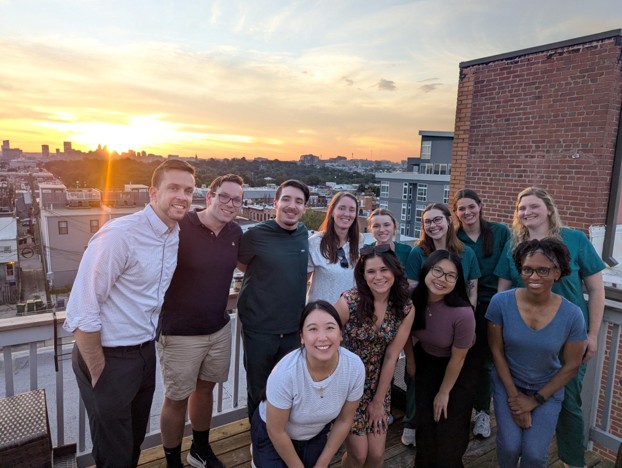
Program Type: ASHP accredited PGY 1 Residency
ASHP Match Number: 176813
Positions: 8
Purpose Statement
The purpose of The Johns Hopkins Hospital Post-Graduate Year 1 (PGY1) Pharmacy Residency is to build on Doctor of Pharmacy education and outcomes to contribute to the development of clinical pharmacists responsible for medication-related care of patients with a wide range of conditions, eligible for board certification and eligible for postgraduate year two (PGY2) pharmacy residency training.
Program Overview
The PGY1 Pharmacy Residency at The Johns Hopkins Hospital provides the resident with the skills and knowledge required to become a competent pharmacy practitioner.
The program is a twelve-month, postgraduate training experience composed of four competency areas: 1) patient care; 2) advancing practice and improving patient care; 3) leadership and management; and 4) teaching, education and dissemination of knowledge. Our residents will have the opportunity to provide pharmaceutical care to patients in multiple settings, develop independent learning skills, maintain a professional ethic, provide effective medication education to others, understand research methods and opportunities, and assume personal responsibility for effecting change.
The specific program for each resident varies based upon the residents' goals, interests and previous experience. However, all residents are required to complete rotations in core subject areas considered to be essential to the pharmacy practitioner. A broad range of elective rotations is available to permit the resident flexibility in pursuing individual goals.
Additional learning experiences aimed at producing a well-rounded pharmacist include the development and completion of a major project related to pharmacy practice, development of oral and written communication skills, patient education, participation in various departmental administrative committees, and practice in various pharmacy areas throughout the institution. Upon successful completion of the program, trainees are awarded a residency certificate.
Program Goals
Residents who complete this program will be able to:
- Serve as an independent practitioner with in-depth knowledge of medication management
- Promote the safe, appropriate, and effective use of medications
- Contribute to the education of pharmacy learners, interdisciplinary team members, and patients
- Obtain a position as a clinical pharmacist or a PGY2 resident
Orientation
The Pharmacy Residency Orientation experience provides a comprehensive and coordinated training program designed to provide incoming residents with an understanding of policies, procedures, and expectations for the pharmacy residency experience. During orientation, residents will participate in hospital, department, and division orientation, and will be exposed to department policies and resources. Hospital and pharmacy department orientation is required for all new pharmacist hires at The Johns Hopkins Hospital. The resident is expected to interact with members of the pharmacy department throughout orientation and to attend assigned orientation and training sessions.
Prior to the start of the residency program, residents will be given a full, detailed orientation itinerary.
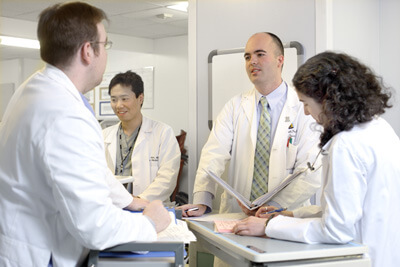
Rotations
Required Rotations
- Critical Care (1 month)
Choice of:- Cardiac Care Unit (CCU)
- Cardiovascular Surgical Intensive Care (CVSICU)
- Medical Intensive Care (MICU)
- Neurosciences Critical Care (NCCU)
- Surgical Intensive Care (SICU)
- Weinberg Intensive Care (WICU)
- Oncology ICU
- Internal Medicine (1 month)
- Integrated Practice Rotation (2 months)
- Leadership Collaborative Rotation (1 month)
- Ambulatory Care (6 months longitudinal experience)
- Adult Internal Medicine Clinic (3 months)
- Anticoagulation Management Clinic (3 months)
Click here for brief description of rotations.
Elective Rotations (1 month each)
- Addiction Medicine
- Advanced Heart Failure and Cardiomyopathy
- Ambulatory Oncology - Breast & Cutaneous Malignancies
- Ambulatory Oncology - GI
- Ambulatory Oncology - Hematologic Malignancies
- Ambulatory Oncology - Multiple Myeloma
- Ambulatory Oncology - Thoracic
- Ambulatory Palliative Care Clinic
- Ambulatory Pediatric Oncology
- Antimicrobial Stewardship
- Benign Hematology and Hemostatic/Antithrombotic Stewardship
- Bone Marrow Transplantation/Lymphoma/Myeloma
- Cardiovascular Progressive Care Unit
- Clinical Informatics
- Clinical Pharmacogenetics & Academia
- Education & Training - Leadership
- Emergency Medicine
- Epic Willow Inpatient Accreditation
- General Adult Infectious Diseases Consults
- General Cardiology
- General Pediatrics
- Hematologic Malignancies
- Hepatology Service
- HIV/AIDS Service
- Hospitalist Service
- Investigational Drug Service
- Kidney and Pancreas Transplant
- Liver Transplant
- Lung Transplant
- Medical Oncology
- Medication Quality and Outcomes
- Medication Safety - Adults
- Medication Safety - Pediatrics
- Neonatal Intensive Care
- Oncology Clinical Informatics
- Outpatient Parenteral Antibiotic Therapy
- Pain Management
- Palliative Care
- Pediatric Cardiac Intensive Care & Heart Transplant
- Pediatric Cystic Fibrosis/Pulmonology
- Pediatric Emergency Medicine
- Pediatric Infectious Diseases Consult
- Pediatric Intensive Care
- Pediatric Liver Transplant, Gastroenterology, and Surgery
- Pediatric Nephrology
- Pediatric Oncology
- Psychiatry
- Surgery Acute Care
- Transitions of Care
- Transplant Nephrology
- Trauma Critical Care
Click here for brief description of rotations.
Additional elective rotations may be available pending resident interest and preceptor availability. Residents are required to spend at least 2/3 of the program in direct patient care activities.
Education Components
-
ACPE-accredited 30-minute Pharmacotherapy Rounds presentation
- Article for Writing on the Wall (Department newsletter)
- Teaching Certificate Program The University of Maryland School of Pharmacy (optional)
Please refer to the "Learning Opportunities" section of the Department of Pharmacy, Johns Hopkins Medicine website for more information.
Attendance at Professional Meetings
The department will support the resident (expense and leave time) to attend ASHP Midyear Clinical Meeting and Eastern States Residency Conference. A PGY1 resident may seek approval to present their resident project at a meeting other than Eastern States. Any additional travel that is to be supported by the department is evaluated on a case-by-case basis.
Please refer to the Meetings and Conferences section of the Department of Pharmacy, Johns Hopkins Medicine website.
Resident Projects
The resident must complete a longitudinal resident project with significant breadth intended to advance pharmacy practice. The overall goal of a project is to increase the resident's knowledge of project design and management, data analysis, and improved patient care. To achieve this goal, follow-up actions in the project process should consist of a multifaceted approach, involving the departments and medical service responsible for providing care, to implement change and improve the medication-use process.
Please refer to the Projects section of the Department of Pharmacy, Johns Hopkins Medicine website.
Additionally, each PGY1 resident will complete a Formulary project, which may include health system formulary management, medication use policy development, or performance improvement planning.
Committee Participation
The resident will be assigned to departmental, hospital, or health-system committee(s) over the course of the year.
Staffing Component
Each resident will practice as a pharmacist in a designated area throughout the residency year. The PGY1 resident will follow the staffing requirements as outlined in the Residency Program Manual.
Please refer to the Staffing Requirements section of the Department of Pharmacy, Johns Hopkins Medicine website.
On-Call Coverage
The resident will participate in clinical on-call services. On-call duties include code response, drug information question responses, pharmacokinetic assessments, administrative assistance, and other duties. On-call hours are from 4 p.m. to 10 p.m. on weekdays and 7 a.m. to 7 p.m. on weekends and holidays. The frequency of on-call coverage depends upon the number of residents in the entire program and averages about 18 shifts per year.
Please refer to the On Call Program section of the Department of Pharmacy, Johns Hopkins Medicine website.
Paid Time Off (PTO)
Please refer to the Benefits section of the Department of Pharmacy, Johns Hopkins Medicine website.
Preceptors
To learn more about the preceptors at JHH, please see our JHH Pharmacy Preceptor Bios.
Requirements for Acceptance to the Program
The qualified candidate will have a Doctor of Pharmacy degree from an ACPE accredited school of pharmacy. All applications will be accepted through PHORCAS. For more information, see our Application page.
Licensure and Certification Requirements
All residents are expected to obtain a Maryland State Pharmacy License by August 1.
The resident will complete ACLS certification during the residency year, unless already certified.
Program Director

Jennifer A. Szwak, PharmD, BCPS, DPLA, FCCP
Title: Clinical Pharmacy Specialist, Internal Medicine
Education: Doctor of Pharmacy, Virginia Commonwealth University School of Pharmacy - Richmond, VA
Training: PGY1 Pharmacy Residency, Emory HealthCare, Atlanta, GA; PGY2 Internal Medicine Residency, University of Chicago Medicine - Chicago, IL
Jennifer (Austin) Szwak is a Clinical Pharmacy Specialist in Internal Medicine & the PGY1 Residency Program Director at The Johns Hopkins Hospital. Prior to coming to The Johns Hopkins Hospital, Dr. Szwak was engaged in residency training and development as a PGY1 and PGY2 Internal Medicine Residency Program Director for 8 years at UChicago Medicine.
She is a member of the Resident Project Leadership Committee, the Resident On-Call Committee, the Patient Education Committee, and the Pharmacy Informatics Design Team. In addition to her roles within the institution, she has been actively involved in the American College of Clinical Pharmacy (ACCP), the Adult Medicine (AMED) Practice and Research Network, and the Vizient Pharmacy Network Research Committee where she served as chair from 2021 - 2023. She was inducted a Fellow of ACCP in 2022 and was awarded the American Association of Colleges of Pharmacy (AACP) Preceptor of the Year Award for 2024. She has presented nationally on preceptor development, resident wellbeing, and pharmacy education, and is passionate about supporting preceptors in creating healthy, sustainable learning environments.
Contact
Jennifer A. Szwak, PharmD, BCPS, DPLA, FCCP
Department of Pharmacy
Location: 600 North Wolfe Street, Carnegie 180
Baltimore, MD 21287-6180
Phone: 410-502-8815
Email: [email protected]
Residency Program Coordinators
Max Ditlevson, PharmD, BCCP
Title: Clinical Pharmacy Specialist, Ambulatory Care
Education: Doctor of Pharmacy, University of Maryland School of Pharmacy - Baltimore, MD
Training: PGY1 Pharmacy Residency & PGY2 Cardiology Pharmacy Residency, The Johns Hopkins Hospital - Baltimore, MD
Christopher Hartley, PharmD, BCPPS
Title: Clinical Pharmacy Specialist, Pediatric Gastroenterology, Nutrition, and Liver Transplant
Education: Doctor of Pharmacy, University of Rhode Island College of Pharmacy – Kingston, RI
Training: PGY1 Pharmacy Residency, Maine Medical Center – Portland, ME; PGY2 Pediatric Pharmacy Residency, Medical University of South Carolina – Charleston, SC
Stephanie Seto, PharmD, BCCCP
Title: Clinical Pharmacy Specialist, Surgical Intensive Care
Education: Doctor of Pharmacy, Virginia Commonwealth University School of Pharmacy – Richmond, VA
Training: PGY1 Pharmacy Residency, Massachusetts General Hospital – Boston, MA; PGY2 Critical Care Pharmacy, Massachusetts General Hospital – Boston, MA