
Children with sickle cell disease and other hemoglobinopathies need comprehensive, compassionate care from an expert team focused on helping them thrive. Led by pediatric hematology oncology specialist Tamara New, M.D., our team provides treatment and services for pediatric patients with sickle cell disease and other hemoglobinopathies, like thalassemia, in the Sickle Cell Disease and Hemoglobinopathy Program at Johns Hopkins All Children’s Hospital in St. Petersburg, Florida. As part of our comprehensive care, we also help our young adult patients as they transition to adult care.
Meet Our Team
Our expert team in the Sickle Cell Disease and Hemoglobinopathy Program provides advanced, specialized care to children of all ages. Learn more about the team.

Why Choose Johns Hopkins All Children’s
We provide care to patients from birth to age 21. As one of the largest pediatric sickle cell programs on Florida’s west coast, we help families deal with challenges when their child has sickle cell disease (SCD) or other types of hemoglobin disorders. Since these disorders are chronic and last a lifetime, our experts also specialize in transitioning pediatric patients to adult care. Children with sickle cell still can live a healthy and active life.
Our program is a nationally recognized Pediatric Treatment Center by the National Association of Sickle Cell Centers (NASCC). Our team consists of a dedicated pediatric hematologist, who has specialized in sickle cell for over 20 years, as well as a specialized nurse practitioner, nurse program manager and social worker, all exclusively dedicated to our patients and families.
We also hold an annual Sickle Cell Family Symposium to provide patients and caregivers with an interactive educational experience, including learning about advances in sickle cell disease care and treatment, insurance needs and future career planning, among other topics.
Conditions We Treat: Sickle Cell Disease, Thalassemia and other Hemoglobinopathies
Sickle Cell Disease
Sickle cell disease is the most common inherited blood disorder and is often found during a routine newborn blood test. It may also be diagnosed before birth with an amniotic fluid test or a sample of tissue from the placenta.
It exists in many forms, depending on what hemoglobin is affected. The most common forms:
- Sickle cell anemia (HbSS): The child has two copies of the HbS gene, one inherited from each parent. This is marked by reduced oxygen flow through the body resulting in fatigue, skin pallor, shortness of breath, lightheadedness, dizziness or a fast heartbeat.
- Sickle cell with hemoglobin C disease (HbSC): The child has one HbS gene from one parent and one defective hemoglobin C gene from the other. This is generally a less severe form of anemia with similar but milder symptoms.
- Sickle beta thalassemia (HbS beta-thalassemia): The child has one HbS gene and one beta thalassemia gene. Sickle beta thalassemia zero is very similar to sickle cell anemia. A person can exhibit symptoms of varying severity.
Thalassemia and Other Hemoglobinopathies
Thalassemia is a group of inherited blood disorders caused by reduced or absence of one or more of the proteins that make up hemoglobin, the protein in red blood cells that carries oxygen throughout the body. As a result, individuals with thalassemia may develop anemia, fatigue, poor growth and other symptoms. The severity of the condition ranges from mild forms, which may cause little to no complications, to severe forms that require regular medical treatment such as blood transfusions.
Services We Provide
- Infant and new diagnosis education
- Psychology and neuropsychology services
- Pain management
- Medication adherence
- Transfusion and apheresis services
- Chelation management
- Transition preparation program
- Comprehensive disease evaluation every visit
- Monthly outreach clinics, to improve patient accessibility
- Patient and family events
- Collaboration with Bone Marrow Transplant Program for bone marrow transplant and gene therapy
- Transcranial Doppler and other radiological assessments
Sickle Cell Treatment and Care
-
Sickle cell disease and thalassemia can have a variety of complications; therefore, we collaborate with medical specialists throughout our hospital, including hematologists, neurologists, neurosurgeons, cardiologists, nephrologists, pediatric surgeons, anesthesiologists and pharmacists. We also work with Child Life specialists, social workers, schoolteachers and psychologists to help our patients and families cope with the psychosocial impacts of their diagnosis.
Symptoms and their severity vary widely among children. We offer routine preventative care, disease education and emergency care for our patients in outpatient and inpatient settings. We also offer consultations with our physical and occupational therapy teams to help keep our patients as strong and active as possible. Knowing that stem cell transplant can provide a cure, we work closely with our bone marrow transplant team to refer patients for transplants or gene therapy when appropriate.
-
Patients are typically referred to our program after a newborn screening indicates they likely have sickle cell disease or another hemoglobinopathy, or as an older child who has already been diagnosed previously. For our newborn patients, we obtain blood counts on their first clinic visit to confirm the diagnosis.
Once we have confirmed your child’s diagnosis, they will usually have appointments with us every three months, though we may recommend a different frequency of appointments depending on your child’s condition and individual needs.
During your child’s appointments, we will complete blood work, talk with you and your child about your child’s condition, provide education on your child’s condition, update their medication as needed, and answer any questions you or your child may have.
Locations
Outpatient Care Center, St. Petersburg
601 Fifth Street S.
St. Petersburg, FL 33701
Clinic: Mondays, Wednesdays and Thursdays
Other services: Monday-Friday, 8 a.m.-5 p.m.
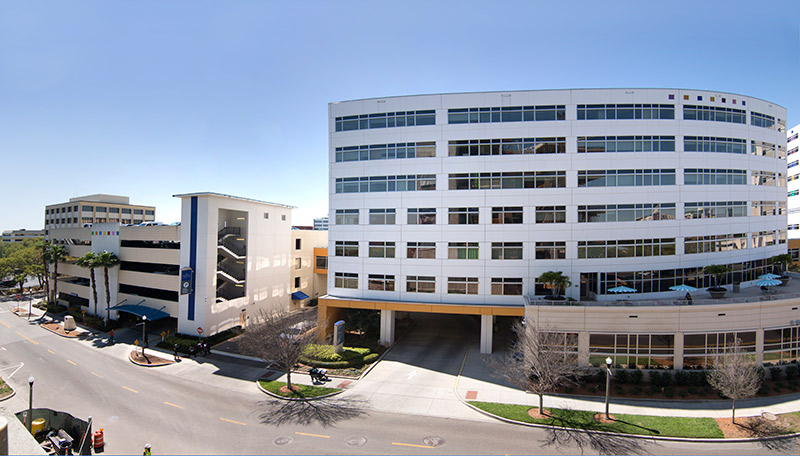
Outpatient Care Center, Tampa
12220 Bruce B Downs Blvd.
Tampa, FL 33612
Clinic: First and third Monday of each month
Infusion Center Hours: Monday, Tuesday, Wednesday, Friday, 8 a.m.-4p.m.
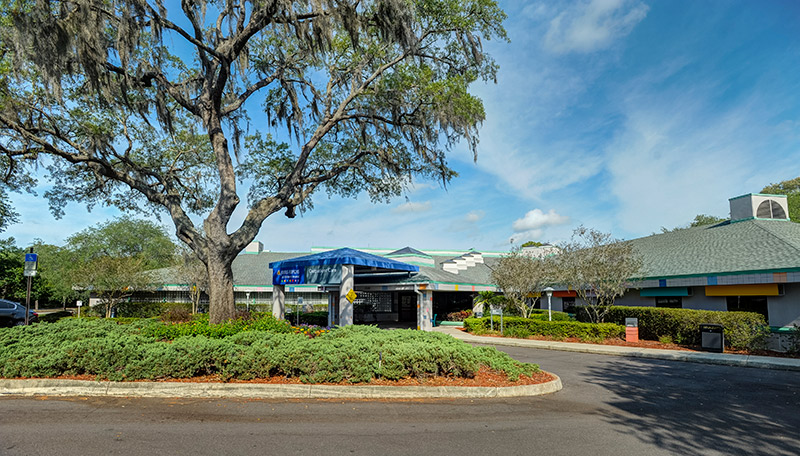
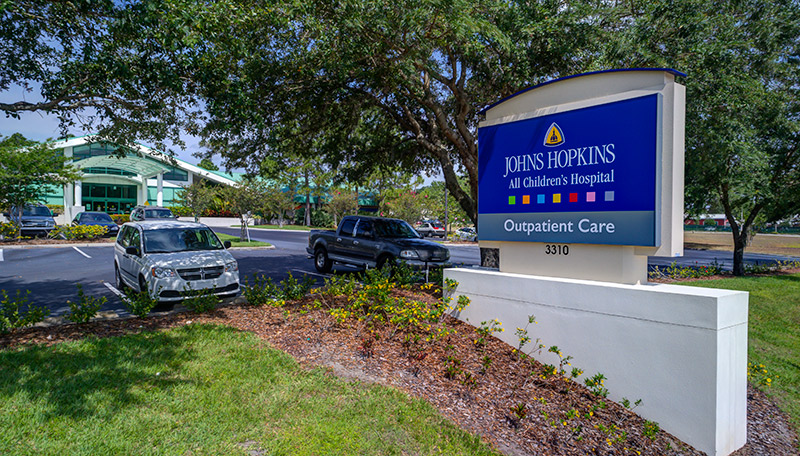
Outpatient Care Center, Lakeland
3310 Lakeland Hills Blvd.
Lakeland, FL 33805
Clinic: Call for availability
All other services are available by appointment Monday-Friday, 8 a.m.-4 p.m.
Read inspiring stories about our patients:
Sickle Cell Disease: Aliyah’s Story

How Amoura’s Sickle Cell Disease Inspires Her Mother

Sickle Cell Disease: Za’Riah’s Story

Sickle Cell Disease and Pain Management: Abihannah's Story

From Patient to Parent: A Sickle Cell Survivor Shares His Greatest Joy
After growing up with sickle cell disease, John Stephens III returns to Johns Hopkins All Children's Hospital to introduce his healthy twin daughters to the care team that helped him thrive and inspires others with his message of hope.
