Solid Tumor Program
The team in the Solid Tumor Program in the Johns Hopkins All Children's Cancer & Blood Disorders Institute in St. Petersburg, Florida, provides comprehensive treatment for solid tumors in children and young adults up to 21 years of age.
We understand the toll a solid tumor diagnosis and treatment can take on children and their families. Our compassionate team is here to provide the support your child and family need while navigating treatment.
Why Choose Johns Hopkins All Children’s
Our patients and families receive care from a devoted team that provides individualized attention, treatment and emotional support. Your child’s care team will be with you and your family throughout the process, helping every step of the way, and we work closely with specialists throughout the hospital to provide your child with expert care that meets their unique needs. It is our goal for your child to be cancer-free and to live an active and healthy life.
When your child comes to us for solid tumor treatment, you can expect:
- Experience and expertise: We are among the largest programs in Florida for childhood solid tumors, seeing about 150 patients per year. Our team treats about 30 to 50 new cases per year and receives additional referrals from throughout the region. That high volume leads to better outcomes for all our patients.
- Advanced treatments: We offer patients advanced chemotherapy, immunotherapy and lifesaving bone marrow transplants.
- Expanded safety measures: Our oncology ward is specially designed to help reduce infection transmission. We know that solid tumor treatment can leave children at higher risk for infectious diseases, and we take every precaution to prevent that.
- Cancer screening program: If one child in your family has an inherited gene mutation (cancer predisposition gene) associated with cancer, we can screen siblings, carefully monitoring them for the earliest signs of cancer, as part of our Cancer Predisposition Program.
- Access to clinical trials: Johns Hopkins All Children’s Hospital is a member of the Children’s Oncology Group (COG) and the only Florida-based site in the Pediatric Early Phase Clinical Trials Network (PEP-CTN). As such, Johns Hopkins All Children’s serves as a critical access point for early-phase, precision-guided clinical trials for patients across Florida and beyond. Johns Hopkins All Children’s is also a member of the Sunshine Project Consortium and the Beat Childhood Cancer Consortium (BCC) and serves as a site for both investigator-initiated and industry-sponsored clinical trials. Additionally, we partner with Moffitt Cancer Center on early phase clinical trials for tumor infiltrating lymphocyte therapy to treat pediatric solid tumors. Learn more about the clinical trials open to patients at Johns Hopkins All Children’s.
- Compassionate care: Our multidisciplinary team is committed to supporting you and your child through every step of the process.
Neuroblastoma: Ethan’s Story
Ethan came to Johns Hopkins All Children’s at just 4 years old with severe leg pain that made it hard for him to walk. He was diagnosed with high-risk neuroblastoma, and received comprehensive, expert treatment here. Now 6 years old, Ethan is in remission and loves to play golf.

Conditions We Treat in the Solid Tumor Program
The Solid Tumor team treats all solid tumors outside of the brain and spinal cord. Some solid tumors our team treats include:
- Ewing Sarcoma. Ewing Sarcoma is a tumor that can develop in any bone in the body, but usually happens in the bones of the arms, legs, ribs, spine and pelvis.
- Kidney Tumors. Kidney tumors are usually in one kidney but can be in both. Wilms tumor is the most common kidney tumor in children. If a child has a kidney tumor, he or she might have pain, swelling or a lump in the abdomen or blood in the urine.
- Liver Tumors. If a child has a liver tumor, he or she might have bulging in the abdomen that makes the belly look big and may also experience weight loss or loss of appetite.
- Neuroblastoma. Neuroblastoma tumors develop from the tissues that form the sympathetic nervous system and are often in the abdomen in the adrenal gland tissues.
- Osteosarcoma. Osteosarcoma usually develops from cells that make growing bones. In most cases, osteosarcomas develop from an unpredictable error in the DNA of growing bone cells.
- Rhabdomyosarcoma. Rhabdomyosarcoma is a tumor that occurs in muscle. These can occur in almost any location in the body.
- Germ Cell Tumors. Germ cell tumors arise from abnormal cells in various parts of the body, including the ovaries, testes, chest and brain.
- Rare Tumors: These are tumors that occur only a few times in children each year and do not belong to the categories above.
Solid Tumor Treatment and Care
-
Our team usually diagnoses solid tumors with a biopsy or removal of the tumor. A pathologist reviews the tumor under a microscope and uses other specialized testing to determine the diagnosis.
If the tumor is cancerous, your child’s care team will determine if the cancer has spread to other areas in the body. This determination process is called staging and helps doctors determine the best treatment strategy for each patient. Depending on the tumor type, staging might involve scans such as CT, MRI or PET scans.
Based on tumor type and staging results, your child’s treatment will be planned with a multidisciplinary team that includes every specialist involved in your child’s care. Your child’s team will design a treatment approach that is aggressive, yet as safe as possible.
Patients often need a combination of treatments. Our treatment options include:
- Surgery to remove some or all of the tumor: Our surgeons are highly skilled and experienced in removing various types of tumors, including those that are hard to treat.
- Chemotherapy (IV medications): Chemotherapy uses medicines to kill cancer cells. Since the medications travel through the bloodstream, chemotherapy can kill tumor cells as well as cells that break away and travel through the bloodstream.
- Radiation therapy: With radiation treatment, a machine is used to direct high-energy radiation at the tumor to destroy tumor cells.
-
Our multidisciplinary care team includes experts from the following specialties:
- Pediatric Oncology: Our pediatric hematologist-oncologists lead the medical management of your child’s cancer care. They coordinate the overall treatment plan and work closely with the other specialists to adjust therapy as needed. They also manage treatment-related side effects, guide follow-up care, and serve as the primary point of contact for your family throughout your child’s treatment.
- Pediatric Surgery: Our Pediatric Surgery team performs biopsies, removes tumors and places special IVs for patients receiving chemotherapy.
- Interventional Radiology: Our Interventional Radiology team performs biopsies when surgery is not needed and performs tumor-directed interventional therapies.
- Pathology: Our Pathology team processes tissue specimens and makes solid tumor diagnoses using the latest pathology and molecular genetic techniques.
- Palliative Care: Our Palliative Care team works to improve quality of life for our patients and families receiving cancer treatment.
- Oncology clinical pharmacists: Every patient is followed by an oncology clinical pharmacist who monitors the child’s specific medical needs.
- Social workers: Our social workers offer patients and families various types of support and can arrange services after discharge.
- Chaplains: Our chaplains offer emotional and spiritual support to patients and their families while honoring all religious beliefs and worldviews.
- Child Life: Our Child Life specialists use developmental, educational and therapeutic interventions and play to help patients and their families cope with illness, treatment and hospitalization.
- Case management: Your case manager will ensure your child has the best care plan and services when he or she is discharged and will also work with patients and families to make sure they are aware of options available within their benefits.
The following practices are committed to the Johns Hopkins All Children’s Solid Tumor Program:
- Orthopaedic Oncology: Specialists at Moffitt Cancer Center perform biopsies and remove tumors in patients who have solid tumors in the arms and legs. They also work to restore normal function to the arms and legs after tumor surgery.
- Radiation Oncology:We partner with both proton and photon radiation centers throughout Florida to provide the best therapy for each individual patient.
Cancer treatment can also affect the ability to have children later in life. Our team counsels patients and families about potential fertility problems. We make sure patients and families understand the options for preserving fertility before starting cancer treatment. We partner with Fertility Preservation Programs in the area to provide the care that is needed.
-
At your child’s first pediatric oncology visit, you will meet the care team, review medical history and any prior test results, and discuss the diagnosis or next steps in evaluation. We will explain the recommended treatment plan, possible side effects, and what the timeline may look like. Our team will also review supportive resources and ensure you leave with a clear plan and contact information for questions or urgent concerns.
At follow-up visits, we will check in on how your child is feeling, review lab results, and monitor for side effects or response to treatment. If your child is receiving chemotherapy or other medications by infusion, visits may last several hours, along with time for medications and supportive care. We will review symptoms to watch for at home and ensure you know how to reach our team between visits for any concerns.
Learn More About Solid Tumors
What are solid tumors?
Tumors are abnormal cells that cluster together. They may be cancerous (malignant) or noncancerous (benign). When a child has a solid tumor, it means the tumor doesn’t contain any liquid. Solid tumors can occur in different parts of the body, such as bones, muscles or organs.
For most patients, the cause of a solid tumor is unknown. Sometimes, a doctor may suspect the patient has an abnormal gene that causes cancer. If this is the case, the doctor will refer the patient for genetic testing within our hospital.
What are some early symptoms of solid tumors?
The symptoms of a solid tumor can vary widely based on the type of tumor. Some patients may have no symptoms, while others may become very ill before they are diagnosed. If a child has symptoms, they might include:
- A painless lump in the body
- Pain in a specific body part
- Swelling of the abdomen
- Exhaustion
- Unexpected weight loss
Locations
-
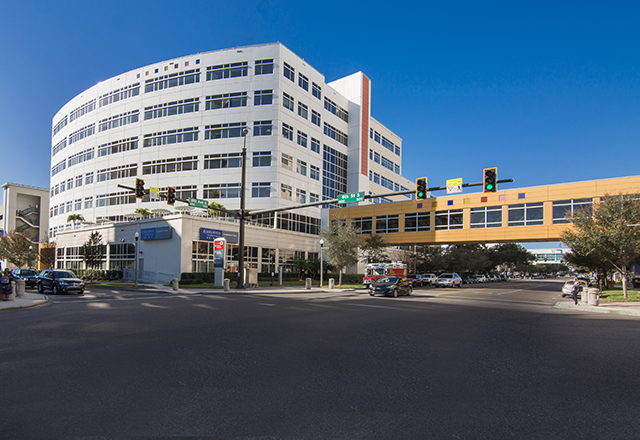
Outpatient Care Center
Johns Hopkins All Children's Hospital 601 5th Street South
St. Petersburg, FL 33701
-