
PGY2 Pain Management and Palliative Care Residency Program
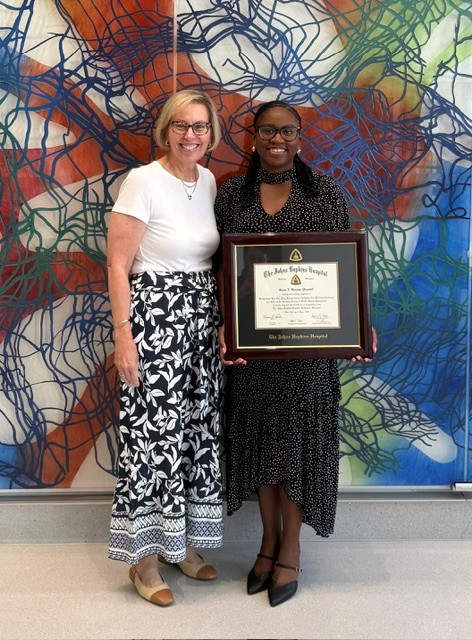
Program Name: Pain Management and Palliative Care Pharmacy Practice
Program Type: ASHP Accredited PGY2 Program
ASHP Match Number: 600473
Purpose
PGY2 pharmacy residency programs build on Doctor of Pharmacy (Pharm.D.) education and PGY1 pharmacy residency programs to contribute to the development of clinical pharmacists in specialized areas of practice. PGY2 residencies provide residents with opportunities to function independently as practitioners by conceptualizing and integrating accumulated experience and knowledge and incorporating both into the provision of patient care or other advanced practice settings. Residents who successfully complete an accredited PGY2 pharmacy residency are prepared for advanced patient care, academic, or other specialized positions, along with board certification, if available.
Program Overview and Objective
The PGY2 Residency in Pain Management and Palliative Care is a 12-month program. The program is designed to provide advanced training in clinical pharmacy practice focusing on patient care, clinical research and education in pain management, palliative care, and addiction medicine. A multidisciplinary approach to inpatient and outpatient pain management and palliative care is utilized. Patient care experiences are provided in palliative medicine, acute and chronic pain services, addiction medicine, psychiatric pain service and hospice. Longitudinal clinic is completed in the Palliative Medicine Clinics. Other experiences may include pediatric pain service, medication safety, and teaching opportunities at the Colleges of Pharmacy in the Baltimore area. Elective rotations allow the resident to explore and expand their experiences in specific areas of interest. Residents will have approximately 8-12 weeks available for elective rotations depending on individual competencies and knowledge base.
Core Required Rotations: (typically 1 month duration unless noted)
- Orientation
- Pain and Palliative Medicine
- Palliative Medicine Ambulatory Clinic
- BMC Pain and Palliative Medicine
- Hospice (2 -3 weeks)
- Chronic/Interventional Pain Service
- Acute Pain Service
- Addiction Medicine
- Psychiatric Pain Service
- Projects (December)
- Repeat 1 core rotation (pain, palliative medicine, or addiction medicine)
Elective Rotations: (typically 1 month duration)
- Medication Safety in Adult Medicine
- Medication Safety and Outcomes
- Other elective learning experiences may be developed based on resident interest and preceptor availability
Longitudinal Learning Experiences: (3-12 months)
- Opioid Stewardship: 5 hours per month for 11 months
- Pain and Palliative Medicine Clinic: typically, 4 hours every other week for 6 months
- Major Project: 12 months
- Formulary Management: 6 months
Pharmacotherapy/CE Activities: 2 months
- Pain Management & Palliative Care Professional Practice: 12 months
- Staffing: every 3rd weekend for 12 months
- On Call Program: 12 months
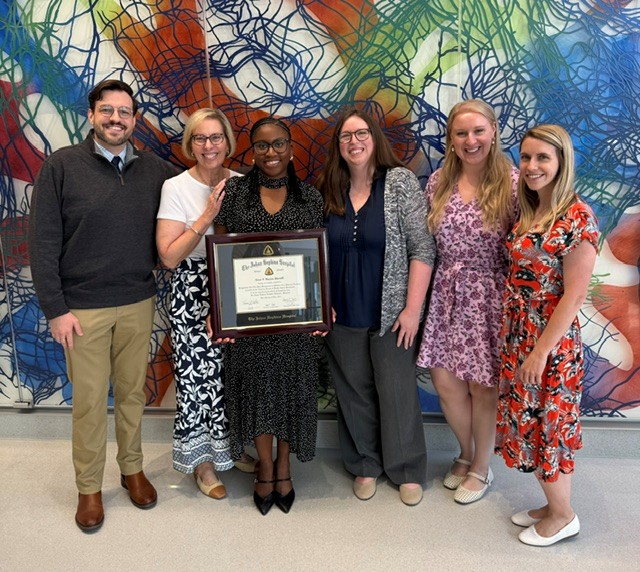
Staffing
Staffing commitment is typically 8 hour shifts every 3rd weekend once the resident’s practice performance is assessed as proficient.
https://www.hopkinsmedicine.org/pharmacy/residents/about/staffing.html
On Call Program
Residents will participate in the in-house on call program. The program operates from 4-10p on weekdays and 7a-7p on weekends/holidays. Coverage duties are rotated between all residents. On-call coverage may include but is not limited to: code response coverage, drug information inquiries, administrative issues, medication history review and other needs as deemed necessary by pharmacy staff. At the end of each shift the resident shall prepare a sign-out which will be disseminated to pharmacy personnel. The frequency of on-call coverage depends upon the number of residents in the entire program and averages about 15 shifts per year. See the “On Call” section of the Residency Manual for additional information.
https://www.hopkinsmedicine.org/pharmacy/residents/about/on-call.html
Projects
During the residency year, a self-directed research or project must be completed. The scope and type of project will vary according to individual interest. The project must be completed in a manner suitable for presentation and publication.
Committees
The resident will be appointed to approximately 4 committees over the course of the year. The committees will address pain and palliative care pharmacy issues and opioid stewardship. This will provide an opportunity to impact drug policy and the medication use process in a longitudinal learning experience.
Education Component
The resident is expected to participate in the instruction of pharmacy staff, fellow residents, pharmacy students, medical staff, and nursing. This will occur both on a formal and informal basis. Residents are required to give an ACPE-accredited Pharmacotherapy Rounds presentation. The resident will be expected to participate regularly in weekly pain management or palliative care rounds and topic discussions.
Pain and Palliative Care Topic Discussion
The resident will participate in a pharmacy-based pain and palliative care topic discussion 1-2 times per month. Residents and preceptors will lead the discussion. Additional topic discussions will occur informally throughout the residency year with the goal of satisfying all content areas within the ASHP PGY2 Competency Areas, Goals and Objectives for PGY2 Pain Management and Palliative Care Pharmacy Residencies Appendix.
Pharmacotherapy Rounds
The resident will provide at least 1 major ACPE accredited presentations. This will include the required Pharmacotherapy Rounds and optional Department of Pharmacy Continuing Education.
Requirements for Successful Completion of the Johns Hopkins Hospital PGY2 Pain Management & Palliative Care Pharmacy Residency Program
- Residents shall be licensed as a pharmacist in the state of Maryland as described in the JHH Pharmacy Residency Manual.
- Residents must have completed a PGY1 accredited residency and have provided evidence of completion no later than 30 days after the PGY2 start date.
- Residents shall provide one ACPE-accredited Pharmacotherapy Rounds activity and assess evaluations submitted. (R4.1.2, R4.1.4)
- Residents must successfully complete a residency project (R2.2). Successful completion will be defined by:
- a formal oral presentation at a local, regional, or national conference
- a final evaluation by the residency project advisor
- a written manuscript that meets guidelines for submission to a journal completed by June 15th
- Residents must obtain ‘achieved for residency’ for at least 80% of all program objectives. In addition, residents must obtain ‘achieved for residency’ for all required objectives in R 1.
- Residents must complete the following deliverables required by the program’s Competency Areas, Goals and Objectives (CAGOs):
- Write 10 Pain and/or Palliative Medicine consult notes in the electronic medical record documenting direct patient care activities (R1.1.5, R1.1.7)
- Prepare or revise one drug class review, monograph, treatment guideline, or protocol (R2.1.1)
- Write one local, regional, or national communication related to pain management and palliative care (i.e., article, clinical pearl, etc.) (R4.1.3)
- Residents must complete 100% of the Appendix
All program requirements must be completed by 5 PM EST on the last day of the residency year. In the event the resident does not complete all requirements by this deadline, the resident will not have successfully completed the residency program and will not be awarded a certificate. There is no option to fulfill residency requirements beyond this deadline, unless the resident has taken an approved leave of absence, has a written plan, approved by the Chief Pharmacy Officer, RPD and resident, including the planned date of return to residency and due dates for submission of outstanding residency requirements.
Confirmation of the successful completion of the program requirements is with the responsibility of the Residency Program Director. The Residency Program Director may require confirmation and/or approval from the assigned Facilitator and/or Residency Project Advisor to confirm successful completion of the residency program requirements. Residents who have not successfully completed all of the requirements are not eligible to receive a certificate of completion or attend the end-of-year function when Certificates of Residency Training are awarded. A Certificate of Residency Training can be awarded when all the requirements have been completed.
Requirements for Acceptance to the Program
A candidate for the PGY2 Pain and Palliative Care Residency at The Johns Hopkins Hospital must have completed a PGY1 Pharmacy Practice Residency or have equivalent experience. He/she needs to be a licensed pharmacist and eligible for licensure in the state of Maryland.
Website: http://www.hopkinsmedicine.org/pharmacy/residents/
Program Director: Suzanne Amato Nesbit, PharmD, BCPMP, FCCP, FASHP
Titles: Clinical Pharmacy Specialist, Pain Management & Opioid Stewardship
Interim Director, Graduate Clinical Education, JHU School of Medicine
Research Associate, Department of Oncology
Education: B. S. Pharmacy, Ohio Northern University; Doctor of Pharmacy, The Ohio State University
Practice Areas: Acute Pain Management, Opioid Stewardship, Palliative Care, Addiction Medicine
Research Interest: Opioid stewardship initiatives, opioid availability internationally, pain education
Dr. Nesbit is a Clinical Specialist in Pain Management, Palliative Care and Opioid Stewardship with the Department of Pharmacy at The Johns Hopkins Hospital and serves as the Residency Program Director of the PGY2 Pain Management and Palliative Care Residency. In 2018, she was named Co-Chair of The Johns Hopkins Health System Opioid Stewardship Committee and Co-Chairs the hospital’s Pain Management Committee. In 2023, Dr. Nesbit became the Assistant Director for Graduate Clinical Education in the Johns Hopkins University School of Medicine. Currently, she has served as the Interim Director since 2025. She has a faculty appointment in the Department of Oncology, as well as the Schools of Pharmacy at University of Maryland and Notre Dame University of Maryland. She has extensive experience in pain management and has served as Chair of the Pain Management Subcommittee of the Maryland Cancer Plan, Chair of the Pain & Palliative Care PRN of ACCP (American College of Clinical Pharmacy) and Chair of the ASHP (American Society of Health-System Pharmacists) Pain and Palliative Care Section Advisory Group. Dr Nesbit served on the Board of Regents for the ACCP from 2012-2015 and was elected a Fellow in 2016. Dr Nesbit also served as an ACCP Presidential officer (2017-2020). She completed a 3-year term on ASHP’s Commission on Credentialing 2025 and became a Fellow of ASHP in 2022. In 2025, Dr Nesbit became a board certified pain management pharmacist (BCPMP).
Contact Information:
Suzanne Amato Nesbit, Pharm.D, BCPMP, FCCP, FASHP
Clinical Pharmacy Specialist, Pain Management and Opioid Stewardship
The Johns Hopkins Hospital/Department of Pharmacy
Interim Director, Graduate Clinical Education
JHU School of Medicine
600 N. Wolfe Street / Carnegie 180
Baltimore, MD 21287-6180
Phone 410-502-3578
Email: [email protected]
Residency Program Coordinator: Lindsay Bowman, PharmD, BCPS
Title: Clinical Pharmacy Specialist, Addiction Medicine
Education: University of Pittsburgh
Training: PGY1 Residency The Johns Hopkins Hospital; PGY2 Pain Management & Palliative Care The Johns Hopkins Hospital