
Hosted by the Johns Hopkins Armstrong Institute for Patient Safety and Quality

In partnership with Patients for Patient Safety US

Funded by the Doris Duke Foundation through the Collective to Strengthen Pathways for Health Research

May 16, 2025
The Johns Hopkins Bloomberg Center
555 Pennsylvania Ave NW
Washington, D.C.
Summary
The Johns Hopkins Armstrong Institute for Patient Safety and Quality, in partnership with Patients for Patient Safety US (PFPS US), was pleased to host a symposium entitled Advancing Patient Safety and Healthcare Quality: Bridging Research, Policy, and Implementation at The Johns Hopkins Bloomberg Center in Washington, D.C., on May 16, 2025.
The solutions-driven event convened experts from Johns Hopkins Medicine and PFPS US with key representatives of health systems, government, industry and policy and patient groups to spark initiatives to reduce preventable harm and improve health outcomes.
Workgroup Session Facilitators
-

Allison Perry is an accomplished leader in patient safety and healthcare innovation. She brings both a background in cultural anthropology and formal training in patient safety through the AHA-NPSF Patient Safety Leadership Fellowship. Her career spans the creation and oversight of national publications, learning collaboratives and educational programs through the National Patient Safety Foundation, the Institute for Healthcare Improvement and her current consulting practice, The Papilio Network.
Ms. Perry is a seasoned speaker and facilitator who has designed and led workshops, programs and strategic convenings across the U.S. and internationally. She is particularly passionate about creating meaningful, experience-based learning environments that apply safety and quality improvement tools in real-world settings. Known for her ability to translate vision into strategy and to guide high-impact implementation, she brings deep expertise in leading initiatives that improve patient safety and quality across the healthcare continuum.
-
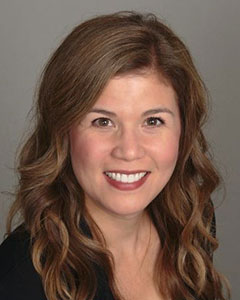
Karen Baldoza is a quality improvement advisor and independent consultant with extensive experience applying the art and science of improvement to build improvement capability and achieve strategic health and healthcare outcomes both in the United States and globally. As a results- and people-driven leader, she integrates practical innovation and improvement concepts, methods and tools with a deep respect for people, processes and subject matter to deliver meaningful results and lasting impact. Before her current role, Karen served as the Vice President of Innovation, Design and Learning at the Institute for Healthcare Improvement.
-
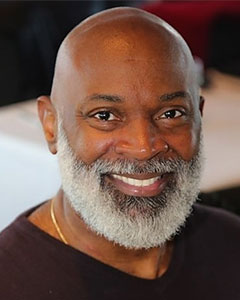
Lorenzo Nicholson joined Johns Hopkins University in December 2023, bringing a wealth of experience in organizational development and learning. From 2021 to 2023, he served as Program Manager within the Johns Hopkins Health System, where he led the Organization Development Learning and Effectiveness team and the training team. In this role, he focused on leadership development, professional development for union staff and leaders and course development for the MyLearning platform.
Lorenzo is a certified facilitator with MindGym, Inc.©, and has over 13 years of experience teaching in the University of Maryland College System. He holds a Bachelor of Arts in Business Management from Johnson C. Smith University in Charlotte, NC, and a Master of Business Administration in Health Services Administration from Strayer University in Washington, DC.
Scene Setters
-

Systems Design
Dr. Gurses is an internationally recognized leader in human factors and systems engineering applied to healthcare. She is the founding director of the Center for Health Care Human Factors at the Johns Hopkins Armstrong Institute and a professor in the Schools of Medicine, Public Health and Engineering. Her research focuses on improving healthcare quality, safety and value through human-centered, IT-enabled work system design. She has authored over 130 peer-reviewed publications and secured more than $20 million in research funding from AHRQ, NIH, CDC, NSF and private partners. Her projects address diagnostic safety in emergency care, safety of transitions and handoffs, prevention of healthcare-associated infections and improved patient-care professional partnerships. Dr. Gurses applies cognitive and team-based modeling across prehospital, inpatient, outpatient and home care settings to engineer practical solutions that strengthen health systems and outcomes across the continuum of care.
“Patients and healthcare professionals do their best amid competing demands. By applying the science and methods of human factors and systems engineering to work system design, we can better support their critical tasks—enhancing safety, resilience, and well-being for both patients and care teams.”
-
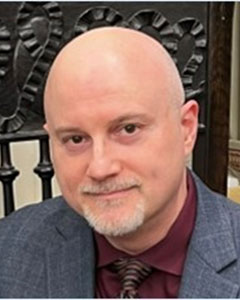
Diagnostic Excellence
Dr. David E. Newman-Toker is a professor of neurology and founding director of the Armstrong Institute Center for Diagnostic Excellence at the Johns Hopkins University School of Medicine. He is an internationally recognized clinical and research leader focused on eliminating harms from diagnostic errors, particularly for patients with dangerous acute diseases such as stroke. His work combines clinical insights with systems-level thinking to promote safer, more accurate diagnosis through research, policy and technology innovation. He has authored 170 peer-reviewed publications, given more than 300 invited lectures, and has served as the principal investigator for 20 federal and foundation grants.
“The National Academy of Medicine has defined improving diagnosis as a moral, professional, and public health imperative. No matter our role in healthcare, we must each embrace the shared responsibility for achieving diagnostic excellence in our daily work—our patients deserve nothing less.”
-
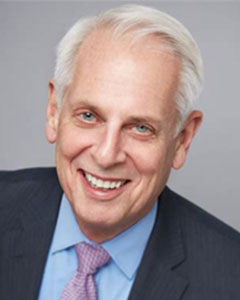
Patient Experience
Martin Hatlie is a long-time advocate for patient safety, who currently serves as Director for Advocacy & Policy at Patients for Patient Safety US. His career bridges medical liability litigation defense, government affairs, health policy and grassroots engagement, nationally and internationally. He is passionate about understanding the roles patients and family caregivers play as co-creators of solutions and advocates for change. Hatlie has been active for over 25 years in health system transformation work on research projects, learning collaboratives and improvement campaigns supported by the Centers for Medicare and Medicaid Services, the Agency for Healthcare Policy and Research, and the Patient-Centered Outcomes Improvement Institute, among others.
Mr. Hatlie has co-authored more than 40 articles on patient safety, the power of transparency and the impact of patient and family engagement on health outcomes.
“Patients and families are an under-used improvement engine in the patient safety field. We see things our provider partners do not. We speak up when they feel they cannot. We advocate for innovation and improvement when they will not. ”
Panelists
-
Dr. David E. Newman-Toker is an internationally recognized leader in neuro-otology, acute stroke diagnosis and the study of diagnostic errors. He is the David Robinson professor of vestibular neurology and also holds appointments in otolaryngology, ophthalmology and emergency medicine at the Johns Hopkins University School of Medicine. He leads the Armstrong Institute Center for Diagnostic Excellence, whose mission is to catalyze efforts to improve diagnostic performance, develop the science of diagnostic safety and enhance diagnostic research.
Dr. Newman-Toker is a bedside-to-populations translational researcher and has held multiple NIH, AHRQ and foundation grants. He has published over 150 journal articles and given more than 300 invited lectures. He has served as an expert consultant on diagnostic safety and quality to AHRQ, the National Quality Forum and the National Academy of Medicine. He has testified before Congress on the use of artificial intelligence for diagnosis. He served as President of the Society to Improve Diagnosis in Medicine (SIDM) from 2018-2020.
-
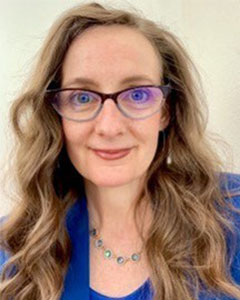
Vonda Vaden Bates is an alliance builder and leadership coach. For over 30 years, Vonda has guided professionals to succeed on behalf of their organizations and careers. She helps people move from potential to action, set and reach goals, manage engaged teams and communicate with influence. Her creative approach has influenced major market shifts in television, retail, banking, technology, education, and healthcare.
In 2013, Vonda decided to contribute her skills on behalf of safety in health care after researching how her husband, Yogiraj Charles Bates, died from one of the most common preventable medical causes of death, hospital-associated venous thromboembolism. Advocating for every person in the care system, Vonda brings a compassionate voice, strategic skills, and collaboration expertise to improve communication and safety in health care.
She is the CEO of 10th Dot®, a company founded by her late husband, which consults, coaches, and trains individuals, teams and organizations to identify hidden potential, tap the benefits of differentiation, and bring ideas to life.
-
Dr. Ayse P. Gurses is a professor of anesthesiology and critical care medicine at the Johns Hopkins University School of Medicine. She holds a joint appointment in Johns Hopkins’ Bloomberg School of Public Health’s department of health policy and management. Her areas of expertise include human factors engineering, patient safety, healthcare technology design, and implementation and usability evaluation.
Her current research focuses on improving patient safety in the cardiac operating room, transitions of care/handoffs, care coordination, compliance of providers with evidence-based guidelines and nursing working conditions.
Dr. Gurses earned her Ph.D. in industrial engineering from the University of Wisconsin-Madison and completed her postdoctoral training at the University of Maryland-Baltimore. Before joining the Johns Hopkins University, she served as a faculty member at the University of Maryland-Baltimore and the University of Minnesota.
She is a member of the Human Factors and Ergonomics Society, where she is the chair of the Health Care Technical Group. She also serves as the associate editor of IIE Transactions on Healthcare Systems Engineering. Her work has been recognized with numerous awards. Most recently, she was awarded a Best Paper Award from the Liberty Mutual Award for research examining patient safety in the cardiovascular operating room and an Early Career Investigator Award from the Federation of Associations in Behavioral and Brain Sciences (FABBS) Foundation.
-

Colonel Steven L. Coffee assists the deputy assistant secretary in providing guidance and oversight in the formulation of strategic plans and policies for 700,000 Air and Space Force military and civilian personnel and their dependents in the human resources arena, to include: compensation and entitlements, education and training, total force military personnel policy, civilian personal policy, manpower and organization and officer and enlisted accession programs.
Colonel Coffee has a Bachelor of Arts in political science from Morehouse College in Atlanta, GA, a Master's in legislative affairs from George Washington University and a Master's in clinical, quality, safety, and leadership from Georgetown University, and a certificate in diversity and inclusion from Cornell University. He has completed Joint and Combined Warfighting School through the National Defense University, Air Command and Staff College as well as Air War College through the Air Force, Air University.
He entered the Air Force in 2001 through the Tennessee State University Reserve Officer Training Corps. He was previously stationed at U.S. Central Command, the National Security Agency/Central Security Service, U.S. Special Operations Command, Joint Base Langley-Eustis, Headquarters U.S. Air Force, commanded the Force Support Squadron Commander, National Reconnaissance Office and the Joint Staff.
Colonel Coffee deployed in support of OPERATION ENDURING FREEDOM, SENTINEL SENTRY, and SPARTAN SHIELD and served as a military aide to Presidents George W. Bush and Barack H. Obama on the social staff. As a White House Military Social Aide, Colonel Coffee facilitated the planning and execution of all social events and official functions on behalf of the President and First Lady of the United States of America.
-
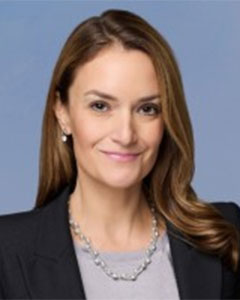
Leslie Jurecko serves as senior vice president of patient safety and loss prevention and chief medical officer at MCIC. MCIC, a Reciprocal Risk Retention Group, is a specialty insurance company that provides medical professional liability insurance coverage, along with risk management services, to its Academic Medical Center partners. These organizations include Columbia University College of Physicians & Surgeons, The Johns Hopkins Hospital, The Johns Hopkins University, New York Presbyterian Hospital, University of Rochester Medical Center, Weill Cornell Medical College, Yale New Haven Health and Yale University School of Medicine. She collaborates with key leadership at these organizations to understand risks and develop critical Patient Safety strategies for implementation across their healthcare systems. Dr. Jurecko previously served as chief quality, safety, experience officer for the Cleveland Clinic.
-

Craig Umscheid is a general internist and clinical epidemiologist who serves as the director of the Center for Quality Improvement and Patient Safety (CQuIPS) at the Agency for Healthcare Research and Quality (AHRQ) in the U.S. Department of Health and Human Services. CQuIPS is one of three centers at AHRQ, which includes five divisions that support the safety, quality and value of healthcare through research, practice improvement and data analysis and measurement.
Before AHRQ, Dr. Umscheid was chief quality and innovation officer at the University of Chicago. He began his career at the University of Pennsylvania, where he became vice chair of quality and safety for the Department of Medicine, and co-founder and director of Penn’s Center for Evidence-based Practice. His career has been dedicated to disseminating and implementing research evidence into clinical practice to support patient care quality and safety. His work has been supported by AHRQ, PCORI, CDC and NIH, and described in over 125 peer-reviewed publications. Dr. Umscheid volunteers as a hospitalist at Georgetown, where he is an adjunct professor.
The symposium is funded by the Doris Duke Foundation through the Collective to Strengthen Pathways for Health Research. The Collective seeks to inform a blueprint for action to produce transformative gains in health outcomes through a series of 18 nationwide conversations in 2025.
