
The United States health care system is slowly transforming from a volume-based to value-based reimbursement model. Quality metrics, often determined by regulations, accreditation agencies and health plans, are essential drivers of higher value care; however, many implemented metrics have not resulted in improvements in quality and value or sustainable reductions in harm. Fragmentation of the US health care system has contributed to measurements that are not aligned with ideal practice and a disconnect between financial incentives and quality of care.
The collaborative, delivered in partnership by the Armstrong Institute for Patient Safety and Quality and the High Value Practice Alliance, was initiated with an in-person kick-off event in Washington, D.C. in November 2025. From December 2025 to April 2026, the group has been conducting monthly virtual work group sessions to continue their work.
Event Details

On May 15, 2026, our collaborative will be hosting an in-person conference in Washington, D.C. This conference will consist of workgroups pitching proposals to a panel of national healthcare regulatory leaders — followed by an interactive discussion with the audience.
View event slideshow video | View travel information (.pdf)
Registration is complimentary.
Please email [email protected] to be registered.
May 15 PACT Summit Agenda
To view the summit agenda, please scan the QR code below or click on this link.

Summit Co-Chairs
-

Former Vice President of Care Transformation for the Johns Hopkins Health System
Dr. Pamela Johnson is the former vice president of care transformation for the Johns Hopkins Health System. From 2020 through 2025, she directed systemwide efforts to improve the effectiveness, efficiency, and affordability of care across a multihospital health system and large ambulatory practice. Dr. Johnson currently serves as a consultant for the Office of Care Transformation.
In 2017, Dr. Johnson co-founded the High Value Practice Alliance, a national consortium of medical centers collaborating on value-based quality improvement and education. The organization’s annual conference, supported by two consecutive AHRQ grants, facilitated dissemination of more than 1,000 initiatives to improve health care quality and affordability from 2017 to 2024.
A former Professor of Radiology and Radiological Science at the Johns Hopkins University School of Medicine and holder of the Sheldon B. Bearman, M.D. Endowed Professorship, Dr. Johnson previously served as Vice Chair of Quality and Safety in Radiology and Director of the Diagnostic Radiology Residency Program. Her clinical expertise in Body CT and her commitment to patient-centered care earned her the 2024 Best Consulting Physician Award from The Johns Hopkins Hospital.
-

Exec. Director for Strategic Solutions, Armstrong Institute for Patient Safety
Dr. Laura Sigman is an assistant professor of pediatrics with the Pediatric Emergency Department at Johns Hopkins Children’s Center in Baltimore, Maryland. She is also the assistant chief of the Eudowood Division of Pediatric Quality and Safety within the Department of Pediatrics and the executive director for strategic solutions with the Armstrong Institute for Patient Safety and Quality.
Dr. Sigman completed her residency in pediatrics at Johns Hopkins, medical school at the University of Chicago and law school at Harvard. Early in her career, she worked for the Department of Justice as an honors program attorney on cases involving Medicare, Medicaid and FDA law, and at the National Research Council of the National Academies. She currently leads educational and external partnership teams at the Armstrong Institute to integrate and develop initiatives that drive quality, safety and service within Johns Hopkins Medicine and through external partnerships.
Summit Presenters
-

Assistant Professor of Medicine and Pediatrics, Director of Quality and Safety, Division of Hospital Medicine, Department of Medicine
Dr. Benjamin Bodnar is an assistant professor of Medicine and Pediatrics at the Johns Hopkins School of Medicine. He holds appointments as the director of quality and safety for the Division of Hospital Medicine, Department of Medicine, as a Eudowood Scholar of Quality and Safety in the Division of Quality and Safety, Department of Pediatrics, and is affiliate faculty with the Armstrong Institute for Patient Safety and Quality at Johns Hopkins.
He was born and raised in Baltimore and after training in institutions across the country, and working at sites around the world, he has settled back in his hometown. He received his undergraduate degree from Stanford University, his medical degree from Columbia University, and completed his specialty training at Yale New Haven Hospital. He also worked at Brigham and Women’s Hospital in Boston, MA, and held the appointment of an Instructor in Medicine at Harvard Medical School prior to joining Johns Hopkins in 2016.
His focus on providing world-class clinical care to his patients at Johns Hopkins Hospital, he has a special interest in global health and the application of Quality Improvement techniques to the often poorly functional systems at work in resource-limited and developing health care environments. He has worked internationally at sites including Nepal, Mongolia, Ghana, Tanzania, Uganda, and Rwanda, and has worked with development groups including Partners in Health and The Millennium Villages Project. He is a faculty member of the Johns Hopkins Center for Global NCD Research and Training.
As part of the Johns Hopkins Medicine COVID-19 response, he led the creation of standardized patient care guidelines for non-ICU COVID-19 patients across the health system. He also played a key role in the implementation of these guidelines via an Electronic Medical Record-integrated Clinical Decision Support platform, thus ensuring the evolving guidance is available to all providers at the point of care.
-
Former Vice President of Care Transformation for the Johns Hopkins Health System
Dr. Pamela Johnson is the former vice president of care transformation for the Johns Hopkins Health System. From 2020 through 2025, she directed systemwide efforts to improve the effectiveness, efficiency, and affordability of care across a multihospital health system and large ambulatory practice. Dr. Johnson currently serves as a consultant for the Office of Care Transformation.
In 2017, Dr. Johnson co-founded the High Value Practice Alliance, a national consortium of medical centers collaborating on value-based quality improvement and education. The organization’s annual conference, supported by two consecutive AHRQ grants, facilitated dissemination of more than 1,000 initiatives to improve health care quality and affordability from 2017 to 2024.
A former Professor of Radiology and Radiological Science at the Johns Hopkins University School of Medicine and holder of the Sheldon B. Bearman, M.D. Endowed Professorship, Dr. Johnson previously served as Vice Chair of Quality and Safety in Radiology and Director of the Diagnostic Radiology Residency Program. Her clinical expertise in Body CT and her commitment to patient-centered care earned her the 2024 Best Consulting Physician Award from The Johns Hopkins Hospital.
-
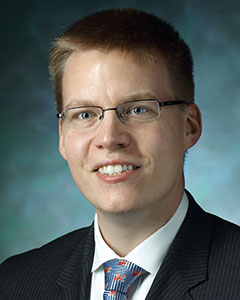
Associate Professor of Radiology at the Johns Hopkins University School of Medicine
Brandyn Lau is an associate professor of radiology at the Johns Hopkins University School of Medicine, and associate faculty in the Armstrong Institute for Patient Safety and Quality.
His primary research interest is in the use of electronic health record data to improve care quality and patient safety. Clinically, the majority of his effort focuses on the prevention, diagnosis, and treatment of venous thromboembolism (VTE). He has authored or co-authored more than 100 peer-reviewed publications, and has received large extramural research grants from AHRQ, NIH, and PCORI to study and improve the use of health information technology for quality improvement in hospitals.
-

Armstrong Institute for Patient Safety & Quality; Senior Vice President for Patient Safety & Quality, Johns Hopkins Medicine
With nearly 20 years in medicine, Dr. Kachalia has focused on eliminating preventable harm, improving patient outcomes and patient experience, and curbing waste in health care delivery. His research background in legal issues in medicine and how they relate to the quality and safety of patient care contributes to these overarching goals. He also practices as an academic hospitalist with medical students and residents.
Dr. Kachalia was formerly the chief quality officer and vice president for quality and safety at Brigham and Women’s Hospital in Boston, where he oversaw inpatient and ambulatory quality and safety initiatives. He was also a general internist, an associate professor of medicine at Harvard Medical School, and an associate professor of health policy and management at the Harvard T.H. Chan School of Public Health. His research has focused on how the law affects medical care, particularly how liability system reform and the disclosure of medical error relate to the quality and safety of health care.
-

Assistant Professor, Department of Radiology, Johns Hopkins Medicine
Dr. Babita Panigrahi is an assistant professor of Radiology at Johns Hopkins specializing in breast imaging. She earned her medical degree from Yale School of Medicine, where she completed an additional research year as a Howard Hughes Medical Institute fellow. She completed her diagnostic radiology residency at Johns Hopkins and a fellowship in breast imaging at Massachusetts General Hospital of Harvard Medical School. At Hopkins, she serves as director of breast imaging residency education. Her clinical and research interests include breast cancer screening, interval cancers, healthcare disparities, and the integration of artificial intelligence into breast imaging practice.
-
Exec. Director for Strategic Solutions, Armstrong Institute for Patient Safety
Dr. Laura Sigman is an assistant professor of pediatrics with the Pediatric Emergency Department at Johns Hopkins Children’s Center in Baltimore, Maryland. She is also the assistant chief of the Eudowood Division of Pediatric Quality and Safety within the Department of Pediatrics and the executive director for strategic solutions with the Armstrong Institute for Patient Safety and Quality.
Dr. Sigman completed her residency in pediatrics at Johns Hopkins, medical school at the University of Chicago and law school at Harvard. Early in her career, she worked for the Department of Justice as an honors program attorney on cases involving Medicare, Medicaid and FDA law, and at the National Research Council of the National Academies. She currently leads educational and external partnership teams at the Armstrong Institute to integrate and develop initiatives that drive quality, safety and service within Johns Hopkins Medicine and through external partnerships.
-

Div. Director, Gynecologic Oncology, Johns Hopkins School of Medicine
Rebecca Stone is associate professor and director of gynecologic oncology for Johns Hopkins. She holds a joint appointment in the Armstrong Institute as the lead for its surgical pathways/enhanced recovery after surgery program - an innovative, multidisciplinary program that standardizes perioperative care to improve quality and cost for thousands of patients annually. Dr. Stone also serves as co-director of the Fertility Preservation Center, pioneering novel surgical interventions to help people fulfill their goals of parenthood in the face of cancer.
Accordingly, her research portfolio spans clinical, quality improvement, and basic science investigation. She has been recognized for her dedication to patient care and teaching over the years, including being named Physician of the Year at Johns Hopkins in 2023 and being inducted into the School of Medicine Distinguished Teaching Society in 2022.
Besides continuing to care for many patients and their families - this is her first love - she is devoted to ensuring that ovarian cancer prevention becomes a standard of care that all know about and can choose. Dr. Stone champions this mission in the U.S. with support from the Break Through Cancer and now the American Cancer Society and helps lead an international taskforce to decrease the global burden of ovarian cancer through prevention.
-
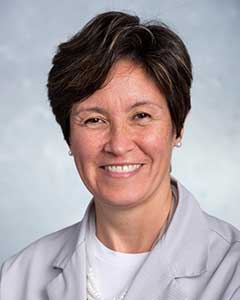
Vice Chair, Research, Director, Breast Cancer Research, Department of Surgery, Endeavor Health NorthShore
Katharine Yao is vice chair of research at NorthShore Legacy Hospitals within Endeavor Health and is a clinical professor of Surgery at the University of Chicago Pritzker School of Medicine. She also has a master's in healthcare quality from Northwestern University. Dr. Yao is currently chair of the National Accreditation Program for Breast Centers (NAPBC) at the American College of Surgeons, co-chair of the Commission on Cancer Breast Disease Site and serves on the Board of Directors for the American Society of Breast Surgeons.
She also chairs the Endeavor Health Cancer Institute Quality Committee. Dr. Yao was the lead on PROMPT, a quality collaborative conducted thru 260 NAPBC sites that worked on improving timeliness of breast cancer diagnosis and first treatment.
Summit Panelists
-
Summit Panelist
-
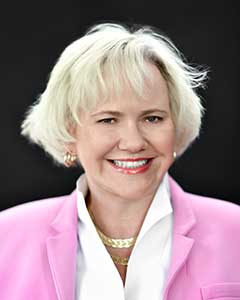
Leah Binder is president & CEO of The Leapfrog Group, a national nonprofit representing employers and other purchasers of health care calling for improved safety and quality in hospitals. Leapfrog publishes free ratings of hospitals and ambulatory surgery centers on how safe they are for their patients, including the Hospital Safety Grade. She is a regular contributor to Forbes.com and consistently named among Modern Healthcare’s annual list of the 100 most influential people in healthcare.
Under her leadership, The Leapfrog Group has grown fourfold in size, and launched major new initiatives including the Leapfrog Hospital Safety Grade, which assigns letter grades assessing the safety of general hospitals across the country.
She has served on numerous national boards and councils, including the National Quality Forum, Women of Impact, CMMI’s Accountable Care Action Collaborative and the National Alliance of Healthcare Purchaser Coalitions.
Prior to her position at The Leapfrog Group, Leah spent eight years as vice president at Franklin Community Health Network, an award-winning rural hospital network in Farmington, Maine. Prior to that she served as senior policy advisor at the New York City Mayor’s Office. She started her career at the National League for Nursing, where she handled policy and communications for more than 6 years.
Ms. Binder has a bachelor’s degree from Brandeis University and two master’s degrees from the University of Pennsylvania, one from the Annenberg School of Communication and the other from the Fels Institute of Government. She was born and raised in Maine and lives in Maryland with her husband and two sons.
-

Applied Research Scientist, National Committee for Quality Assurance (NCQA)
Lauren Campbell is an applied research scientist at NCQA in Sciences and Implementation. She has over 10 years of experience in managing quantitative workstreams, designing and implementing plans for multivariate analyses and leading quantitative teams on large-scale national implementation and evaluation projects. Her work centers on quality measurement for populations with higher risk, including individuals with advanced illness and multiple chronic conditions. Dr. Campbell has expertise in data management and analysis of primary and secondary data sources, including national claims, administrative, and assessment data, in both internal and external environments. She leads the delivery of analytic results, including development of technical reports, manuscripts, and research briefs, and presents findings to federal clients, stakeholders, and clinician panels.
Prior to joining NCQA, Dr. Campbell led quantitative workstreams and implemented claims-based spending, utilization, and quality measures in Center for Medicare & Medicaid Innovation (CMMI) Model evaluations. In this role, she conducted special studies using mixed methods to evaluate outcomes for individuals using post-acute care and long-term services and supports. Dr. Campbell also co-led and managed quantitative tasks for clinical review, reclassification and recalibration of CMS-Hierarchical Condition Category (HCC) risk adjustment models used in Medicare Advantage, including End Stage Renal Disease (ESRD) and frailty models, and led the quality measure testing and validation tasks for the Skilled Nursing Facility Quality Reporting Program (SNF QRP) and Nursing Home Quality Initiative (NHQI).
-
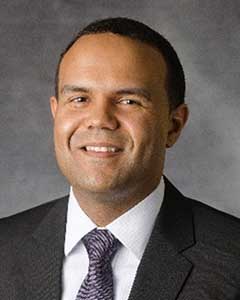
Vice President, Quality and Safety Policy
American Hospital Association
800 10th St NW, Suite 400
Washington, DC 20001
Direct: 202.626.2365
Email: [email protected]Akin Demehin is vice president, quality and safety policy, at the American Hospital Association (AHA) in Washington, D.C. He oversees AHA’s regulatory policy analysis, development and advocacy efforts related to quality measures, quality and safety standards, health information technology, behavioral health and workforce on behalf of the AHA’s nearly 5,000 member hospitals and health systems.
Akin has held a variety of positions in health care policy and management. Before joining the AHA in 2012, Akin was administrative director of performance measures at the National Quality Forum (NQF). Prior to NQF, Akin worked at the Massachusetts General Hospital (MGH) in Boston, MA, starting as an administrative fellow, and then serving as the administrative director of the Edward P. Lawrence Center for Quality and Safety.
Akin holds a master's of public health in health policy and administration from Yale University and a bachelor of arts cum laude in history and science from Harvard College.
-

Chief Scientific Officer at the National Quality Forum (NQF)
Vice President, Quality Measurement, at Joint CommissionDr. Drye provides strategic and technical direction to NQF’s and The Joint Commission’s quality measurement programs. She guides the development and execution of initiatives to advance the next generation of measures and measure infrastructure needed to improve health outcomes for all people. Drawing on her expertise in clinical medicine, measurement science, data interoperability, and health policy, she works collaboratively to facilitate consensus on and further the use of low-burden, high-impact quality measures to drive meaningful improvement. Her current focus includes NQF’s work to advance a consensus framework for the use of AI-enabled quality measures in value-based payment and guiding the design and implementation of next generation measures in The Joint Commission’s accreditation and certification programs.
Prior to NQF, Dr. Drye was senior director of quality measurement programs at the Yale New Haven Hospital Center for Outcomes Research and Evaluation (Yale/CORE) and faculty at Yale School of Medicine. At Yale/CORE she directed the development of many outcome measures currently in national use and advised CMS on its transformation to digital quality measures. Before becoming a physician and focusing on quality measurement, she worked for eight years in senior governmental public health policy positions in Washington, DC, including Chief of Staff of the White House Domestic Policy Council and Legislative Assistant to U.S. Senator Joe Lieberman.
-

Physician Director of Organizational Transformation, Professional Satisfaction, American Medical Association
Dr. Jane Fogg is a physician leader and executive with broad experience leading health care delivery, focusing on primary care, systems redesign, and value based delivery models. She joined the American Medical Association as physician director of organizational transformation for the division of Professional Satisfaction & Practice Sustainability in 2023. She leads the wellbeing survey service, Organizational Biopsy, which assesses both drivers and outcomes of wellbeing in health care systems. She also leads the development of strategies to activate and advance organizational transformation that delivers physician satisfaction, and she also supports the research, recognition and resource work in her unit. Dr. Fogg speaks internationally and locally on value-based care delivery, innovation in health care, physician wellbeing and in basket reduction.
-
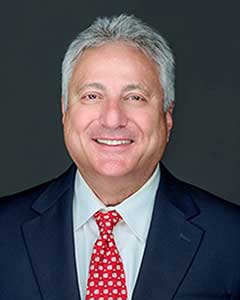
Medical Officer, Center for Clinical Standards and Quality, Centers for Medicare and Medicaid Services
Dr. Green is a board-certified Ob/Gyn. He graduated from Georgetown University School of Medicine and completed his residency in Ob/Gyn in 1992 at the University of Maryland. After residency, Dr. Green went on to do a fellowship in Advanced Operative Pelviscopy. In 1993, Dr. Green began private practice and practiced until April, 2007.
During his time in private practice, Dr. Green completed a program in the business of medicine, obtained his insurance license and co-developed an electronic medical record. He has lectured for many board preparation courses. Currently he is serving as a medical officer at CMS in the Quality Measurement Value-based Incentive Group serving as the quality team lead and the registry and qualified clinical data registry lead for the MIPS program (Merit based Incentive Program). He is also working on measure development, health equity and projects related to Women’s health care.
-

Program Director for the executive master’s program in Clinical Quality, Safety & Leadership at Georgetown University
Senior Director of Education at the MedStar Institute for Quality & SafetyCarole Hemmelgarn is the program director for the executive master’s program in clinical quality, Safety & Leadership at Georgetown University, and the senior director of education at the MedStar Institute for Quality & Safety. Carole received a master’s degree in patient safety leadership from the University of Illinois at Chicago, and a second master’s degree in health care ethics from Creighton University. She sits on the board of directors for Leapfrog, board of directors of Children’s Hospital Solutions for Patient Safety, the board of quality safety and experience at Children’s Hospital Colorado, and National Quality Forum Stakeholder Advisory Council. She is also a founding member of Patients for Patient Safety US.
-

Senior Vice President of Medical Affairs and Chief Medical Officer, Johns Hopkins Health System
As the senior vice president of medical affairs and chief medical officer for the Johns Hopkins Health System, Peter Hill works closely with vice presidents of medical affairs, clinical directors and medical staff members to strengthen efforts to provide safe, efficient and cost-effective health care. Dr. Hill also provides leadership for various programs, including pharmacy, health information management, centralized credentialing, capacity management and care transformation.
In addition to serving as senior vice president for the Johns Hopkins Health System, Dr. Hill was the vice president for medical affairs for The Johns Hopkins Hospital from 2017–24.
Dr. Hill earned his undergraduate degree from the University of California, his master’s degree from Brown University and his medical degree from the University of Maryland. He completed his residency and served as chief resident in emergency medicine at The Johns Hopkins Hospital, joining the faculty of the Johns Hopkins University School of Medicine as assistant chief of service.
-

Chief Medical Officer, Quality Measurement and Value-based Incentives Group, Center for Clinical Standards and Quality, Centers for Medicare & Medicaid Services
Ron Kline is a board-certified pediatric hematologist/oncologist and the chief medical officer of the Quality Measurement and Value-based Incentives Group (QMVIG) in the Center for Clinical Standards and Quality (CCSQ) at the Centers for Medicare & Medicaid Services (CMS). QMVIG is responsible for the development, evaluation, implementation and support for quality measurement programs across the entire federally funded health care continuum. This includes Medicare’s Quality Payment Program and the Inpatient and Outpatient Quality Reporting Programs. These innovative programs work to improve healthcare quality for all Americans.
Dr. Kline has been a clinical pediatric hematologist–oncologist for more than 30 years, serving as the medical director of the Pediatric Division of Comprehensive Cancer Centers of Nevada, the largest multispecialty oncology group in Nevada immediately prior to accepting his RWJF fellowship. He has remained clinically active while at CMS and OPM, previously working (as part of his CMS/OPM duties) in pediatric hematology/oncology at Walter Reed Military Medical Center and currently working at Johns Hopkins. He also works on weekends as a pediatric emergency department physician at Ascension St. Agnes Hospital in Baltimore.
-

Vice President and Chief Medical Officer, Joint Commission, Oakbrook Terrace, IL Primary care physician, Mass General Hospital, Boston, MA
Associate Professor, Departments of Medicine, and Health Care Policy Harvard Medical School, Boston, MAElizabeth Mort is vice president and chief medical officer for Joint Commission, having joined the organization in May 2024. In this role, she chairs the Chief Medical Officers/Chief Physicians Council dedicated to healthcare safety issues and the identification of significant emerging trends. Dr. Mort serves as a primary voice of patient safety and the key liaison between Joint Commission and the healthcare safety community. She designs services to further enhance quality and patient safety and works closely with the organizations we serve on accreditation and certification processes. Dr. Mort is the editor-in-chief of the Joint Commission Journal of Quality and Safety.
She is also a practicing primary care general internist at Mass General Hospital. Prior to joining Joint Commission, she served as the senior vice president of Quality and Safety, chief quality officer at the MGH and the MGPO from January 2013 until May 2023, during which she was responsible for high-stakes quality and safety measurement and improvement work across a broad range of initiatives that span the full continuum of care. Prior to serving as SVP, she served in several senior-level leadership roles at MGH and Partners Health Care, now Mass General Brigham.
-
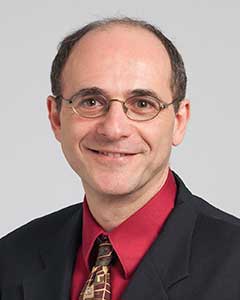
Vice Chair for Research, Cleveland Clinic’s Primary Care Institute
Professor of Medicine, Case Western Reserve UniversityMichael B. Rothberg is the vice chair for research in Cleveland Clinic’s Primary Care Institute and professor of medicine at Case Western Reserve University. He practices general internal medicine and directs the Center for Value-Based Care Research. His research examines quality of care and decision making for common medical conditions, with an emphasis on tailoring treatment to patients based on individual risk and preferences. His methods include large observational studies, risk modeling and cost-effectiveness analysis. His areas of interest include pneumonia and influenza, venous thromboembolism, coronary artery disease and diabetes. The goal of his research is to help physicians and patients make better healthcare decisions in order to improve outcomes and control costs.
Dr. Rothberg completed a research fellowship in medical informatics from the National Library of Medicine and has received research funding from AHRQ, NIA, NHLBI, the Doris Duke Charitable Foundation and the Informed Medical Decisions Foundation. Dr. Rothberg received his M.D. from New York University and his master’s in public health from Harvard University.
-
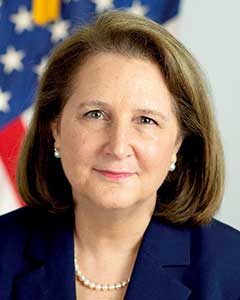
Deputy Director, Center for Clinical Standards and Quality
Director of the Quality Measurement and Value-Based Incentives Group
Centers for Medicare and Medicaid ServicesDr. Schreiber is the deputy director of the Center for Clinical Standards and Quality at Centers for Medical and Medicaid Services (CMS), and the director of the Quality Measurement and Value-Based Incentives Group (QMVIG). Dr. Schreiber is a general internal medicine physician with over 25 years of clinical healthcare experience and executive quality leadership of large health systems. She has a long history of advancing healthcare quality on a local, state and national level.
Since arriving at CMS in 2018, Dr. Schreiber has led numerous quality initiatives, including MIPS transformation to value pathways, the modernization of the Hospital Stars program and advancing digital quality measurement systems. Her current focus areas include promoting interoperability across care settings, quality measurement and patient safety.
-

Vonda Vaden Bates is an alliance builder and leadership coach. For over 30 years Vonda has guided professionals to succeed on behalf of their organizations and careers. She helps people move from potential to action, set and reach goals, manage engaged teams, and communicate with influence. Her creative approach has influenced major market shifts in television, retail, banking, technology, education, and healthcare.
In 2013 Vonda decided to contribute her skills on behalf of safety in health care after researching how her husband, Yogiraj Charles Bates, died from one of the most common preventable medical causes of death, hospital-associated venous thromboembolism. Advocating for every person in the care system, Vonda brings a compassionate voice, strategic skills, and collaboration expertise to improve communication and safety in health care.
She is the CEO of 10th Dot®, a company founded by her late husband, which consults, coaches, and trains individuals, teams and organizations to identify hidden potential, tap the benefits of differentiation, and bring ideas to life.
Workgroup Leads
-
Facilitator: Erica Reinhardt, Johns Hopkins Armstrong Institute for Patient Safety & Quality
Moderator: Amit Pahwa, Johns Hopkins University School of Medicine, Depts. of Medicine & Pediatrics
Interns: Julia Wang, Johns Hopkins Carey Business School; Bloomberg School of Public Health
Melody Borg, Johns Hopkins Carey Business SchoolClinical Leads: Ben Bodnar, Johns Hopkins School of Medicine, Depts. of Medicine & Pediatrics
Nisha Gilotra, Johns Hopkins School of Medicine / Division of Cardiology -
Facilitator: Ray Terhorst, Johns Hopkins Armstrong Institute for Patient Safety & Quality
Moderator: Lenny Feldman, Soc. of Hospital Med.; Johns Hopkins School of Med. / Internal Med & Pediatrics
Intern: Ally Jin, Johns Hopkins University Premedical Program
Clinical Leads: Elliott Haut, Johns Hopkins School of Medicine / Department of Surgery
Brandyn Lau, Johns Hopkins Department of Radiology and Armstrong Institute
Michael Streiff, Johns Hopkins University / Medicine -
Facilitators: Cindy Dwyer, Johns Hopkins Armstrong Institute for Patient Safety & Quality
Moderator: Laura Sigman, Armstrong Institute for Patient Safety & Quality, Johns Hopkins Medicine
Interns: Erica Stephens, Johns Hopkins Bloomberg School of Public Health
Sarah Millender, Johns Hopkins Carey Business School; Bloomberg School of Public HealthClinical Lead: Rebecca Stone, Gynecologic Oncology, Johns Hopkins School of Medicine
-
Facilitator: Cindy Dwyer, Johns Hopkins Armstrong Institute for Patient Safety & Quality
Moderator: Laura Sigman, Armstrong Institute for Patient Safety & Quality, Johns Hopkins Medicine
Interns: Bailey Johnson, Johns Hopkins Carey Business School
Sarah Mollenkopf, Johns Hopkins School of Medicine / Internal Medicine ResidencyClinical Leads: Katharine Yao, National Accreditation Program for Breast Centers (NAPBC); Endeavor Health / Dept. of Surgery
Babita Panigrahi, Department of Radiology, Johns Hopkins Medicine -
Facilitator: Lorenzo Nicholson, Johns Hopkins University
Moderator: Pamela Johnson, Former Vice President of Care Transformation for the Johns Hopkins Health System
Interns: Ashish Vaidyanathan, Johns Hopkins School of Medicine
Lumi Adegbite, Johns Hopkins Carey Business School; Bloomberg School of Public HealthClinical Leads: Armin Zadeh, Johns Hopkins School of Medicine / Cardiology
Moneal Shah, Allegheny Health Network
Michael Silverman, Johns Hopkins Regional Physicians / Cardiovasc.Specialists of Central MD -
Facilitator: Ray Terhorst, Johns Hopkins Armstrong Institute for Patient Safety & Quality
Moderator: Pamela Johnson, Former Vice President of Care Transformation for the Johns Hopkins Health System
Intern: Manal Mansoor, Johns Hopkins Bloomberg School of Public Health
Clinical Leads: Lee Riley, Johns Hopkins Department of Orthopaedic Surgery
Adam Levin, Johns Hopkins University / Orthopaedic Surgery
Amit Jain, Johns Hopkins University / Orthopedic Surgery; Carey Business School
Yoshimi Anzai, University of Utah, Department of Radiology and Imaging Sciences
Program Overview
The purpose of this program is to create sustainable improvements in value, safety and quality by aligning and synergizing the work of health systems, health plans, policy makers, regulatory agencies and patients. Six teams of diverse stakeholders are designing novel metrics and programs in three key areas related to inpatient hospital outcome-linked process measures; oncology prevention and diagnosis; and prior authorization.
The following topics will be addressed:
Inpatient Outcome-based Process Measures
- Heart Failure Readmission Reduction
- Hospital-Associated Venous Thromboembolism Prevention

Oncology Prevention and Diagnosis
- Opportunistic Salpingectomy for Ovarian Cancer Prevention
- Timeliness of Breast Cancer Diagnosis

Quality Measurement in Prior Authorization
- Stable Chest Pain Diagnostic Efficacy
- Low Back Pain Longitudinal Value

The collaborative is led by the Armstrong Institute for Patient Safety & Quality at Johns Hopkins Medicine and the High Value Practice Alliance with the support of Johns Hopkins University Bloomberg Center Nexus Award.