Research Lab Results
-
Jun O. Liu Laboratory
The Jun O. Liu Laboratory tests small molecules to see if they react in our bodies to find potential drugs to treat disease. We employ high-throughput screening to identify modulators of various cellular processes and pathways that have been implicated in human diseases from cancer to autoimmune diseases. Once biologically active inhibitors are identified, they will serve both as probes of the biological processes of interest and as leads for the development of new drugs for treating human diseases. Among the biological processes of interest are cancer cell growth and apoptosis, angiogenesis, calcium-dependent signaling pathways, eukaryotic transcription and translation.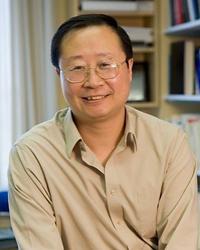
-
Jungsan Sohn
Dr. Sohn's lab is interested in understanding how biological stress-sensors are assembled, detect danger signals and initiate stress response. Innate immunity is the first line of defense against invading pathogens in higher eukaryotes. We are using in vitro quantitative biochemical assays and mutagenesis and x-ray crystallography to investigate the underlying operating principles of inflammasomes, a component of the innate immune system, to better understand biological stress sensors. -
Justin Bailey Lab
We study human B cells and neutralizing antibody responses against hepatitis C virus (HCV), hepatitis B virus (HBV), SARS-CoV-2, and respiratory syncytial virus (RSV). Our overarching hypothesis is that understanding the B cell response in individuals who naturally control infections, and those who have been vaccinated, can help us to understand the basic biology behind successful immune responses, leading to design of more effective vaccines. A particular technical strength of our laboratory is high dimensional flow cytometric analysis of antigen-specific B cells, which allows us to phenotype these rare cells, and also to sequence B cell receptor (BCR) repertoires and isolate virus-neutralizing monoclonal antibodies (mAbs). -
Kalina Hristova Lab
The Kalina Hristova Lab investigates the structure and assembly of biological membranes. Our team conducts research on the structural and thermodynamic principles that enable membrane protein folding and signal transduction across biological membranes. Part of our work has involved developing new tools to study the structure of thermally disordered fluid membranes and the energetics of biomolecular interactions in biological membranes. Through our studies, we have established a better understanding of the physical principles behind complex biological processes and the mechanisms of disease development in humans.
-
Karakousis Lab
The Karakousis Lab is primarily focused on understanding the molecular basis of Mycobacterium tuberculosis persistence and antibiotic tolerance. A systems biology-based approach, including the use of several novel in vitro and animal models, in combination with transcriptional, proteomic, genetic, imaging, and computational techniques, is being used to identify host cytokine networks responsible for immunological control of M. tuberculosis growth, as well as M. tuberculosis regulatory and metabolic pathways required for bacillary growth restriction and reactivation. In particular, we are actively investigating the regulatory cascade involved in the mycobacterial stringent response. Another major focus of the lab is the development of host-directed therapies for TB, with the goal of shortening treatment and improving long-term lung function. Additional research interests include the development of novel molecular assays for the rapid diagnosis of latent TB infection and active TB disease, and for the detection of drug resistance. -
Karen Bandeen-Roche Lab
The Karen Bandeen-Roche Lab explores the application of underlying variable methods in epidemiologic and psychosocial research. Our team seeks to improve the ability to measure key outcomes like functional status and psychological disorders. Our other areas of statistical research include the study of classification and variance structure and multivariate survival analysis. We are deeply invested in the field of gerontology as well as ophthalmology and neurology.
-
Karen Reddy Laboratory
The focus of the research in the Reddy Laboratory is to begin to understand how the nuclear periphery and other subcompartments contribute to general nuclear architecture and to specific gene regulation. Our research goals can be broken down into three complementary areas of research: understanding how genes are regulated at the nuclear periphery, deciphering how genes are localized (or ""addressed"") to specific nuclear compartments and how these processes are utilized in development and corrupted in disease.
-
Kashani Lab
Dr. Amir Kashani and his team are developing novel diagnostic and therapeutic methods to diagnose and treat retinal diseases using advanced imaging methods. These methods can detect the earliest changes in retinal capillaries before they are noticeable to the patient or doctor. -
Kass Lab
Basic science investigations span an array of inquiries, such as understanding the basic mechanisms underlying cardiac dyssynchrony and resynchronization in the failing heart, and beneficial influences of nitric oxide/cGMP/protein kinase G and cGMP-targeted phosphdiesterase signaling cascades on cardiac maladaptive stress remodeling. Recently, the latter has particularly focused on the role of phosphodiesterase type 5 and its pharmacologic inhibitors (e.g. sildenafi, Viagra®), on myocyte signaling cascades modulated by protein kinase G, and on the nitric oxide synthase dysregulation coupled with oxidant stress. The lab also conducts clinical research and is presently exploring new treatments for heart failure with a preserved ejection fraction, studying ventricular-arterial interaction and its role in adverse heart-vessel coupling in left heart failure and pulmonary hypertension, and testing new drug, device, and cell therapies for heart disease. A major theme has been with the use of advanced non-invasive and invasive catheterization-based methods to assess cardiac mechanics in patients.asive and invasive catheterization-based methods to assess cardiac mechanics in patients. David Kass, MD, is currently the Director at the Johns Hopkins Center for Molecular Cardiobiology and a professor in cellular and molecular medicine. -
Katherine Wilson Lab
Research in the Wilson Lab focuses on three components of nuclear lamina structure: lamins, LEM-domain proteins (emerin), and BAF. These three proteins all bind each other directly, and are collectively required to organize and regulate chromatin, efficiently segregate chromosomes and rebuild nuclear structure after mitosis. Mutations in one or more of these proteins cause a variety of diseases including Emery-Dreifuss muscular dystrophy (EDMD), cardiomyopathy, lipodystrophy and diabetes, and accelerated aging. We are examining emerin's role in mechanotransduction, how emerin and lamin A are regulated, and whether misregulation contributes to disease.