Research Lab Results
-
Tamara O'Connor Lab
The O'Connor Lab studies the molecular basis of infectious disease using Legionella pneumophila pathogenesis as a model system. We are looking at the network of molecular interactions acting at the host-pathogen interface. Specifically, we use L. pneumophila pathogenesis to examine the numerous mechanisms by which an intracellular bacterial pathogen can establish infection, how it exploits host cell machinery to accomplish this, and how individual proteins and their component pathways coordinately contribute to disease. We are also studying the role of environmental hosts in the evolution of human pathogens. Using genetics and functional genomics, we compare and contrast the repertoires of virulence proteins required for growth in a broad assortment of hosts, how the network of molecular interactions differs between hosts, and the mechanisms by which L. pneumophila copes with this variation.
-
Joel Pomerantz Laboratory
The Pomerantz Laboratory studies the molecular machinery used by cells to interpret extracellular signals and transduce them to the nucleus to affect changes in gene expression. The accurate response to extracellular signals results in a cell's decision to proliferate, differentiate or die, and it's critical for normal development and physiology. The dysregulation of this machinery underlies the unwarranted expansion or destruction of cell numbers that occurs in human diseases like cancer, autoimmunity, hyperinflammatory states and neurodegenerative disease. Current studies in the lab focus on signaling pathways that are important in innate immunity, adaptive immunity and cancer, with particular focus on pathways that regulate the activity of the pleiotropic transcription factor NF-kB.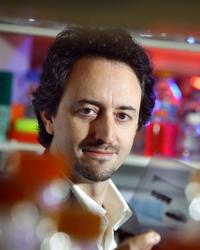
-
James Knierim Laboratory
Research in the James Knierim Laboratory attempts to understand the flow of information through the hippocampal formation and the computations performed by the various subfields of the hippocampus and its inputs from the entorhinal cortex. To address these issues, we use multi-electrode arrays to record the extracellular action potentials from scores of well-isolated hippocampal neurons in freely moving rats. These neurons, or ""place cells,"" are selectively active when the rat occupies restricted locations in its environment and help to form a cognitive map of the environment. The animal uses this map to navigate efficiently in its environment and to learn and remember important locations. These cells are thought to play a major role in the formation of episodic (autobiographical) memories. Place cells thus constitute a tremendous opportunity to investigate the mechanisms by which the brain transforms sensory input into an internal, cognitive representation of the world and then uses this representation as the framework that organizes and stores memories of past events.
-
Charles W. Flexner Laboratory
A. Laboratory activities include the use of accelerator mass spectrometry (AMS) techniques to measure intracellular drugs and drugs metabolites. AMS is a highly sensitive method for detecting tracer amounts of radio-labeled molecules in cells, tissues, and body fluids. We have been able to measure intracellular zidovudine triphosphate (the active anabolite of zidovudine) in peripheral blood mononuclear cells from healthy volunteers given small doses of 14C-zidovudine, and have directly compared the sensitivity of AMS to traditional LC/MS methods carried out in our laboratory. B. Clinical research activities investigate the clinical pharmacology of new anti-HIV therapies and drug combinations. Specific drug classes studied include HIV reverse transcriptase inhibitors, protease inhibitors, entry inhibitors (selective CCR5 and CXCR4 antagonists), and integrase inhibitors. Scientific objectives of clinical studies include characterization of early drug activity, toxicity, and pharmacokinetics. Additional objectives are characterization of pathways of drug metabolism, and identification of clinically significant harmful and beneficial drug interactions mediated by hepatic and intestinal cytochrome P450 isoforms.
-
Gilkes Lab
Our lab is focused on determining the role of hypoxia in breast cancer metastasis. We are particularly interested in the changes in the extracellular matrix that occur under hypoxic conditions and promote cancer cell migration.
-
The Bigos Lab
The Bigos Lab focuses on a Precision Medicine approach to the treatment of psychiatric illness. In addition, this lab employs functional neuroimaging and genetics as biomarkers in neuropsychiatric drug development. A recent study used functional MRI to test the neural effects of a drug with the potential to treat cognitive dysfunction in schizophrenia. Other studies aim to identify patient-specific variables including sex, race, and genetics that impact drug clearance and clinical response to better select and dose antipsychotics and antidepressants.
-
Dara Kraitchman Laboratory
The Dara Kraitchman Laboratory focuses on non-invasive imaging and minimally invasive treatment of cardiovascular disease. Our laboratory is actively involved in developing new methods to image myocardial function and perfusion using MRI. Current research interests are aimed at determining the optimal timing and method of the administration of mesenchymal stem cells to regenerate infarcted myocardium using non-invasive MR fluoroscopic delivery and imaging. MRI and radiolabeling techniques include novel MR and radiotracer stem cell labeling methods to determine the location, quantity and biodistribution of stem cells after delivery as well as to noninvasively determine the efficacy of these therapies in acute myocardial infarction and peripheral arterial disease. Our other research focuses on the development of new animal models of human disease for noninvasive imaging studies and the development of promising new therapies in clinical trials for companion animals.
-
Zaver M. Bhujwalla Lab – Cancer Imaging Research
Dr. Bhujwalla’s lab promotes preclinical and clinical multimodal imaging applications to understand and effectively treat cancer. The lab’s work is dedicated to the applications of molecular imaging to understand cancer and the tumor environment. Significant research contributions include 1) developing ‘theranostic agents’ for image-guided targeting of cancer, including effective delivery of siRNA in combination with a prodrug enzyme 2) understanding the role of inflammation and cyclooxygenase-2 (COX-2) in cancer using molecular and functional imaging 3) developing noninvasive imaging techniques to detect COX-2 expressing in tumors 4) understanding the role of hypoxia and choline pathways to reduce the stem-like breast cancer cell burden in tumors 5) using molecular and functional imaging to understand the role of the tumor microenvironment including the extracellular matrix, hypoxia, vascularization, and choline phospholipid metabolism in prostate and breast cancer invasion and metastasis, with the ultimate goal of preventing cancer metastasis and 6) molecular and functional imaging characterization of cancer-induced cachexia to understand the cachexia-cascade and identify novel targets in the treatment of this condition. -
Lewis Romer Lab
Work in the Lewis Romer Lab focuses on the responses of vascular systems to disease and injury. Using cultured human endothelial cells and fibroblasts from mice that lack expression of the FAK- or Src-family kinases, we’re exploring several topics. These include the effect of inflammatory cytokine on cell adhesion to the extracellular matrix; the role of FAK signaling in inhibiting apoptosis; and the function of FAK- and Src-family kinases in cell-matrix interactions during adhesion and motility. -
Lee Martin Laboratory
In the Lee Martin Laboratory, we are testing the hypothesis that selective vulnerability--the phenomenon in which only certain groups of neurons degenerate in adult onset neurological disorders like amyotrophic lateral sclerosis and Alzheimer's disease--is dictated by brain regional connectivity, mitochondrial function and oxidative stress. We believe it is mediated by excitotoxic cell death resulting from abnormalities in excitatory glutamatergic signal transduction pathways, including glutamate transporters and glutamate receptors as well as their downstream intracellular signaling molecules. We are also investigating the contribution of neuronal/glial apoptosis and necrosis as cell death pathways in animal (including transgenic mice) models of acute and progressive neurodegeneration. We use a variety of anatomical and molecular neurobiological approaches, including neuronal tract-tracing techniques, immunocytochemistry, immunoblotting, antipeptide antibody production, transmission electron microscopy and DNA analysis to determine the precise regional and cellular vulnerabilities and the synaptic and molecular mechanisms that result in selective neuronal degeneration.