Research Lab Results
-
Susan Michaelis Lab
The Michaelis Laboratory's research goal is to dissect fundamental cellular processes relevant to human health and disease, using yeast and mammalian cell biology, biochemistry and high-throughput genomic approaches. Our team studies the cell biology of lamin A and its role in the premature aging disease Hutchinson-Gilford progeria syndrome (HGPS). Other research focuses on the core cellular machinery involved in recognition of misfolded proteins. Understanding cellular protein quality control machinery will ultimately help researchers devise treatments for protein misfolding diseases in which degradation is too efficient or not enough.
-
Pablo Iglesias Lab
Investigators in the Pablo Iglesias Lab use analytic tools from control systems and dynamical systems to study cell biology, including biological signal transduction pathways. Our research interests include the ways cells interpret directional cues to guide their motion, regulatory mechanisms that control cell division, and the sensing and actuation that enable cells to maintain lipid homeostasis. -
Fu Lab
The Fu Lab is a basic research lab that studies zinc transport, with a particular focus on which step in the zinc transport process may be modulated and how. Dr. Fu's lab uses parallel cell biology and proteomic approaches to understand how these physiochemical principles are applied to mammalian zinc transporters and integrated to the physiology of pancreatic beta cells. This research has implications for understanding how zinc transport is related to diabetes and insulin intake. -
Sean Taverna Laboratory
The Taverna Laboratory studies histone marks, such as lysine methylation and acetylation, and how they contribute to an epigenetic/histone code that dictates chromatin-templated functions like transcriptional activation and gene silencing. Our lab uses biochemistry and cell biology in a variety of model organisms to explore connections between gene regulation and proteins that write and read histone marks, many of which have clear links to human diseases like leukemia and other cancers. We also investigate links between small RNAs and histone marks involved in gene silencing. -
Translational Neurobiology Laboratory
The goals of the Translational neurobiology Laboratory are to understand the pathogenesis and cell death pathways in neurodegenerative disorders to reveal potential therapeutic targets for pharmaceutical intervention; to investigate endogenous survival pathways and try to induce these pathways to restore full function or replace lost neurons; and to identify biomarkers to mark disease function or replace lost neurons; and to identify biomarkers to mark disease progression and evaluate therapeutics. Our research projects focus on models of Huntington's disease and Parkinson's disease. We use a combination of cell biology and transgenic animal models of these diseases. -
Ryuya Fukunaga Lab
The Fukunaga Lab uses multidisciplinary approaches to understand the cell biology, biogenesis and function of RNA-binding proteins and small silencing RNAs from the atomic to the organismal level. The lab studies (1) biology and molecular functions and mechanisms of uncharacterized RNA-binding proteins, and (2) how small silencing RNAs, including microRNAs (miRNAs), small interfering RNAs (siRNAs) and piwi-interacting RNAs (piRNAs), are produced and function. Mutations in the RNA-binding protein and small RNA genes cause many diseases, including cancers. We use a combination of biochemistry, Drosophila genetics, molecular biology, cell culture, and next-generation sequencing, to answer fundamental biological questions and also potentially lead to therapeutic applications to human diseases. -
Andrew Lane Lab
The Lane laboratory is focused on understanding molecular mechanisms underlying chronic rhinosinusitis, particularly the pathogenesis of nasal polyps, as well as inflammation on the olfactory epithelium. Diverse techniques in molecular biology, immunology, and physiology are utilized to study epithelial cell innate immunity, olfactory loss, and response to viral infection. Ongoing work explores how epithelial cells of the sinuses and olfactory mucosa participate in the immune response and contribute to chronic inflammation. The lab creates and employs transgenic mouse models of chronic nasal/sinus inflammation to support research in this area. Collaborations are in place with the School of Public Health to explore mechanisms of anti-viral immunity in influenza and COVID-19.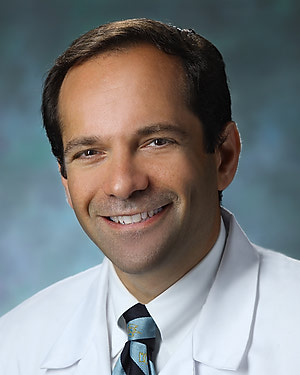
-
Andrew McCallion Laboratory
The McCallion Laboratory studies the roles played by cis-regulatory elements (REs) in controlling the timing, location and levels of gene activation (transcription). Their immediate goal is to identify transcription factor binding sites (TFBS) combinations that can predict REs with cell-specific biological control--a first step in developing true regulatory lexicons. As a functional genetic laboratory, we develop and implement assays to rapidly determine the biological relevance of sequence elements within the human genome and the pathological relevance of variation therein. In recent years, we have developed a highly efficient reporter transgene system in zebrafish that can accurately evaluate the regulatory control of mammalian sequences, enabling characterization of reporter expression during development at a fraction of the cost of similar analyses in mice. We employ a range of strategies in model systems (zebrafish and mice), as well as analyses in the human population, to illuminate the genetic basis of disease processes. Our long-term objective is to use these approaches in contributing to improved diagnostic, prognostic and therapeutic strategies in patient care.
-
Advanced Optics Lab
The Advanced Optics Lab uses innovative optical tools, including laser-based nanotechnologies, to understand cell motility and the regulation of cell shape. We pioneered laser-based nanotechnologies, including optical tweezers, nanotracking, and laser-tracking microrheology. Applications range from physics, pharmaceutical delivery by phagocytosis (cell and tissue engineering), bacterial pathogens important in human disease and cell division. Other projects in the lab are related to microscopy, specifically combining fluorescence and electron microscopy to view images of the subcellular structure around proteins. -
Albert Lau Lab
The Lau Lab uses a combination of computational and experimental approaches to study the atomic and molecular details governing the function of protein complexes involved in intercellular communication. We study ionotropic glutamate receptors (iGluRs), which are ligand-gated ion channels that mediate the majority of excitatory synaptic transmission in the central nervous system. iGluRs are important in synaptic plasticity, which underlies learning and memory. Receptor dysfunction has been implicated in a number of neurological disorders.