
The Johns Hopkins Kimmel Cancer Center is an integral part of your community. At Johns
Hopkins, we are deeply committed to fulfilling our obligation to serve and educate the
community. We aim to ensure that new discoveries and knowledge are effectively disseminated at the community level. Our mission involves not only advancing the frontiers of cancer research but also making sure that these advancements reach and benefit the local population.
We engage in various outreach programs and educational initiatives designed to increase
awareness and understanding of cancer prevention, diagnosis, and treatment. By fostering strong community ties, we strive to empower individuals with the latest information and resources, ultimately working towards a healthier, well-informed community.
Community outreach and engagement
-
Ask the Experts Past Sessions On Youtube
Watch all past sessions
-
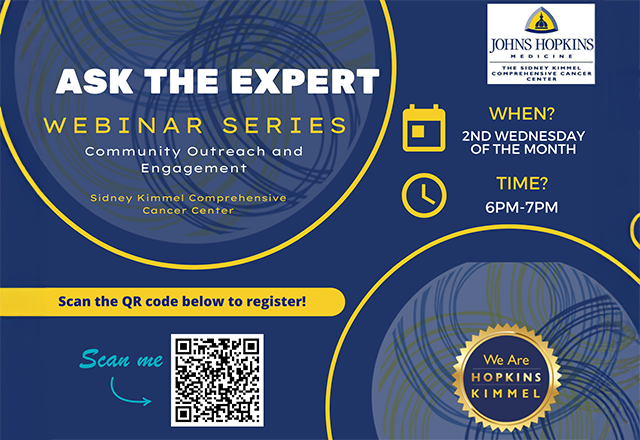
Ask The Experts Sessions
Click here to register
-
Community Advisory Groups
Click Here To Join
-
Community Outreach and Engagement Podcast
Click here to listen

-
Cancer In Maryland
Click here to learn more

-
Request a Speaker
Click to request a speaker




HPV and Cancer Risks
Human Papillomavirus (HPV) is the most common sexually transmitted infection in the world and is known to elevate the risk of certain cancers. It has been linked to cervical cancer as well as head and neck cancers (specifically in the throat and esophagus). Risk factors include having multiple sexual partners, smoking, and infections such as Hepatitis B and C.
Reducing Your Risks
You can minimize your risks by:
- Avoiding smoking or quitting if you currently smoke
- Receiving the HPV vaccine
Consult your doctor about your options. It's worth noting that individuals with HPV-related cancers generally respond well to
immunotherapy. Don’t hesitate to seek the care you need. Remember, early detection of cancer is one of the most effective strategies for treatment.

Obesity and Cancer Risk
Obesity is a significant risk factor for several types of cancer, including liver, breast, and colorectal cancers. Excess body weight can lead to chronic inflammation and hormonal imbalances, which may contribute to cancer development. Additionally, obesity is often associated with lifestyle factors such as poor diet and lack of physical activity, both of which can further increase cancer risk.
Tips:
1. Eat whole foods, and construct a well-balanced plate
2. Aim for 30 minutes of moderate exercise 5 days a week
Consult with your doctor or a nutritionist for more individualized needs. Check with your insurance to see if nutrition services are covered.

Smoking: It’s bad for your heart!
Don’t start. If you do smoke, QUIT.
As soon as you stop smoking, you help your heart and lungs.
Need help? Check out our resources.
The Johns Hopkins Tobacco Treatment Clinic was established in 2018. Lead by Panagis Galiatsatos, M.D., M.H.S., the center is made up of a multi-disciplinary team of nurses, physicians and a certified tobacco treatment specialist.
Read about the clinic: At Johns Hopkins Tobacco Treatment Clinic, Quitting Is Just the Beginning


Charitable Giving Support Community Outreach and Engagement at the Kimmel Cancer Center
Online
To make a gift or pledge online, please complete our secure online giving form.

Over the Phone
Call 410-955-1327.

By Mail
Download and mail our giving form to:
Fund for Johns Hopkins Medicine
P.O. Box 49143
Baltimore, MD 21297-9143
