Research Lab Results
-
Lei Zheng Lab
Zheng’s research focuses on two R01-funded projects; first, the group has developed a pancreatic cancer immunotherapy research program on a neoadjuvant therapy platform as well as a number of preclinical models of pancreatic cancer for developing innovative immunotherapy strategies. The group has applied the knowledge gained from pancreatic cancer immune-based therapies to the development of a colorectal cancer GVAX vaccine. Second, the group is aimed at understanding the mechanistic roles of the tumor microenvironment in cancer development and metastasis and identifying new targets for pancreatic cancer therapies by dissecting the tumor microenvironment of pancreatic cancer. -
Lemberg Research Group
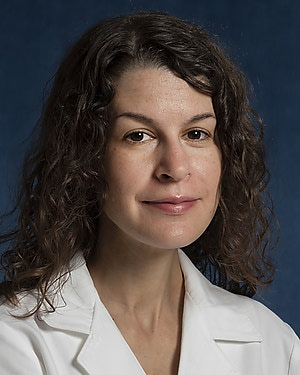
The mission of the Lemberg research group is to understand metabolism in childhood/young adult cancers in order to develop a better understanding of how these cancers develop, how they respond to treatments, and how children can go on to live healthy lives with or after a cancer history. We aim to investigate how tumors and the surrounding physiologic environments interact to drive nutrient use so that the tumor can grow and spread, and how the presence of a cancer affects the development of the whole child. Our ultimate goal is to improve outcomes for children and young adults with cancer.
-
Leonard Feldman Lab
Research in the Leonard Feldman Lab is focused on consult medicine, high-value care and medical education, including resident training and online curriculum. Past studies include integrating lessons on respect and courtesy toward patients into the training of residents and the impact of including the cost of medical procedures when residents ordered tests.
-
Leucker Laboratory
The Leucker Laboratory is a translational cardiovascular research program dedicated to understanding the mechanisms underlying residual atherosclerotic cardiovascular disease risk and developing innovative strategies for cardiovascular prevention. Our work integrates human vascular biology, advanced cardiovascular imaging, epidemiology, and clinical trials to uncover the pathways linking inflammation, lipoproteins, endothelial dysfunction, and cardiometabolic disease to cardiovascular outcomes.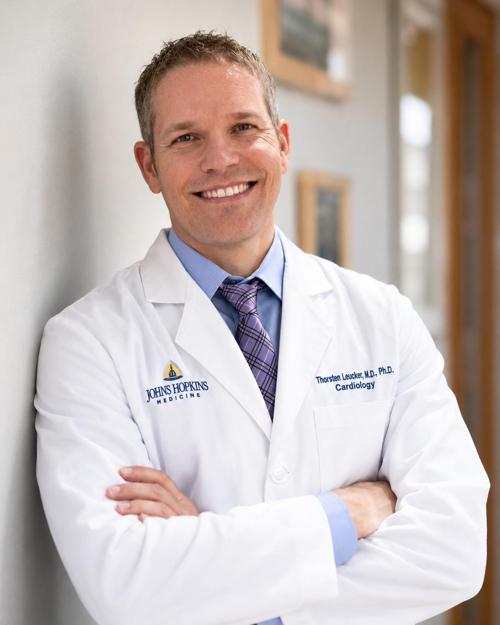
Principal Investigator
-
Lewis Romer Lab
Work in the Lewis Romer Lab focuses on the responses of vascular systems to disease and injury. Using cultured human endothelial cells and fibroblasts from mice that lack expression of the FAK- or Src-family kinases, we’re exploring several topics. These include the effect of inflammatory cytokine on cell adhesion to the extracellular matrix; the role of FAK signaling in inhibiting apoptosis; and the function of FAK- and Src-family kinases in cell-matrix interactions during adhesion and motility. -
Li Gao Lab
The Li Gao Lab researches functional genomics, molecular genetics and epigenetics of complex cardiopulmonary and allergic diseases, with a focus on translational research applying fundamental genetic insight into the clinical setting. Current research includes implementation of high-throughput technologies in the fields of genome-wide association studies (GWAS), massively parallel sequencing, gene expression analysis, epigenetic mapping and integrative genomics in ongoing research of complex lung diseases and allergic diseases including asthma, atopic dermatitis (AD), pulmonary arterial hypertension, COPD, sepsis and acute lung injury/ARDS; and epigenetic contributions to pulmonary arterial hypertension associated with systemic sclerosis.
-
Liliana Florea Lab
Research in the Liliana Florea Lab applies computational techniques toward modeling and problem solving in biology and genetic medicine. We work to develop computational methods for analyzing large-scale sequencing data to help characterize molecular mechanisms of diseases. The specific application areas of our research include genome analysis and comparison, cDNA-to-genome alignment, gene and alternative splicing annotation, RNA editing, microbial comparative genomics, miRNA genomics and computational vaccine design. Our most recent studies seek to achieve accurate and efficient RNA-seq correction and explore the role of HCV viral miRNA in hepatocellular carcinoma.
-
Lilly Engineer Lab
Research in the Lilly Engineer Lab examines the quality and safety of medical care, with a focus on rural and underserved communities. Our current research evaluates methods for improving immunization rates among inner-city populations of school-aged children. We are also exploring the effect of federal policy changes and health care market forces on rural hospitals in the United States.
-
Lima Lab
The Lima Lab’s research is concentrated on the development and application of imaging and technology to address scientific and clinical problems involving the heart and vascular system. Specifically, our research is focused on developing magnetic resonance imaging (MRI) contrast techniques to investigate microvascular function in patients and experimental animals with myocardial infarction; functional reserve secondary to dobutamine stimulation and myocardial viability assessed by sodium imaging; and cardiac MRI and computed tomography (CT) program development of techniques to characterize atherosclerosis in humans with cardiovascular or cerebrovascular disease. Current projects include: • The Coronary Artery Risk Development in Young Adults (CARDIA) Study • The MESA (Multi-Ethnic Study of Atherosclerosis) Study • The Coronary Artery Evaluation using 64-row Multidetector Computed Tomography Angiography (CORE64) Study Joao Lima, MD, is a professor of medicine, radiology and epidemiology at the Johns Hopkins School of Medicine. -
Linda Smith-Resar Lab
The Linda Smith-Resar Lab primarily investigates hematologic malignancy and molecular mechanisms that lead to cancer as well as sickle cell anemia. Recent studies suggest that education is an important and effective component of a patient blood management program and that computerized provider order entry algorithms may serve to maintain compliance with evidence-based transfusion guidelines. Another recent study indicated that colonic epithelial cells undergo metabolic reprogramming during their evolution to colorectal cancer, and the distinct metabolites could serve as diagnostic tools or potential targets in therapy or primary prevention.