Research Lab Results
-
Devreotes Laboratory
The Devreotes Laboratory is engaged in genetic analysis of chemotaxis in eukaryotic cells. Our long-term goal is a complete description of the network controlling chemotactic behavior. We are analyzing combinations of deficiencies to understand interactions among network components and carrying out additional genetic screens to identify new pathways involved in chemotaxis. A comprehensive understanding of this fascinating process should lead to control of pathological conditions such as inflammation and cancer metastasis. -
Berger Lab
The Berger Lab's research is focused on understanding how multi-subunit assemblies use ATP for overcoming topological challenges within the chromosome and controlling the flow of genetic information. A long-term goal is to develop mechanistic models that explain in atomic level detail how macromolecular machines transduce chemical energy into force and motion, and to determine how cells exploit and control these complexes and their activities for initiating DNA replication, shaping chromosome superstructure and executing myriad other essential nucleic-acid transactions. Our principal approaches include a blend of structural (X-ray crystallography, single-particle EM, SAXS) and solution biochemical methods to define the architecture, function, evolution and regulation of biological complexes. We also have extensive interests in mechanistic enzymology and the study of small-molecule inhibitors of therapeutic potential, the development of chemical approaches to trapping weak protein/protein and protein/nucleic acid interactions, and in using microfluidics and single-molecule approaches for biochemical investigations of protein dynamics. -
Bakker Memory Lab
Research in the Bakker Memory Laboratory is focused on understanding the mechanisms and brain networks underlying human cognition with a specific focus on the mechanisms underlying learning and memory and the changes in memory that occur with aging and disease. We use a variety of techniques including neuropsychological assessments, experimental behavioral assessments and particularly advanced neuroimaging methods to study these questions in young and older adults and patients with mild cognitive impairment, Alzheimer’s disease, Parkinson’s disease and epilepsy. Through our collaborations with investigators in both basic science and clinical departments, including the departments of Psychiatry and Behavioral Sciences, Psychological and Brain Sciences, Neurology and Public Health, our research also focuses on brain systems involved in spatial navigation and decision-making as well as cognitive impairment in neuropsychiatric conditions such as schizophrenia, eating disorders, obsessive-compulsive disorders, depression and anxiety. -
Douglas Ball Lab
The Douglas Ball Lab conducts clinical trials and pre-clinical laboratory studies of thyroid cancer. Our clinical trials, performed in collaboration with research staff in the upper aero-digestive group in the Sidney Kimmel Comprehensive Cancer Center, have included protocols for advanced radioiodine-refractory differentiated thyroid cancer and medullary thyroid cancer. Our pre-clinical research, conducted with Dr. Nelkin, Dr. Agrawal and other Kimmel Cancer Center researchers, includes pathogenesis and mechanisms of treatment resistance in medullary thyroid cancer, and pathogenesis and immune-directed therapy of anaplastic thyroid cancer.
-
Drug Discovery Group
Barbara Slusher, M.A.S., Ph.D., leads a 20-member veteran drug discovery team of medicinal chemists, assay developers, pharmacologists, toxicologists and pharmacokinetic/drug metabolism experts, who identify novel drug targets arising from JHU faculty’s research and translate them into new, small molecule drug therapies. Her team collaborates extensively with faculty at the Bloomberg~Kimmel Institute for Cancer Immunotherapy and leads the BKI immunotherapy drug discovery core, aimed at developing new immune-targeting drug therapies for laboratory and clinical testing at Johns Hopkins. -
David Thompson Lab
Researchers in the David Thompson Lab examine the outcomes of patients treated in intensive care units (ICUs), patient safety efforts, quality improvement efforts, and multidisciplinary teamwork and safety curriculum development. We're taking part in a study aimed at reducing hospital-acquired infections among cardiovascular surgery patients. Our investigators also participated in a clinical research collaboration that saw an 81 percent reduction in bloodstream infections related to central lines.
-
Brown Lab
The Brown Lab is focused on the function of the cerebral cortex in the brain, which underlies our ability to interact with our environment through sensory perception and voluntary movement. Our research takes a bottom-up approach to understanding how the circuits of this massively interconnected network of neurons are functionally organized, and how dysfunction in these circuits contributes to neurodegenerative diseases like amyotrophic lateral sclerosis and neuropsychiatric disorders, including autism and schizophrenia. By combining electrophysiological and optogenetic approaches with anatomical and genetic techniques for identifying cell populations and pathways, the Brown Lab is defining the synaptic interactions among different classes of cortical neurons and determining how long-range and local inputs are integrated within cortical circuits. In amyotrophic lateral sclerosis, corticospinal and spinal motor neurons progressively degenerate. The Brown Lab is examining how abnormal activity within cortical circuits contributes to the selective degeneration of corticospinal motor neurons in an effort to identify new mechanisms for treating this disease. Abnormalities in the organization of cortical circuits and synapses have been identified in genetic and anatomical studies of neuropsychiatric disease. We are interested in the impact these abnormalities have on cortical processing and their contribution to the disordered cognition typical of autism and schizophrenia. -
Daniel Brotman Lab
Research in the Daniel Brotman Lab focuses on aspects of hospital medicine such as quality improvement, patient satisfaction and perioperative medicine. We recently conducted a cohort study of hypertensive African Americans to examine how access to care, treatment ambivalence and medication non-adherence affect long-term mortality.
-
Best Laboratory
The Best Laboratory focus on therapeutic vaccine development for HPV-related diseases by developing a murine model of papilloma analogous to Recurrent Respiratory Papillomatosis (RRP) for testing of DNA vaccine technology. We also work to understand the immunosuppressive tumor microenvironment that facilitates RRP development, and translate this work into novel therapies and clinical practice.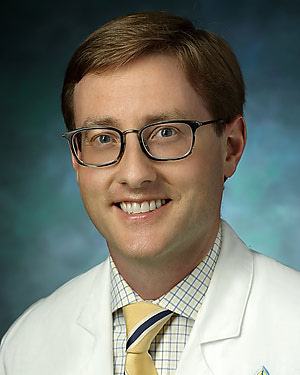
-
Bert Vogelstein Laboratory
The Bert Vogelstein Laboratory seeks to develop new approaches to the prevention or treatment of cancers through a better understanding of the genes and pathways underlying their pathogenesis. Our major focus is on cancers of the colon and rectum. We have shown that each colon neoplasm arises from a clonal expansion of one transformed cell. This expansion gives rise to a small benign colon tumor (called a polyp or adenoma). This clonal expansion and subsequent growth of the tumors appears to be caused by mutations in oncogenes and tumor suppressor genes, and the whole process is accelerated by defects in genes required for maintaining genetic instability. Mutations in four or five such genes are required for a malignant tumor to form, while fewer mutations suffice for benign tumorigenesis. As the mutations accumulate, the tumors become progressively more dangerous. Current studies are aimed at the further characterization of the mechanisms through which these genes act, the identification of other genes that play a role in this tumor type, and the application of this knowledge to patient management.