Research Lab Results
-
Welling Laboratory
Dr. Paul A. Welling and his research team explore the genetic and molecular underpinnings of electrolyte physiology, potassium balance disorders, hypertension and kidney disease. A major thrust of current research activity is devoted to understanding how faulty genes and environmental stresses drive hypertension. The research is providing new insights into how the Western diet triggers deleterious responses of salt-sensitivity genes. The Welling laboratory employs a multidisciplinary approach, spanning from gene discovery, molecular biology, genetically engineered mouse models to translational studies in humans. By illuminating pathophysiological mechanisms and translating the discoveries to develop more effective diagnostic and therapeutic strategies, Welling’s group is striving to improve the health of at-risk individuals and patients with kidney disease and hypertension.
Dr. Welling is the Joseph S. and Esther Hander Professor of Laboratory Research in Nephrology. He has been continuously funded by the National Institutes of Health for over 25 years. Currently he serves as Coordinator of a Global Research Network, funded by the LeDucq Foundation. More about his research can be found at https://www.wellinglab.com/ -
Venu Raman Research Lab
The Raman laboratory is within the Division of Cancer Imaging Research in the Department of Radiology and Radiological Science. The focus of the laboratory is bench-to-bed side cancer research. We integrate molecular and cellular biology, developmental biology, cancer biology, molecular imaging techniques to study cancer formation and progression. Many of the projects in the lab investigate dysregulated genes in cancer and the translatability of this information to a clinical setting. One such project is to functionally decipher the role of a RNA helicase gene, DDX3, in the biogenesis of multiple cancer types such as breast, lung, brain, sarcoma, colorectal and prostate. Additionally, using a rational drug design approach, a small molecule inhibitor of DDX3 (RK-33) was synthesized and its potential for clinical translation is being investigated.
-
Basic science investigations in the Umapathi Lab focus on understanding how metabolic dysregulation drives heart failure and cardiomyopathy. The laboratory employs patient-derived induced pluripotent stem cell (iPSC) models, transgenic mouse systems, and advanced proteomics to define the molecular mechanisms underlying metabolic heart failure (MetHF), with particular emphasis on O-GlcNAcylation and cardiac energetics in heart failure. Additional research explores the mechanistic basis of contractile dysfunction/arrhythmias in inherited cardiomyopathies, particularly LMNA-related disease, integrating calcium signaling, mechanobiology, and electrophysiology to identify novel therapeutic targets for conduction abnormalities and ventricular arrhythmias.
-
Karakousis Lab
The Karakousis Lab is primarily focused on understanding the molecular basis of Mycobacterium tuberculosis persistence and antibiotic tolerance. A systems biology-based approach, including the use of several novel in vitro and animal models, in combination with transcriptional, proteomic, genetic, imaging, and computational techniques, is being used to identify host cytokine networks responsible for immunological control of M. tuberculosis growth, as well as M. tuberculosis regulatory and metabolic pathways required for bacillary growth restriction and reactivation. In particular, we are actively investigating the regulatory cascade involved in the mycobacterial stringent response. Another major focus of the lab is the development of host-directed therapies for TB, with the goal of shortening treatment and improving long-term lung function. Additional research interests include the development of novel molecular assays for the rapid diagnosis of latent TB infection and active TB disease, and for the detection of drug resistance. -
Kass Lab
Basic science investigations span an array of inquiries, such as understanding the basic mechanisms underlying cardiac dyssynchrony and resynchronization in the failing heart, and beneficial influences of nitric oxide/cGMP/protein kinase G and cGMP-targeted phosphdiesterase signaling cascades on cardiac maladaptive stress remodeling. Recently, the latter has particularly focused on the role of phosphodiesterase type 5 and its pharmacologic inhibitors (e.g. sildenafi, Viagra®), on myocyte signaling cascades modulated by protein kinase G, and on the nitric oxide synthase dysregulation coupled with oxidant stress. The lab also conducts clinical research and is presently exploring new treatments for heart failure with a preserved ejection fraction, studying ventricular-arterial interaction and its role in adverse heart-vessel coupling in left heart failure and pulmonary hypertension, and testing new drug, device, and cell therapies for heart disease. A major theme has been with the use of advanced non-invasive and invasive catheterization-based methods to assess cardiac mechanics in patients.asive and invasive catheterization-based methods to assess cardiac mechanics in patients. David Kass, MD, is currently the Director at the Johns Hopkins Center for Molecular Cardiobiology and a professor in cellular and molecular medicine. -
Kunisaki Lab
The Kunisaki lab is a NIH-funded regenerative medicine group within the Division of General Pediatric Surgery at Johns Hopkins that works at the interface of stem cells, mechanobiology, and materials science. We seek to understand how biomaterials and mechanical forces affect developing tissues relevant to pediatric surgical disorders. To accomplish these aims, we take a developmental biology approach using induced pluripotent stem cells and other progenitor cell populations to understand the cellular and molecular mechanisms by which fetal organs develop in disease.
Our lab projects can be broadly divided into three major areas: 1) fetal spinal cord regeneration 2) fetal lung development 3) esophageal regeneration
Lab members: Juan Biancotti, PhD (Instructor/lab manager); Annie Sescleifer, MD (postdoc surgical resident); Kyra Halbert-Elliott (med student), Ciaran Bubb (undergrad)
Recent publications:
Kunisaki SM, Jiang G, Biancotti JC, Ho KKY, Dye BR, Liu AP, Spence JR. Human induced pluripotent stem cell-derived lung organoids in an ex vivo model of congenital diaphragmatic hernia fetal lung. Stem Cells Translational Medicine 2021, PMID: 32949227Biancotti JC, Walker KA, Jiang G, Di Bernardo J, Shea LD, Kunisaki SM. Hydrogel and neural progenitor cell delivery supports organotypic fetal spinal cord development in an ex vivo model of prenatal spina bifida repair. Journal of Tissue Engineering 2020, PMID: 32782773.
Kunisaki SM. Amniotic fluid stem cells for the treatment of surgical disorders in the fetus and neonate. Stem Cells Translational Medicine 2018, 7:767-773
-
Lamichhane Lab
Our research focuses on the biology of the peptidoglycan of Mycobacterium tuberculosis, the organism that causes tuberculosis, and Mycobacteroides abscessus, a related bacterium that causes opportunistic infections. We study basic mechanisms associated with peptidoglycan physiology but with an intent to leverage our findings to develop tools that will be useful in the clinic to treat mycobacterial infections. Peptidoglycan is the exoskeleton of bacteria that not only provides structural rigidity and cell shape but also several vital physiological functions. Breaching this structure is often lethal to bacteria. We are exploring fundamental mechanisms by which bacteria synthesize and preserve their peptidoglycan. Although our lab uses genetic, biochemical and biophysical approaches to study the peptidoglycan, we pursue questions irrespective of the expertise required to answer those questions. It is through these studies that we identified synergy between two beta-lactam antibiotics against select mycobacteria. -
Liliana Florea Lab
Research in the Liliana Florea Lab applies computational techniques toward modeling and problem solving in biology and genetic medicine. We work to develop computational methods for analyzing large-scale sequencing data to help characterize molecular mechanisms of diseases. The specific application areas of our research include genome analysis and comparison, cDNA-to-genome alignment, gene and alternative splicing annotation, RNA editing, microbial comparative genomics, miRNA genomics and computational vaccine design. Our most recent studies seek to achieve accurate and efficient RNA-seq correction and explore the role of HCV viral miRNA in hepatocellular carcinoma.
-
Leucker Laboratory
The Leucker Laboratory is a translational cardiovascular research program dedicated to understanding the mechanisms underlying residual atherosclerotic cardiovascular disease risk and developing innovative strategies for cardiovascular prevention. Our work integrates human vascular biology, advanced cardiovascular imaging, epidemiology, and clinical trials to uncover the pathways linking inflammation, lipoproteins, endothelial dysfunction, and cardiometabolic disease to cardiovascular outcomes.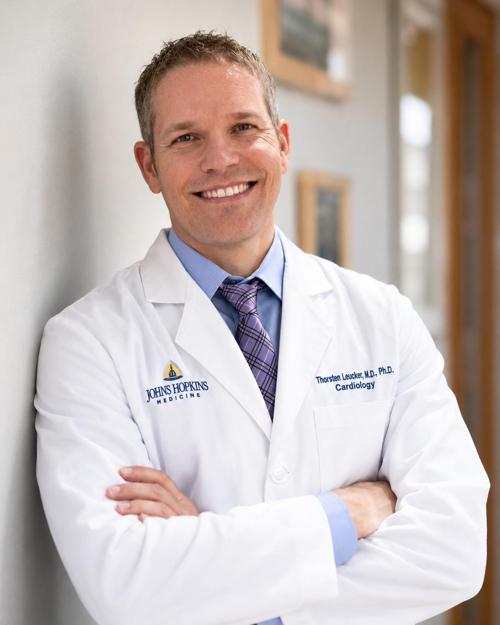
Principal Investigator
-
Neuroengineering and Biomedical Instrumentation Lab
The mission and interest of the neuroengineering and Biomedical Instrumentation Lab is to develop novel instrumentation and technologies to study the brain at several levels--from single cell to the whole brain--with the goal of translating the work into practical research and clinical applications. Our personnel include diverse, independent-minded and entrepreneurial students, post docs, and research faculty who base their research on modern microfabrication, stem cell biology, electrophysiology, signal processing, image processing, and integrated circuit design technologies.