-
Christine Argento, MD

- Associate Professor of Clinical Medicine
Expertise: Pulmonology
Primary Location: The Johns Hopkins Hospital, Baltimore, MD
-
Hans J. Lee, MD

- Interventional Pulmonary Fellowship Director
- Associate Professor of Medicine
Expertise: Pulmonology
Primary Location: The Johns Hopkins Hospital, Baltimore, MD
-
Jeffrey Thiboutot, MD MHS
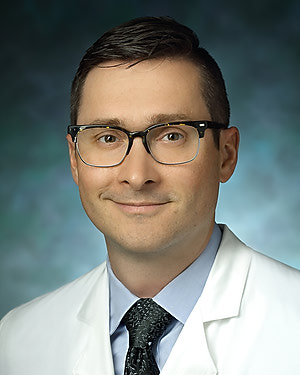
- Assistant Professor of Medicine
Expertise: Pulmonology
Primary Location: Johns Hopkins Bayview Medical Center, Baltimore, MD
Interventional Pulmonology Research Program
On This Page:
Our Interventional Pulmonary faculty are actively engaged in several research studies dedicated to advancing our knowledge of the diagnosis and treatment of patients with a variety of airway disorders. Patients seen by the Johns Hopkins Interventional Pulmonary service have the opportunity to participate in studies that investigate novel treatments and therapies for lung cancer, pleural diseases and other respiratory disorders. If any of the listed research studies below sound like they may apply to you, you can learn more by contacting our research office at [email protected] or 443-287-3701.
-
This research is being done to compare genetic information about your tumor obtained from a “liquid biopsy” (blood draw) to the genetic information about your tumor from a needle tissue biopsy of a lymph node. An EBUS-TBNA procedure includes navigating a scope and taking tissue samples with a needle. The EBUS-TBNA procedure is part of the standard of care; the liquid biopsy is not standard of care and is being explored as a possible alternative to a tissue biopsy.
Lead Investigator: Jeffrey Thiboutot, MD, MHS
Sponsor: Amgen, Inc. -
The purpose of this study is to develop a biomarker test that will utilize small lung tissue specimens and blood samples to determine the specific molecular profile of possible cancerous lung nodules. The developed biomarker test may enable earlier and more specific treatment for patients diagnosed with lung cancer. This research includes genome sequencing.
Lead Investigator: Hans Lee, MD
Sponsor: Veracyte, Inc. -
CASCADE-LUNG is an event-driven, multisite, prospective, observational, blood specimen collection study in the elevated-risk lung cancer screening population. The primary objective is to determine the sensitivity and specificity of the Delfi Lung Cancer ScreeningTest (DLCST).
Lead Investigator: Panagis Galiatsatos, M.D., M.H.S.
Sponsor: Delfi Diagnostics Inc.
Link: https://clinicaltrials.gov/ct2/show/NCT05306288 -
This research is being done to evaluate a new method of imaging tissue samples obtained during bronchoscopy. We are aiming to assess if FFOCT, which DOES NOT require an in-person cytotechnologist, can be used in similar fashion to ROSE, which DOES require an in-person cytotechnologist. If FFOCT is similar to ROSE for assessing tissue quality and quantity, this could be used in healthcare centers that do not have access or resources for ROSE.
Lead Investigator: Jeffrey Thiboutot, MD, MHS
Link: https://clinicaltrials.gov/ct2/show/NCT05171478 -
The goal of this clinical research study is to learn if using gravity instead of suction during a thoracentesis can make the procedure more comfortable for patients. Therapeutic thoracentesis and both treatment techniques (gravity and suction) are considered standard of care and are used for draining fluid around the lung. This is an investigational study, where we will compare the results of gravity and suction techniques.
Lead Investigator: Hans Lee, MD
Link: https://clinicaltrials.gov/ct2/show/NCT05131945 -
This research is being done to evaluate the usefulness of a test, the Percepta Nasal Swab, in determining the risk of lung cancer when a lung nodule is detected by imaging performed as part of lung cancer screening or incidentally during a medical workup.
Lead Investigator: Hans Lee, MD
Sponsor: Veracyte, Inc. -
The purpose of this research is to evaluate the ability of genomic test to help determine a person’s risk of lung cancer when a lung nodule is detected by imaging (a CT or computed tomography scan) performed as part of lung cancer screening or during a medical workup. This research includes genome sequencing, which determines the order of DNA building blocks (nucleotides) in your genetic code.
Lead Investigator: Hans Lee, MD
Sponsor: Veracyte, Inc. -
This research is being done to collect blood samples and medical data from people at high risk for lung cancer or people that were already diagnosed with lung cancer. These blood samples will be used to develop a blood test to differentiate between individuals at high risk with and without lung cancer. The test may allow for the early detection of stage I and II lung cancer tumors in patients at high-risk from a simple blood sample.
Lead Investigator: A. Christine Argento, MD
Sponsor: Nucleix, Inc.
Link: https://clinicaltrials.gov/ct2/show/NCT04968548 -
The condition of having air in the chest cavity is called a pneumothorax. This condition is treated by placing a chest tube to drain the air. The purpose of this study is to measure the pressure of the air in the chest cavity. While the chest tube is being placed, the pressure of the air will be measured. The condition of participants will then be monitored by reviewing medical records.
Lead Investigator: Jeffrey Thiboutot, MD, MHS
Link: https://clinicaltrials.gov/ct2/show/NCT04630301 -
There are approximately 1.5 million cases of solitary pulmonary nodules (SPN) in the lung each year. They may be seen in both benign and malignant cases, making diagnosis challenging. Currently, imaging-based diagnosis takes months or even years of surveillance. The periodic imaging examinations can increase costs and delay relevant treatment. In addition, there is a lack of agreement on the best size or methods used for tissue sampling of SPN in clinical care.
Liquid biopsy using blood and/or tissue offers a method of accurate diagnosis, yet it has not been explored in SPN. Recently, our preliminary study demonstrated that malignant SPNs can be identified using liquid biopsy testing, and it is likely that in the future, a diagnosis can be made within five-days of the initial visit. This study will use tissue and blood to further refine the use of a liquid biopsy disposable device to diagnose SPNs in clinical settings.
Lead Investigator: Jeffrey Thiboutot, MD, MHS
Sponsor: National Institutes of Health (NIH)