Major Scientific Contributions
- Flow limitation in biological systems: expiratory flow limitation (bronchitis, emphysema, asthma), inspiratory flow limitation (snoring, obstructive sleep apnea), blood flow in the pulmonary circulation (Zone 2), CPR stroke volume, systemic venous return
- Cardiopulmonary interactions
- Measurement and analysis of mechanical properties of human and animal lungs: pressure-volume relationships, interdependence between lung elements, effects of lung inflation on lung blood volume
- Mechanisms of gas exchange in human lungs
- Mechanisms of severe asthmatic attack
- Identification and quantification of risk factors for COPD
- Use of pulmonary function testing for diagnosis of respiratory disease and for epidemiologic studies
- Elucidation of the control of cardiac output from interaction between the peripheral circulatory system and cardiac function.
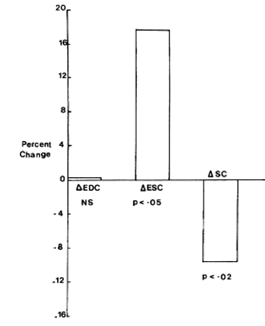
Each of the blocks in this figure signifies one of areas of Sol Permutt’s research. The sizes of the blocks represent the relative numbers of publications in the areas.

The structural basis of airways hyperresponsiveness in asthma
For many years, asthma researchers implicated inflammatory mediators and abnormal airways smooth muscle activity for airway hyperresponsiveness in asthma (>20% fall in forced vital capacity after a bronchoconstricting challenge). Permutt and colleagues1 postulated that increased airway wall thickness could explain this phenomenon. They examined pulmonary function and airways structure by CT scan in 21 moderate to severe asthmatics before and after maximal airway dilation with albuterol, an inhaled bronchodilator. The effect of baseline tone was the bronchoconstricting challenge.
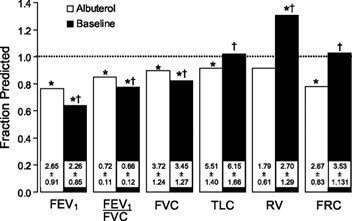
Baseline tone caused marked increases in residual volume (RV) and functional residual capacity (FRC) but only small decreases in forced vital capacity (FVC) because increases in total lung capacity (TLC) helped preserve FVC. These protective tone-induced increases in TLC were highly determined by how much the FRC increased with RV (not shown). An analysis of airway structure revealed that the rise in FRC was dependent on relaxed large airway luminal diameter (but not the constricted luminal diameter or the change in diameter with tone) as shown below:
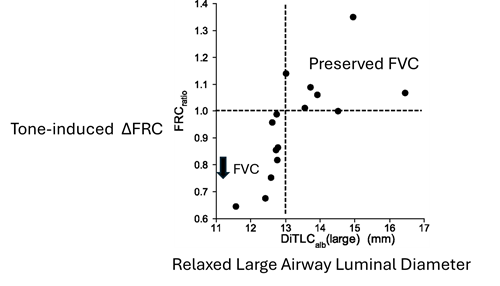
Only the asthmatics with relaxed large airway luminal diameters <13 mm reacted to baseline tone with progressive reductions in FVC (i.e. hyperresponsiveness). To quote Sol: “In summary, the findings of this study suggest that the magnitude of the hyperresponsiveness in asthma is a function of the intrinsic structure of the airways”.
Brown RH, Pearse DB, Pyrgos G, Liu MC, Togias A and Permutt S. The structural basis of airways hyperresponsiveness in asthma. J Appl Physiol 101: 30-39, 2006
Expiratory Flow Limitation
At any given lung volume, increasing effort to exhale causes increased expiratory flow, but only until a maximal flow is obtained.

Further increases in expiratory effort cause no further increases in flow. Permutt and colleagues proposed that flow limitation would occur if there was a segment of airway that collapsed when its transmural pressure decreased to a critical level (the critical transmural pressure, Ptm’). The maximal flow would then be determined by 3 key attributes of the lungs: The elastic recoil pressure (Pel) of the lung, the resistance of the airways between the alveoli and the collapsing segment (Rs), and the Ptm’.
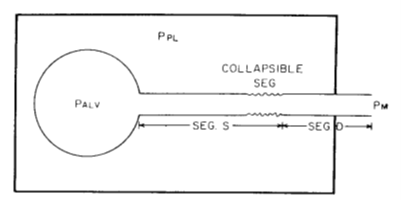
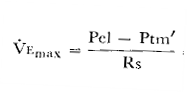 Pride, Permutt, Riley, Bromberger-Barnea
J Appl Phys 1962
The same model could explain flow-limitation and determinants of maximal flow in several other biological systems:
Snoring and obstructive sleep apnea
Smith PL, AR Schwartz, E Gauda, R Wise, R Brower, S Permutt. The modulation of upper airway critical pressures during sleep. Prog Clin Biol Res 345:253-8, 1990.
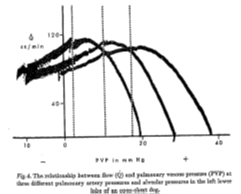
Flow through Zone 2 of the pulmonary circulation
Permutt S, Bromberger-Barnea B, Bane HN. Alveolar Pressure, Pulmonary Venous Pressure, and the Vascular Waterfall
Venous return from the systemic circulation
Guyton AC et al. Venous return at various right atrial pressures and the normal venous return curve. Am J Physiol 1967. 189: 609-615.
Micturition
Griffiths, DJ. Hydrodynamics of Male Micturition. Med Biol Eng. 1971: 9: 581-588.
Cardiopulmonary resuscitation
Hausknecht MJ, RA Wise, RG Brower, C Hassapoyannes, ML Weisfeldt, J Suzuki, and S Permutt. The effects of lung inflation on blood flow during cardiopulmonary resuscitation in the canine isolated heart lung preparation. Circ. Res. 59:676 683, 1986.
Relationships Among Pulmonary Artery Pressure, Alveolar Pressure and Pulmonary Blood Flow
First Description of “Zones in the Lung.”
The Concept of the “Vascular Waterfall.”

PPA’ = pressure in the pulmonary arteries at the bottom of the lung
PLA’ = pressure in the pulmonary veins at the bottom of the lung
PALV = pressure in the alveolar air space
HT = vertical height from the bottom of the lung to the top of the lung
H1 = vertical distance from the bottom of the lung to the plane where the pressure in the pulmonary veins = PALV
H2 = vertical distance from the bottom of the lung to the plane where the pressure in the pulmonary arteries = PALV.
RT = pulmonary artery resistance through the entire lung
QT = Blood flow through the entire lung
Pleural pressure and ventricular afterload
One of Dr. Permutt’s major contributions was the recognition that changes in pleural pressure, the pressure surrounding the heart, will alter left ventricular afterload in a way analogous to, but directionally opposite, changes in arterial blood pressure. That is, increases in pleural pressure, like decreases in arterial pressure, reduce LV afterload and facilitate ventricular emptying. During conditions in which the heart is more sensitive to afterload and less sensitive to preload, such as systolic heart failure, changes in pleural pressure can be used to assist forward blood flow. These concepts have also been applied to optimize blood flow during CPR, to explain pulmonary edema from upper airway obstruction, and clarify the variable sensitivity patients display to the application of PEEP.
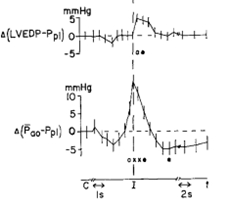
Mean changes in left ventricular filling pressure (LVEDP-Ppl) and transmural aortic pressure (Pao-Ppl) during deep spontaneous inspiration in a dog. The increase in filling pressure and aortic distending pressure associated with decreases in stroke volume (not shown) were interpreted to indicate increased LV afterload from decreased pleural pressure.
Schrijen F, W Ehrlich, S Permutt. Cardiovascular changes in conscious dogs during spontaneous deep breaths. Pflugers Arch 1975 Mar 26; 355(3):205-15