
Solbert Permutt's Enduring Legacy
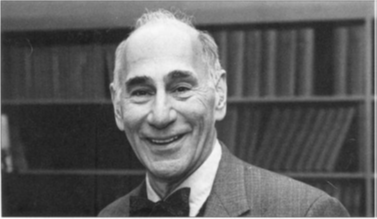
Sol Permutt was a luminary in pulmonary and critical care medicine, an extraordinary researcher, physician, colleague, and mentor. He transformed the Johns Hopkins University School of Medicine's Division of Pulmonary and Critical Care Medicine, advanced the field of cardiopulmonary physiology, and mentored countless trainees and junior faculty at the Johns Hopkins Schools of Medicine and Public Health. His guidance shaped generations of physician-scientists, including many current Hopkins faculty and leaders in respiratory and cardiovascular physiology across the United States and around the world.
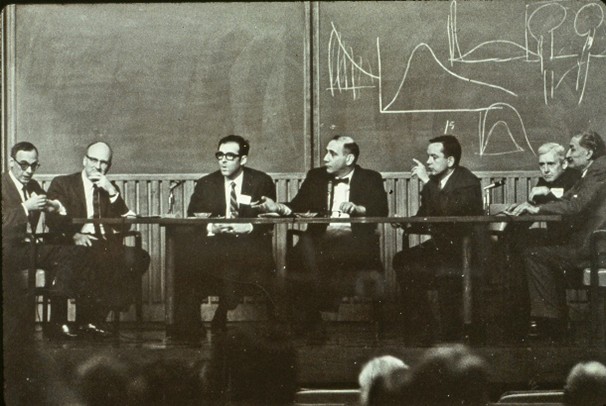 Sol Permutt holding court at a meeting at Columbia University in the 1960s. From left to right, William Briscoe, Jere Mead, Ewald Weibel, Sol Permutt, Peter Macklem, Dick Riley, and Domingo Gomez.
Biography
Sol grew up in Birmingham, Alabama, a brilliant but undisciplined student whose grades were outstanding or poor but never average. He was drafted into the military twice, in 1943 and in 1953, and with the Army’s support he completed medical school at the University of Southern California.
After medical residency at the University of Chicago, he directed a tuberculosis ward at Fitzsimmons Army Hospital in Denver, where he was inspired by Bill Harris and William Stead to pursue a career in pulmonary medicine. In 1955, he became chief resident in medicine under Robert Bloch at Montefiore Hospital in New York, and in 1956 began research training under Richard Riley at Johns Hopkins in Baltimore. He served for 3 years as Chief of Cardiopulmonary Physiology at National Jewish Hospital in Denver before returning to Hopkins in 1961, where he spent the rest of his career. He was the Director of the Division of Pulmonary and Critical Care Medicine from 1972 to 1981.
During his tenure, he inaugurated a collaborative program integrating the clinical, research, and educational activities of the division with programs in the School of Public Health. He also oversaw extensive growth in the division’s clinical program, including the opening of a new intensive care unit and a new bronchoscopy program, as well as clinical consultative and inpatient services provided to other Baltimore-area hospitals.
After stepping down from the directorship, Sol devoted his tremendous energy and talent to research in respiratory disease and to training of young scientists and clinicians.
His professional colleagues remember Sol as an intellectual giant, capable of interpreting data with extraordinary insight and seeing relationships that nobody else could discern. When they went to Sol with a with a vexing scientific question, he would spend days, sometimes weeks, in deep intense thought, engaging anyone who might know something pertinent, exploring every aspect of the problem, most of which nobody had thought to consider.
Through endless passionate discussion, he led his colleagues invariably to new insights and higher levels of understanding than they ever thought possible. For countless fellows and faculty colleagues over the years, working with Sol was the most intellectually exciting and satisfying experience of their professional lives. Sol was their source of light.
Dr. Permutt received numerous awards for his contributions to pulmonary biology and medicine, including two of the most prestigious in the field, the George Wills Comstock Award from the American Lung Association in 1988 and the Edward Livingston Trudeau Medal from the American Thoracic Society in 1992.
Co-Authorship
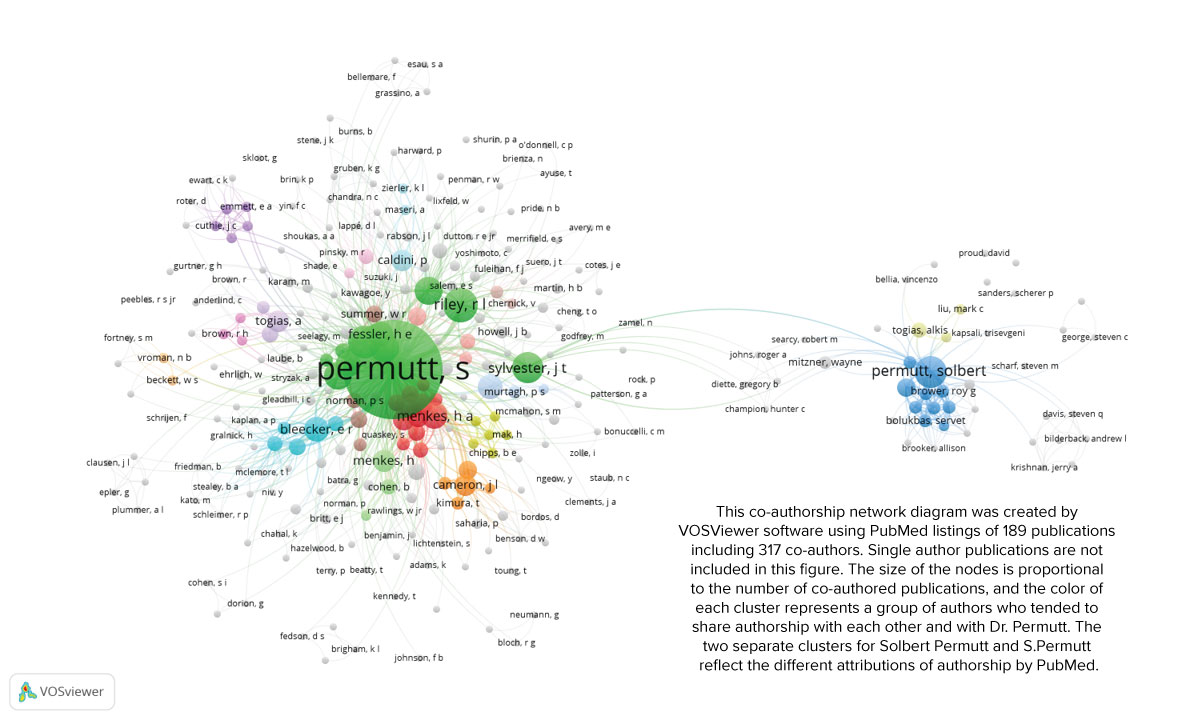
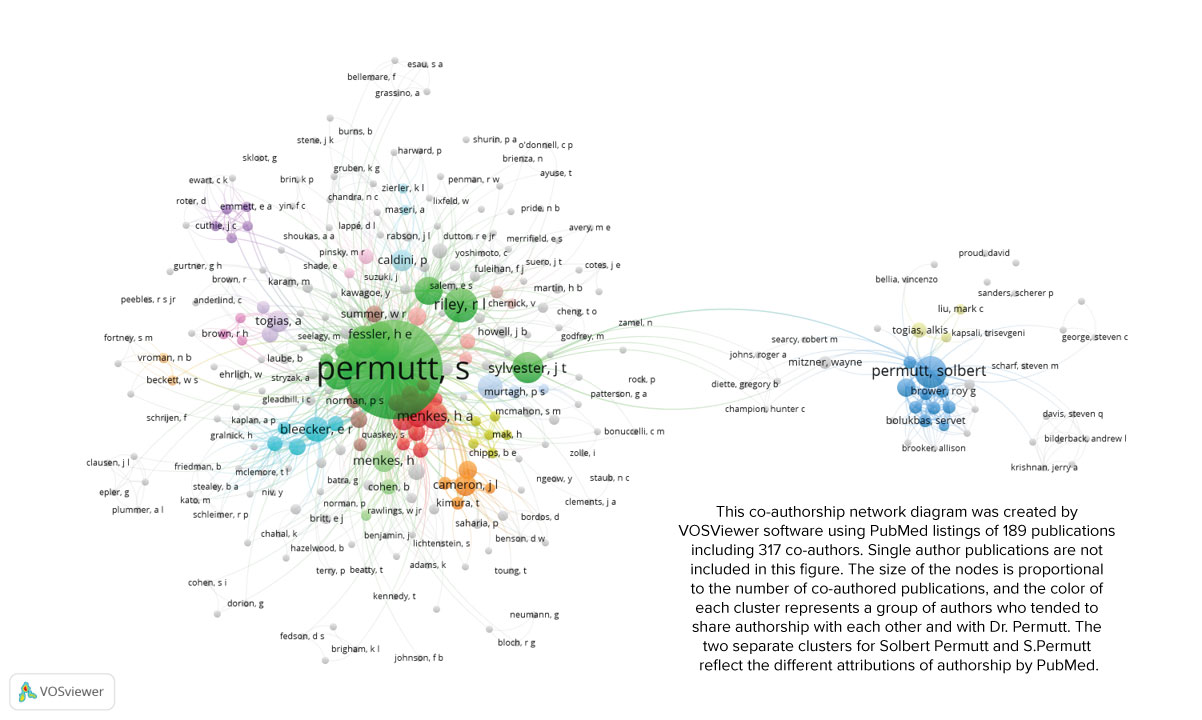
This co-authorship was created by VOSViewer using PubMed listings of 189 publications including 317 co-authors. Single author publications are not included in this figure.
The size of the nodes is proportional to the number of co-authored publications, and the color of each cluster represents a group of authors who tended to share authorship with each other and with Dr. Permutt.
The two separate clusters for Solbert Permutt and S.Permutt reflect the different attributions of authorship by PubMed.