
Fellow Research
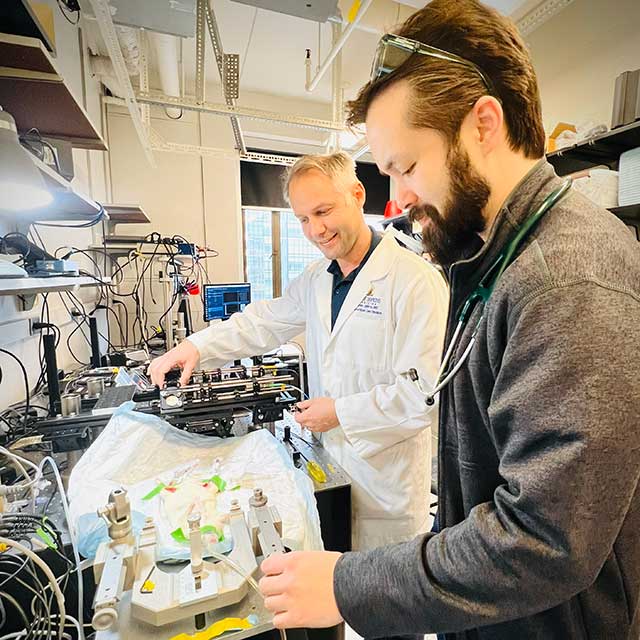
At Johns Hopkins, we are committed to training the next generation of academic neurointensivists — well-rounded clinicians who are not only experts in providing cutting-edge clinical care at the bedside but also advance the science and practice of neurocritical care. Our fellowship offers a robust research component, including a dedicated research track, that enhances clinical training and positions fellows at the forefront of neurocritical care innovation.
Research Opportunities: The Heart of the Fellowship
Fellows are encouraged to pursue scholarly work that reflects their interests, contributing to the evolution of the field while gaining essential skills in different domains of the science of neurocritical care: translational, clinical, educational or quality improvement research.
Our fellows benefit from:
- Our faculty mentors — who are leaders in the neurocritical care field — provide unparalleled expertise and guidance, ensuring that each fellow’s research trajectory is thoughtfully nurtured and aligned with cutting-edge initiatives.
- Access to the wealth of research resources at Johns Hopkins University, including vast datasets, state-of-the-art technologies and interdisciplinary collaborations across neurology, neurosurgery, anesthesiology and critical care medicine.
- Flexibility to design their own personalized research curriculum, with longitudinal elective time built into the fellowship program. Whether fellows choose the research track or the clinician educator track, they will have ample time to engage deeply in scholarly work while progressing in their clinical training.
Mentorship and Collaboration
A hallmark of the Johns Hopkins Neurocritical Care Fellowship is the strong mentorship model. Each fellow is paired with a faculty mentor who shares their research interests. These mentors guide fellows through every aspect of their research journey, from hypothesis development to manuscript submission, and are instrumental in supporting grant writing. Fellows can collaborate with faculty from across the neurocritical care division, which fosters a truly interdisciplinary approach to solving complex clinical problems.
Moreover, faculty research projects often involve national and international collaboration, exposing fellows to a global network of experts. This collaborative, mentorship-driven model empowers fellows to become leaders in neurocritical care, capable of driving meaningful advancements in the field.
Research Excellence and Clinical Training Synergy
While scholarly activities and research are core components of our program, clinical excellence is of paramount significance. Thus, research blocks are alternated with clinical blocks to allow for longitudinal time for research while ensuring continued clinical training in the practice of neurocritical care.
Moreover, our research opportunities are designed to enhance clinical training by deepening fellows’ understanding of cutting-edge technologies, emerging therapies and innovative clinical practices. Fellows engage in longitudinal research experiences while developing clinical expertise necessary to succeed in any practice setting — whether academic, community-based or global.
This balance of research and clinical training equips fellows to excel as academic and non-academic neurointensivists who can translate scientific discoveries into improved patient care and contribute to the global neurocritical care community. Our program provides an ideal environment for those interested in shaping the future of the field while also becoming world-class clinicians and educators.
For more information
Fellows interested in learning more about the research opportunities within the division can visit the Neurocritical Care Division website for information about faculty projects, funding opportunities and collaborations. We are committed to fostering a research-driven culture where fellows can thrive both as clinicians and scholars.