-
Elise Ng, MD
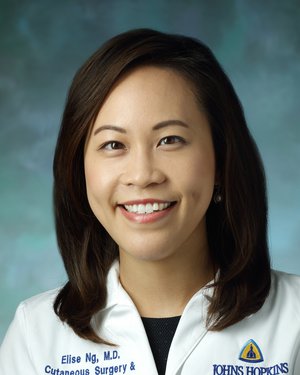
- Director, Dermatologic Surgery
Expertise: Reconstructive Plastic Surgery, Mohs Surgery, Dermatology
Primary Location: Johns Hopkins Health Care & Surgery Center - Green Spring Station, Lutherville, Lutherville, MD
-
Myriam Lucia Vega Gonzalez, MD MPH

Expertise: Laser Surgery and Cosmetic Dermatology, Dermatology
Primary Location: Johns Hopkins Health Care & Surgery Center - Green Spring Station, Lutherville, Lutherville, MD
-
Jennifer Powers, MD

Expertise: Reconstructive Plastic Surgery, Laser Surgery and Cosmetic Dermatology, Dermatology, Dermatologic Surgery, Mohs Surgery
Primary Location: Levi Watkins, Jr., M.D., Outpatient Center, Baltimore, MD
-
Joel C. Sunshine, MD PhD MS

Expertise: Dermatopathology, Dermatology
Primary Location: Johns Hopkins Health Care & Surgery Center - Green Spring Station, Lutherville, Lutherville, MD
May is Skin Cancer Awareness Month
May is Skin Cancer Awareness Month; physicians and researchers from the Johns Hopkins Department of Dermatology are available to discuss disease prevention, treatments and research.
One of the most common forms of cancer diagnosed globally, skin cancer occurs when the tissues of the skin begin to grow abnormally. It exists in many forms, including basal cell carcinoma and squamous cell carcinoma (cancers of the middle and outermost layers of skin) and melanoma (cancer that affects the cells that make skin pigment).
Skin cancer can develop in any person at any age regardless of their skin tone, though individuals with less melanin (skin pigmentation) are at higher risk. Reducing exposure to ultraviolet (UV) light from the sun or artificial sources, such as tanning beds, can help prevent skin cancer. Routine skin exams conducted by a medical professional and self-exams can help catch it early on.
One of the most common forms of cancer diagnosed globally, skin cancer occurs when the tissues of the skin begin to grow abnormally. It exists in many forms, including basal cell carcinoma and squamous cell carcinoma (cancers of the middle and outermost layers of skin) and melanoma (cancer that affects the cells that make skin pigment).
Skin cancer can develop in any person at any age regardless of their skin tone, though individuals with less melanin (skin pigmentation) are at higher risk. Reducing exposure to ultraviolet (UV) light from the sun or artificial sources, such as tanning beds, can help prevent skin cancer. Routine skin exams conducted by a medical professional and self-exams can help catch it early on.
Skin Cancer Podcast Hub

To arrange an interview, please contact Rebekah Mikeasky at [email protected].
The following Johns Hopkins Medicine physicians are available for comment: