

Johns Hopkins 'Paws for Healing' Facility Dog Program
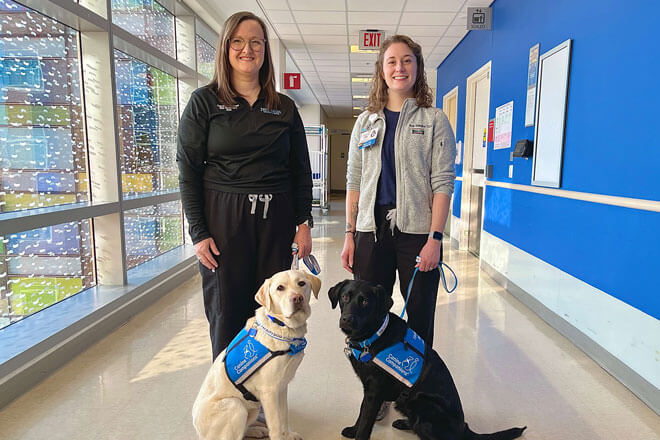
Providing comfort and support to children in the hospital.
Facility dogs are expertly trained canines who work directly with pediatric patients during clinic or hospital care. Rosalina “Rosie” and Yoda — the first full-time facility dogs to work at Johns Hopkins Children’s Center — joined the hospital in February 2026.
Both dogs are labrador and golden retriever mixes. Their handlers, Carrie Potter and Molly Trippe-Gallagher, are child life specialists who work with the dogs for 40 hours each week to help patients meet their goals, including serving as a motivator for patients, comforting patients during procedures and providing a friendly distraction throughout a patient’s hospitalization.
Meet Yoda and Rosie
Meet Yoda

Meet Rosie

Program FAQs
-
- Please do not attempt to distract the facility dogs from their work — and remember, sometimes you may not know what it looks like when they are working.
- Always ask the handler in advance before petting the facility dogs, and be sure to practice good hand hygiene before and after petting.
- Do not give the dogs treats.
- Child life specialists will coordinate with the clinical team to arrange visits from Rosie and Yoda for patients.
- Do not interfere with cues from the dogs’ handlers.
-
Rosie and Yoda both started training when they were just a few weeks old. They received nearly two years of training from Canine Companions, an organization that has, since 1975, bred, raised and trained dogs to assist people who have disabilities or are in hospitals and other facility settings.
Facility dogs learn 40 commands that allow them to interact with and calm patients and staff members. They can also pull toy wagons, push drawers and retrieve items. Facility dogs receive special certification through the Assistance Dogs International standardized practical test, and return for follow-up assessments on a periodic basis.
-
Pet therapy animals are beloved volunteers who work with their humans to bring comfort and cheer to patients and families in the hospital. Their humans are hospital volunteers, and the dogs are registered with a pet therapy organization. They visit patients in some common areas and patient rooms. Many of these friendly pups, along with their owners, visit the hospital several times a month.
While both programs are helpful to patients and their families, the support Rosie and Yoda can provide is more extensive due to the special training they received from Canine Companions. Both facility dogs and pet therapy volunteers help make the hospital feel more comfortable for patients, but Rosie and Yoda can be present during a child’s exam, scan or procedure because they have been trained to meet the psychosocial needs of patients and aid in positive coping.
-
Yoda will be at the Blalock-Taussig-Thomas Heart Center outpatient cardiology clinic, the pediatric cardiac intensive care unit, and pediatric floor 9N.
Rosie will be at the Rubenstein Building infusion clinic, and pediatric floors 10N and 12S.
-
In order to receive a facility dog visit, a patient must:
- Be receiving care on one of the units where the facility dogs work.
- Have a treatment goal the facility dog and child life specialist can assist with meeting.
- Need help coping before, during or after a procedure.
- Have an extended hospital stay.
- Not be on isolation precautions or allergic to dogs.
Rosie and Yoda have busy schedules, and need rest during their day. They will not be able to meet every patient who would like to see them.
-
The Johns Hopkins Children’s Center Facility Dog Program is made possible entirely through philanthropy. Every aspect of the program, including the dogs’ specialized training, veterinary care, food, equipment and handler support is funded through the generosity of donors, corporate partners and community supporters. Because the program does not receive hospital operating funds, philanthropic support is essential to sustaining and expanding the impact of our facility dogs. Gifts to the program help ensure these highly trained dogs can continue providing comfort, emotional support and evidence-based therapeutic interventions to thousands of patients and families each year.
