Stroke Recovery Timeline
Featured Expert

Updated July 13, 2026.
A stroke is an emergency situation, and the faster you receive treatment the better. But what happens in the days, weeks and months after a stroke? Johns Hopkins stroke rehabilitation specialist Preeti Raghavan, M.D., explains that “at times, the process can be slow and uncertain, and different people recover in a range of ways.”
Although recovery looks different for everyone, it can be helpful to get a sense of the stroke recovery timeline so you know what to expect after you or a loved one experiences a stroke.
Strokes aren’t always easy to recognize. Look out for these signs.
Key Points
- Stroke recovery is different for everyone, but it is often a long and challenging process.
- Most noticeable recovery usually happens during the first three months after a stroke, as the brain adapts and regains function.
- People with more severe stroke may recover at a different pace than people with less severe stroke.
- The progress slows after six months, but recovery can continue for many months or years, supported by ongoing therapy and lifestyle adjustments.
- There is no expiration date for stroke recovery. It can continue as long as the barriers are being addressed and there are opportunities for learning.
Day 1: Initial Treatment
If you experience a stroke, you will likely be initially admitted to an emergency department to stabilize your condition and determine the type of stroke. If it is caused by a blood clot (ischemic stroke), clot-busting medication can help reduce long-term effects if you are treated in time.
Depending on the stroke’s severity, you may need to spend time in intensive care or acute care.
“Starting rehabilitation as soon as possible after the cause of the stroke is treated is vital in stroke recovery,” says Raghavan. “At Johns Hopkins, rehabilitation starts around 24 hours after a stroke.”
The rehabilitation team includes physiatrists, neurologists, physical and occupational therapists, speech-language pathologists and nurses. They meet daily to discuss the patient’s condition, and some form of therapy is delivered as often as every hour during the first day or two.
First Few Weeks After a Stroke
The typical length of a hospital stay after a stroke is five to seven days. During this time, the stroke care team will evaluate the effects of the stroke, which will determine the rehabilitation plan.
The long-term effects of stroke — which vary from person to person, depending on the stroke’s severity and the area of the brain affected — may include:
- Cognitive symptoms like memory problems and trouble speaking
- Physical symptoms such as weakness, paralysis and difficulty swallowing
- Emotional symptoms like depression and impulsivity
- Heavy fatigue and trouble sleeping
Physical and occupational therapy can help determine which areas of the brain are affected by working with a patient to complete various tasks, like walking or brushing hair. Speech-language therapy is important for people who have trouble swallowing due to stroke or aftereffects of having a breathing tube.
Therapy sessions are conducted up to six times each day while the person is at the hospital, which helps evaluate the damage caused by the stroke and jump-start the recovery.
Stroke Rehabilitation Priorities
Activities of daily living (ADL) become the focus of rehabilitation after a stroke. ADL typically include tasks like bathing or preparing food. But you should also talk with your care team about activities important to you, such as performing a work-related skill or a hobby, to help set your recovery goals. While therapy is vital, it is equally important to practice on your own.
Beyond affecting ADL, a stroke can have serious cognitive and emotional impacts for both patients and caregivers. Rehabilitation psychologists and neuropsychologists can screen for these kinds of challenges and create a plan to improve cognitive function and develop resilience in the face of what could be permanent lifestyle changes.
Leaving the Hospital After a Stroke
Your care team will formulate a discharge plan that will depend on your level of functional impairment. After the hospital stay, you might continue your rehabilitation:
- In an inpatient rehabilitation unit or independent rehabilitation facility, if you can benefit from being monitored by a physician and can tolerate three hours of therapy per day
- At a subacute rehabilitation facility, if you require a slower course of rehabilitation with one to two hours of therapy daily
- At home with visits to an outpatient rehabilitation clinic as needed
“You don’t have to be at 100% health to return home after a stroke,” says Raghavan. “If you can perform most of your regular daily activities in your home environment and/or you have family support to assist with these activities, you can go home.”
1–3 Months Post-Stroke
“The first three months after a stroke are the most important for recovery and when many patients will see the most improvement – this time is considered the critical period as rehabilitation efforts are synergistic with natural recovery processes,” says Raghavan. During this time, most people will enter and complete an inpatient rehabilitation program, or make progress in their outpatient therapy sessions.
The goal of rehabilitation is to restore function as close as possible to prestroke levels or learn compensatory strategies to assist with function. An example of a compensatory strategy is learning to hold a toothpaste tube so the strong hand can unscrew the cap. “Compensatory strategies are often essential when a person cannot yet do tasks the way they were done before the stroke. However, they can also be hard to unlearn later when it becomes possible to do more,” Raghavan notes.
Spontaneous Recovery
During the first three months after a stroke, a person might experience a phenomenon called spontaneous recovery — a skill or ability that seemed lost to the stroke returns as the brain finds new ways to perform tasks.
Anticipating Setbacks
Some people will experience setbacks in the months after a stroke, like pneumonia, a heart attack or a second stroke. These challenges can have significant effects physically, mentally and emotionally, and rehabilitation might need to be put on hold. It is important to work with your care team to adjust rehabilitation goals when there are setbacks.
Exploring New Treatments
While physical, occupational and speech therapies remain the key components of stroke rehabilitation, researchers are always coming up with new ways to enhance or supplement these treatments. One innovative technique is noninvasive brain stimulation (NIBS), which uses weak electrical currents to stimulate areas of the brain associated with specific tasks like movement or speech. This stimulation can help boost the effects of therapy. Another innovation is a new treatment for spasticity and muscle stiffness that does not produce muscle weakness using an injectable enzyme. In addition, technology-assisted rehabilitation can extend rehabilitation by targeting specific actions or processes in an engaging way.
Dressing after a Stroke
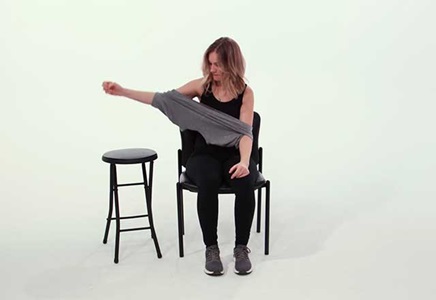
Watch these videos from our expert showing how to put on different articles of clothing after a stroke.
The 6-Month Mark and Beyond
After six months, improvements are possible but are likely to be slower as the critical period of recovery closes. Most people who experienced stroke reach a relatively steady state at this point. For some, this means a full recovery. Others will have ongoing impairments in this chronic phase of stroke. Whether a full recovery is possible depends on a variety of factors, including severity of the stroke, how fast the initial treatment was provided, and the type and intensity of rehabilitation.
There are many new treatments and therapies to facilitate recovery in the chronic phase of stroke, so it is crucial to continue following up with members of your care team, including:
- Your primary care physician, who can help you manage any health concerns that can also impact stroke recovery. They can also help you take steps to prevent future strokes, such as managing high blood pressure and diabetes, optimizing nutrition and sleep and overcoming challenges to movement and exercise.
- A rehabilitation physician (physiatrist), who can help coordinate aspects of your recovery and keep meeting with you as long as you need the support, whether it’s for a few years or the rest of your life. A rehabilitation physician and their team can also help with lifestyle challenges necessary to facilitate recovery.
- Physical, occupational and speech therapists, who can help you recover as much function as possible in day-to-day activities, with a focus on your personal goals
- A neurologist, who understands the mechanisms behind stroke-related brain injury and can suggest customized treatments to target the affected area of the brain
- A rehabilitation psychologist, who can help with cognitive, emotional and behavioral functioning as well as reintegrating with the community, which can aid in recovery
“During checkups, I look to support patients any way I can,” says Raghavan, a physiatrist. “If there’s any way I can help them maximize their ability to communicate, return to work, improve sleep patterns, build muscle tone, minimize fall risk or address psychological needs, we’ll create a plan.”
A coordinated effort among specialists can facilitate further progress months and years down the line. While improvement may take longer for some people, every small step counts. “Every time you need less assistance with a task, that is a milestone,” says Raghavan. “We are still learning a lot about recovery and there are many new treatments on the horizon - I think there is much to be hopeful about.”
Medically reviewed by Preeti Raghavan, M.D.
BE FAST to Identify a Stroke

A stroke is always an emergency situation. An easy way to quickly identify stroke symptoms is the acronym BE FAST:
B = Balance loss
E = Eye (vision) changes
F = Face drooping or twisting
A = Arm weakness
S = Speech difficulty
T = Time to call 911