


Primary ovarian insufficiency (POI), also known as premature ovarian failure, is a condition in which a woman’s egg supply is depleted early in life, prior to age 40.
Women with primary ovarian insufficiency may experience infertility due to low egg supply and irregular or absent menstrual cycles.
Primary Ovarian Insufficiency Treatment: Why Choose Johns Hopkins
- The reproductive endocrinologists at the Johns Hopkins Fertility Center have decades of experience helping women with primary ovarian insufficiency achieve pregnancy.
- We develop treatment plans in line with each patient’s goals. If a woman with low egg supply wishes to attempt to become pregnant with her own eggs, we will counsel her on treatment options. If a woman cannot or prefers not to become pregnant with her own eggs, we offer oocyte donation, a treatment with a high rate of success.
- Even if you are not currently trying to conceive, we can help you manage the symptoms of primary ovarian insufficiency using hormone therapy. Low levels of the hormones estrogen (estradiol) and progesterone can cause hot flashes and vaginal dryness. Hormone therapy can lessen these symptoms and prevent other long-term health consequences such as bone loss.
- The research team at the Fertility Center is at the forefront of finding new ways to improve treatment options for women who have primary ovarian insufficiency.
Primary Ovarian Insufficiency Treatment: What to Expect
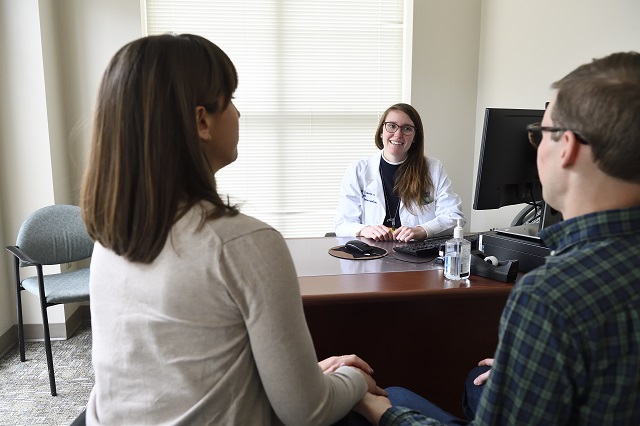
At your initial consultation, you will meet with your fertility specialist and share your treatment goals. Some women with primary ovarian insufficiency wish to become pregnant, while others wish to treat symptoms and prevent long-term health consequences. We want to first understand your goals before developing your treatment plan.
We will review your medical records and order additional testing (if needed) to confirm your primary ovarian insufficiency diagnosis and develop a custom treatment plan.
You may require specialized treatment for other medical issues caused by primary ovarian insufficiency. We will work closely with experts across the Johns Hopkins medical system to provide a comprehensive approach to your care.