
Donor Stories
The Miriam Jay Wurts Andrus Center for Community Geriatrics
Miriam Jay Wurts Andrus (1909–2000) was a philanthropist, social activist and artist with a lifelong passion for helping others and a deep understanding of the need for community-based, comprehensive coordinated health care for older adults. Born in New York City and raised in New Jersey, she attended Vassar College and Columbia University before getting her master’s degree in political science from The Johns Hopkins University. Although she married and settled in Baltimore, she lent her support to communities worldwide in many ways, from contributing to the founding of the United Nations through her role with the National Committee of Americans United for World Government to helping fund private women’s universities in Japan and Iran. In Baltimore, she supported Center Stage and Brown Memorial United Presbyterian Church with her time, dedication and financial contributions. A talented photographer and gardener, Mrs. Andrus bonded in the last years of her life with her geriatrician, Dr. John Burton. He visited her at home regularly, helping her face medical challenges as she taught him about growing dahlias. Thanks to Dr. Burton, Mrs. Andrus recognized how vital this type of care can be to homebound seniors' health, well-being, comfort and sense of hope. Her desire to make it more broadly available through advocacy, educational programs and research is what inspired her generous gift from her estate to create The Miriam Jay Wurts Andrus Center for Community Geriatrics in the Division of Geriatric Medicine and Gerontology at Johns Hopkins.
Since the center’s 2001 dedication, the division has developed and studied innovations in clinical care for older adults, provided excellent and novel education for medical and health care professionals, and conducted research to improve older adults’ health and well-being while living in the community. Dr. Burton says, “These funds are precious because they allow us to nurture people. If you have a young person getting a start in their career, you can foster their talent even before they have the ability to get a grant.”
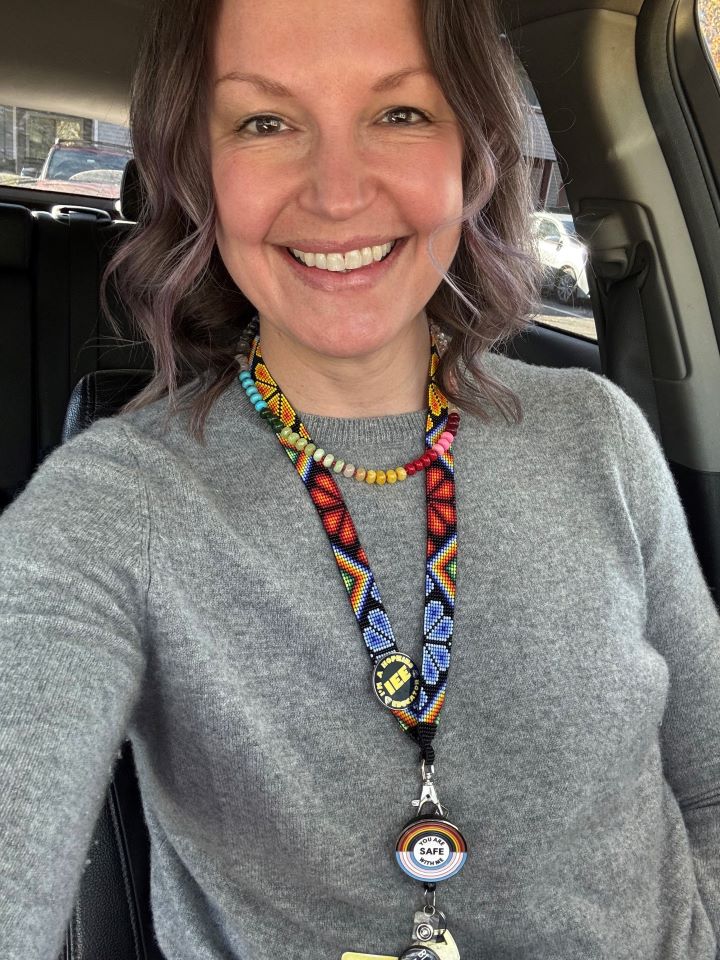
With the Miriam Jay Wurts Andrus Center for Community Geriatrics' generous support, Dr. Mariah Robertson has advanced innovative clinical and educational initiatives that bring care and learning into home and community settings. This funding has enabled a collaborative project with colleagues in pulmonary and critical care medicine at Hopkins to examine disparities in the use of pulse oximetry among home-based patients—an important step toward equitable, evidence-based care. It has also supported the development of arts- and museum-based educational experiences for interdisciplinary learners, including T32 trainees, geriatric medicine fellows and medical students. In collaboration with emergency medicine and paramedicine teams, Dr. Robertson has helped implement a curriculum that trains paramedicine students to care for older adults in the home using the Age-Friendly Health Systems 4Ms framework. Collectively, these efforts have strengthened connections between learners and home-limited older adults, emphasizing the critical role of the home environment in understanding and caring for patients as whole people.
Dr. Alicia I. Arbaje has used the center's generous support to become a recognized physician-scientist and thought leader in integrating geriatric medicine and human factors engineering into health care delivery redesign. This work has improved older adults’ care transitions across health care settings and helped older adults thrive after hospitalization as they transition to the home. Dr. Arbaje has developed interventions to engage older adults, caregivers and home health agencies in health care delivery redesign to improve older adults’ well-being and support the home health care agencies serving them as they return home from the hospital. She developed the Hospital-to-Home-Health Transition Quality Index (H3TQ) to integrate older adult and home health clinician perspectives into care transition quality measurement. Subsequently, she developed the Coming Home Intervention (CHI) to enable home health agencies to proactively identify and act upon older adults’ transitions issues. Dr. Arbaje is now creating learning health collaboratives across hospitals and home health care agencies to facilitate communication to support older adults and their families when coming home from the hospital.
William H. Adler III, M.D., Lectureship on Science and Aging
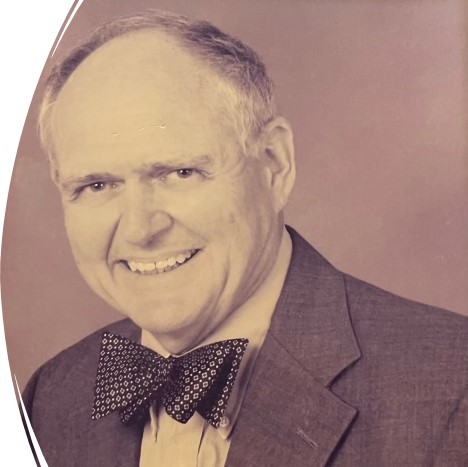
William H. Adler III, M.D. (1939–2021), trained clinically as a pediatrician but spent his career conducting basic science studies and clinical research on the human immune system. After completing his degrees at Harvard College (B.S. 1961) and The University at Buffalo (M.D. 1965), he entered pediatric residency and immunology fellowship at University of Florida (1965–1970). He was drafted in 1970 and stationed at the U.S. Army Medical Research Institute of Infectious Diseases at Fort Detrick, Maryland. After that, Dr. Adler spent two years as a visiting scientist in Harrow, England, working with Nobel Laureate Sir Peter Medawar. Upon returning to the U.S., he began his NIH career at the National Institute of Child Health and Human Development studying the effects of growth, development and aging on immune function. When the National Institute of Aging was established, he joined the Gerontological Research Center (GRC) in Baltimore as the director of clinical immunology research, located within what is now the Johns Hopkins Bayview Medical Center campus. Dr. Adler was an active member of the Johns Hopkins Division of Geriatric Medicine and Gerontology during his two decades at the GRC (1977–1997).
Dr. Adler’s research made significant contributions to the understanding of the workings of the human immune system, including the regulation of natural killer T cell activity, tumor immunology, human T and B cell function across the life span, and the effect of aging on the course of HIV/AIDS.
In 2023, the William H. Adler III, M.D., Lectureship on Science and Aging was established by his daughter, Ellen Adler O’Connell, and his widow, Dr. Rebecca Elon, to honor Dr. Adler’s memory, science, and work within the Division of Geriatric Medicine and Gerontology.
The Daniel and Jeannette Hendin Schapiro Geriatric Medical Education Center
Generous and visionary support from an anonymous donor led to the establishment of the Daniel and Jeannette Hendin Schapiro Geriatric Medical Education Center in 2012. A unique collaboration with Johns Hopkins Bayview’s Division of General Internal Medicine, the Schapiro Center’s goal is to expand training in the care of older adults through the development of practical educational programs that prepare physicians, trainees and allied health professionals to treat this unique population. To do this, we’ve consistently focused on work that impacts the care of older adults at the front lines of health care, including partnering with organizations such as the Alzheimer's Association of Maryland to train more primary care practices in the use of cognitive assessments and interventions; developing curriculum for internal medicine residents in caring for patients with multimorbidity; and integrating care among disciplines, such as an innovative collaboration of faculty from the Johns Hopkins School of Nursing, the Johns Hopkins Hospital Pastoral Care Education Program and the Notre Dame University School of Pharmacy.
Thanks to the Schapiro Center, our division has supported Dr. Nancy Schoenborn’s broadly recognized work on multimorbidity and cancer screenings for older adults, Dr. Jennifer Hayashi’s work in home-based care, and collaborations with the Johns Hopkins Geriatric Workforce Enhancement Program (GWEP). We’ve been able to create the educational research infrastructure necessary to conduct these important projects rigorously. This infrastructure, which includes a full-time research assistant and access to statistical support, has also supported successful application for other competitive education research funding. Without the Schapiro Center, these crucial aspects of educating health care professionals in caring for older adults would not be possible.
The center’s director Danelle Cayea, M.D., M.S., states, "It is our plan that programs developed by the Schapiro Center will serve as templates that can be translated into clinical education and practice at programs throughout the United States."
The Matthew Tayback Memorial Fund
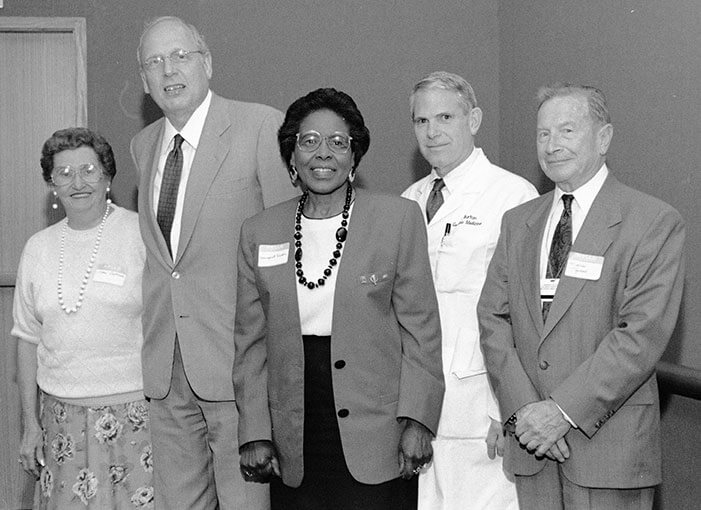
Matthew Tayback, Sc.D., (1919-2004) earned his degree in biostatistics from the School of Public Health in 1953. He was a longtime Johns Hopkins faculty member in geriatric medicine, biostatistics and international health, and the first Commissioner on Aging for the State of Maryland. In his roles, he was at the forefront of local issues like infant mortality, teen pregnancy and tobacco risks in addition to empowering older adults, modernizing health care information systems and reducing the spread of communicable diseases. According to his daughter, Sheila Leatherman, a professor of health policy and management at Gillings School of Global Public Health, University of North Carolina at Chapel Hill, his philosophy was, “All of us have the responsibility to try to do something good in our lifetimes.” He took his devotion to this philosophy worldwide, building village wells in African countries, improving population planning in India, and helping an international team study the nutritional status of Palestinians in the West Bank and Gaza until his death at age 85.
To honor her father’s legacy, in 2004 Leatherman founded the Matthew Tayback Memorial Fund with the Division of Geriatric Medicine and Gerontology. “Hopkins was an important part of his life,” Leatherman says. “He felt such loyalty to the organization. The spirit of the gift was so Hopkins could remain at the cutting edge of medicine because that’s what my father was in his time there.”
The Matthew Tayback Memorial Fund pays for innovative lectures about everything from prevention and global health to aging and spirituality. In 2006 and 2008, a biennial conference series brought scientific evidence and best practices about pertinent issues impacting the health and wellbeing of older adults from a public health perspective to the city of Baltimore, with the goal of identifying approaches that could be implemented based on the needs of the city. Subsequently, the fund has supported the Johns Hopkins Center on Aging and Health’s monthly scientific seminar series of talks from a variety of national and international experts. These talks are meant to stimulate interdisciplinary research on the health concerns of an aging society while looking for possibilities for prevention.
“I always admired him,” Dr. John Burton, professor emeritus in the Division of Geriatric Medicine and Gerontology, says of Tayback. “He was a visionary leader who tried to use state resources to improve the care and wellbeing of Maryland’s seniors. And as a mentor, he helped launch the careers of many young people.”