
Training Pathways
Global Health Pathway
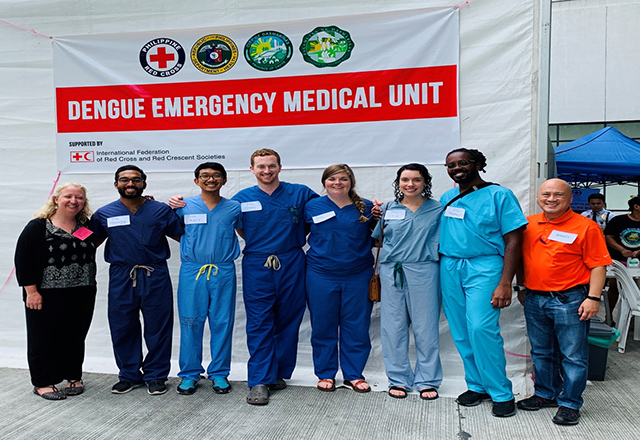 Pediatric Residents with Dr. Nicole Shilkofski and Filipino physician colleagues in Cavite, Philippines.
We aim to train pediatric leaders who will work in the field of global health to eliminate health disparities through advocacy, research, community partnership, education and clinical care.
While all residents in the program are encouraged to pursue overseas global health rotations during their PGY2 or PGY3 years, residents in the global health pathway will dedicate a minimum of two months of elective time during residency toward international rotations and development of a longitudinal capstone project at one field site.
In collaboration with their career adviser and pathway mentor, each resident will develop an individualized learning plan that provides an opportunity for faculty to connect them to specific institutional resources to enhance their professional career development within both pediatrics and global health.
The five pillars of global health education will include:
- A stateside curriculum
- Pre-departure preparation
- Global health elective experiences
- Post-return debriefing
- Curriculum evaluation, with a focus on capstone project development and implementation
Established field placements for electives currently exist in Malawi, Bangladesh, Lesotho, Nigeria, Kenya, Philippines, Myanmar, Uganda, Haiti and Peru, among many others available through the School of Public Health and Center for Global Health.
All residents in the pathway will complete pre-departure coursework through the Johns Hopkins Center for Global Health, which provides funding for many of the international elective experiences through the Paul S. Lietman Global Travel Grants for Residents.
Residents in the pathway are also eligible to take up to 16 credits per year of coursework through the school of public health. For example:
- Foundations of International Health
- Issues in the Reduction of Maternal and Neonatal Mortality in Low-Income Countries
- Health Systems in Low- and Middle-Income Countries
- Infectious Diseases and Child Survival
- Child and Public Health in the Tropics
Residents will be expected to present their scholarly work and capstone projects at the annual School of Public Health Global Health Day and at international conferences, such as the annual meeting of the Consortium of Universities for Global Health (of which Johns Hopkins is a member).
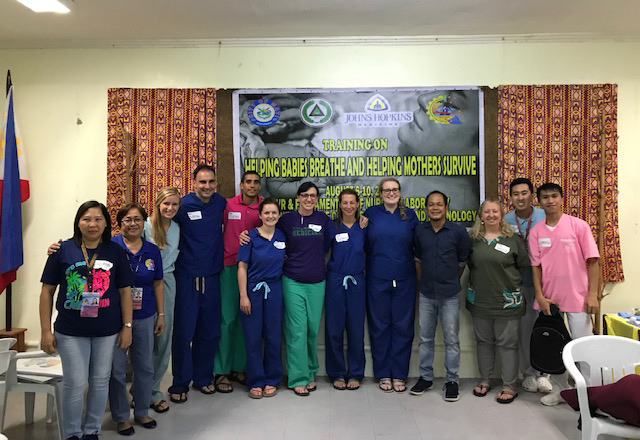
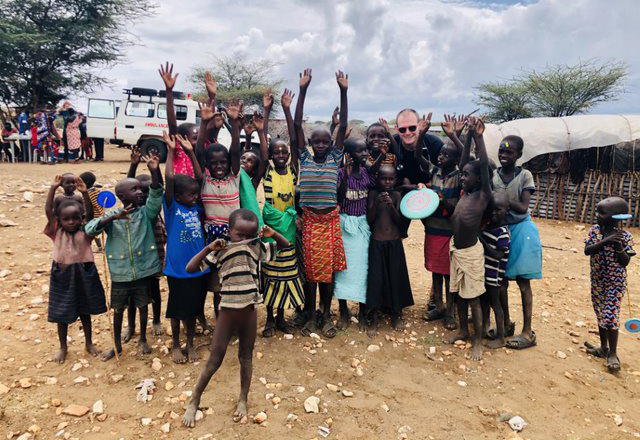
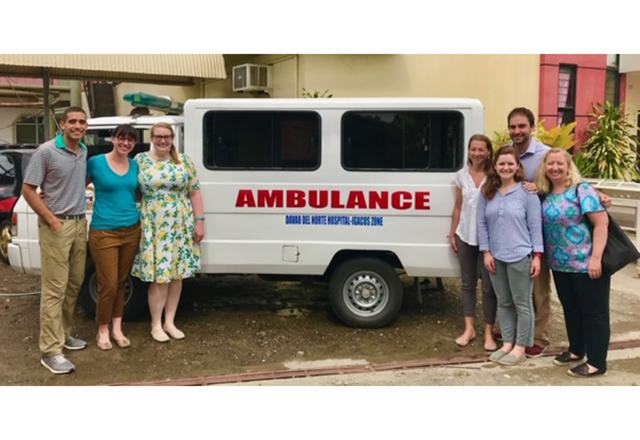
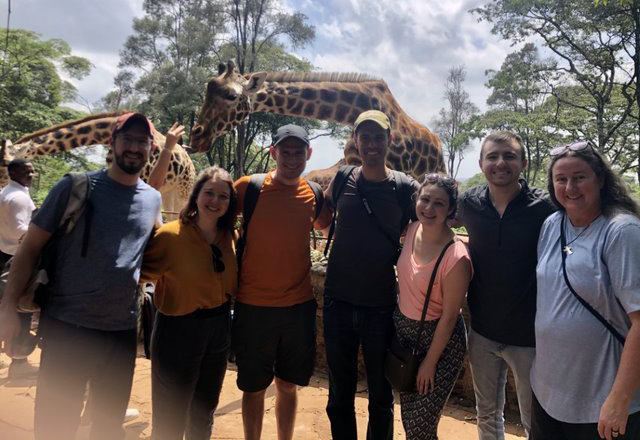
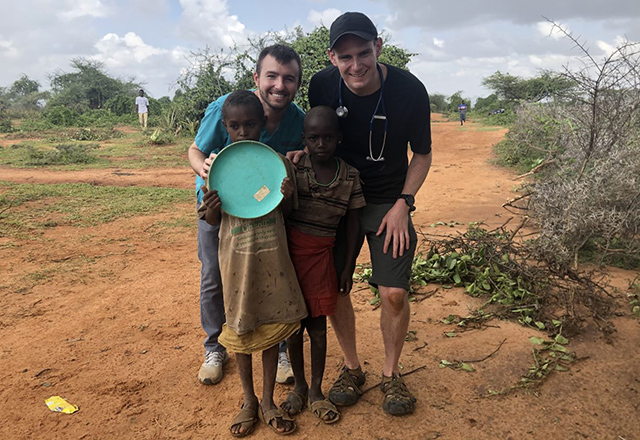
Snapshots from Our Global Health Program
Relationships and Collaborations
The global health pathway leverages relationships and collaborations across the Department of Pediatrics and the larger Johns Hopkins University community, including:
Johns Hopkins Bloomberg School of Public Health
- International Center for Maternal and Newborn Health
- Center for Global Health
- Center for Clinical Global Health Education
The Johns Hopkins University
- Center for Health Equity
- Urban Health Institute
- Fogarty Global Health Fellowship
- Global Health Pathway Program
- Alliance for a Healthier World
Johns Hopkins University School of Medicine
Current Global Health Pathway Residents
Dr. Charlotte Gemes
Dr. Charlotte Gemes is a third year resident in the global health pathway whose interest in global health started while an undergraduate at the University of Virginia where she participated in a qualitative public health research program in Cape Town, South Africa. Following this, she conducted research in Kigali, Rwanda where she looked at what factors influence mothers’ decisions on whether to breastfeed their babies. She continued her global health interest in medical school at the University of Vermont where she rotated at a local federally qualified health center with a diverse patient population including immigrants from a variety of countries. She also participated in a pediatric rotation in Harare, Zimbabwe prior to graduation. She is undecided thus far in her career plans, but hopes to integrate work abroad.

Dr. Dilys Osei
Dr. Dilys Osei is a third year resident who was born in Accra, Ghana and became interested in global health at a young age after witnessing disparities within her family's community in Ghana in terms of limited and delayed access to care in rural villages. She was involved in local global health initiatives during her undergraduate education at Emory University where she helped refugees from the Democratic Republic of Congo assimilate into the United States. Her global health interests during residency and longitudinally include improving access to care and the timely and safe transportation of critically ill patients to health care facilities in limited resource settings.

Dr. Rachel David
Dr. Rachel David is a second year resident in the global health pathway whose interest in global health and health equity started early in life after seeing health disparities in India. Throughout undergrad, she worked with Refugee Services of Texas and a local refugee health clinic where she conducted research on refugees' perceived and actual accessibility to health care. She worked in local clinics in South American countries where she saw the importance and impact of health education. She pursued a MPH during medical school where she worked with Physicians for Human Rights, specifically with projects related to improving access to resources for refugees from Afghanistan. Her interests include incorporating public health to improve health accessibility and communication globally.

Dr. Taylor Walters
Dr. Taylor Walters is a second year resident in the global health pathway whose interest in global health first started when she was working for the International Rescue Committee, a refugee resettlement agency in Charlottesville and Richmond, Virginia, prior to medical school. Through this role she worked with humanitarian migrants from around the world and developed a passion for working with children with complex medical needs and helping their families navigate the US healthcare system. Dr. Walters also pursued global health research during her Masters in Public Health at UVA through a qualitative project in Khayelitsha, South Africa focused on understanding the lived experience of individuals with chronic disease. As a medical student at VCU, Dr. Walters was involved in the underserved pathway that afforded her the opportunity to work with vulnerable populations in urban and rural settings, culminating in a capstone project on smoking prevalence amongst Hispanic migrant farmworkers on the Eastern Shore of Virginia. As a pediatric global health resident, she is interested in improving education in refugee health and research regarding capacity building for maternal-child health in resource poor areas

Dr. Abbey Nishikawa

Health Equity and Advocacy Pathway
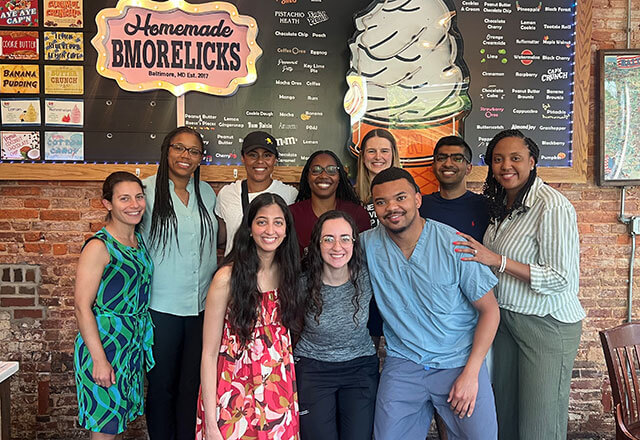 Health Equity and Advocacy Pathway leadership and residents at Welcome Ice Cream Social
We envision a world where every child, regardless of their background, has the opportunity to reach their full potential. We aim to train pediatric leaders who will work to eliminate health disparities through advocacy, research, community partnership, education and clinical care.
The Harriet Lane Pediatric Residency Program has been building leaders in the field of pediatrics for more than 100 years. With a combination of innovative curricula, a world-class faculty, robust clinical experiences, and opportunities for independence and team leadership, our program has an international reputation for providing exceptional pediatric training. Located in East Baltimore, the program also has a long-standing commitment to serving and advocating for children and families in our local community as well as nationally.
To train leaders in health equity, the program will leverage world-renowned resources across Johns Hopkins to provide graduates with a unique skill set that will equip them to make an impact for children affected by health disparities.
Relationships and Collaborations
The health equity/urban health pathway will leverage relationships and collaborations across the department and the institution, including:
Johns Hopkins School of Medicine
- Centro SOL – Center for Salud/Health & Opportunities for Latinos
- Center for Transgender and Gender Expansive Health
- Rales Center for the Integration of Health and Education
Johns Hopkins Bloomberg School of Public Health
- Bloomberg American Health Initiative
- Center for Adolescent Health
- Center for Injury Research and Policy
- The Child and Adolescent Health Measurement Initiative
- Department of Population, Family and Reproductive Health
The Johns Hopkins University
The three pillars of the pathway are mentorship, advocacy and skill building, and scholarship.
Pillars of the Program
The three pillars of the Health Equity pathway are mentorship, advocacy and skill building and scholarship.
In addition to the foundational experiences of the Harriet Lane Pediatric Residency Program, the health equity/urban health pathway will offer the following opportunities and tailored curriculum:
Mentorship: Residents in this pathway will receive longitudinal mentorship from accomplished Johns Hopkins faculty members who are actively engaged in addressing problems of health equity. Over the first six months, residents will work with program leadership to build a longitudinal mentorship and scholarship oversight team based on their individual interests and institutional areas of focus.
Advocacy and skill building: Residents will work with their mentors and program leadership to develop an individualized learning plan that will leverage continuity clinic and elective time in all three years of residency to build a foundation of skills that will prepare them for careers in this area. Potential examples include:
- Courses and workshops at the Johns Hopkins Bloomberg School of Public Health
- Advocacy rotations at the national, state and city level
- International/global health advocacy rotations including:
- Clinical immersion experiences — Nigeria, Guyana, Solomon Islands, Kenya
- Malnutrition camp experiences — Haiti
- Medical education research collaborations — Philippines
- Global health research opportunities — Lesotho, Bangladesh, Malawi
- Community pediatric experiences serving diverse populations, including
- The Harriet Lane Clinic — pediatric and adolescent clinics (winner of the 2013 Academic Pediatric Association Health Care Delivery Award)
- Intensive Primary Care Clinic — for children and adolescents with or affected by HIV
- Children’s Medical Practice, Bayview
- Center for Addiction and Pregnancy, Johns Hopkins Bayview Medical Center
- Johns Hopkins Community Physicians (East Baltimore Medical Center, Remington and other sites)
- Home visitation during community hospital medicine rotation at St. Agnes Hospital
- Electives working with high-risk and underserved populations in Baltimore and other locations (e.g., Latino health elective; Baltimore Child Abuse Center; community health elective; school-based health elective at the Rales Center; Indian Health Service elective in Tuba City, Arizona; international adoption elective; refugee health with International Rescue Committee)
- Opportunities to network and collaborate with health equity-focused peers from the Medicine-Pediatrics Urban Health Residency Program and the urban health internal medicine primary care pathway
Scholarship: Residents will work with their mentors to develop a scholarly capstone project related to health equity and/or underserved urban populations, which will be completed over the course of the residency. Elective time in the PGY (postgraduate year) 2 and PGY3 can be dedicated to this project. Presentation of this scholarship at national meetings in the PGY3 is encouraged and is a goal of this program.
We encourage residents to consider the vast resources at the institution and to work with an existing research or advocacy team to implement their project.
Resources
We encourage residents to consider the vast resources at the institution and to work with an existing research or advocacy team to implement their project. A sample of recent work from our faculty in this area includes:
- Starting Early: A Life-Course Perspective on Child Health Disparities (a research action agenda) (Pediatrics)
- Health Disparities Across the Lifespan — Where Are the Children? (JAMA)
- Translating Life Course Theory to Clinical Practice to Address Health Disparities (Maternal Child Health J)
- A Call to Improve the Health and Healthcare of Latino Children (J Pediatr)
- Promise and Perils of the Affordable Care Act for Children (JAMA)
- Quality Healthcare for Children and the Affordable Care Act: A Voltage Drop Checklist. (Pediatrics)
- Child Health Disparities: What Can a Clinician Do? (Pediatrics)
- Breaking the Intergenerational Cycle of Disadvantage: The Three Generation Approach (Pediatrics)
- Caregiver Health Promotion in Pediatric Primary Care Settings: Results of a National Survey (J Pediatr)
- Home Visitation by Pediatric Residents — Perspectives from Two Pediatric Training Programs (Acad Pediatr)
- Extending the Medical Home into the Community: A Newborn Home Visitation Program for Pediatric Residents (Acad Pediatr)
- Merging Systems: Integrating Home Visitation and the Family-centered Medical Home (Pediatrics)
Current Health Equity and Advocacy Residents
Dr. Jaz-munn Johnson
Dr. Jaz-munn Johnson is a third year in the Health Equity and Advocacy Pathway. He plans to specialize in Adolescent and Young Adult Medicine and has a special interest in at-risk, justice-involved youth (JIY) and the health/wellness impacts of youth incarceration. While in medical school, he co-founded an organization that sought to improve the continuity of medical care for re-entrant youth. This advocacy work fueled his residency Quality Improvement project here at Johns Hopkins, where he is working to improve the screening, documentation and referral practices for youth with a history/risk of legal system involvement. Along with these projects, he has helped to revamp the ACE, PCE, and trauma focused educational modules for our ambulatory curriculum, which is an area of medical education that he is particularly passionate about. Ultimately, he hopes to continue his juvenile-justice health-services research/advocacy to help bring about public policy reform.

Dr. Molly Kuehn

Dr. Mikaela Gold

Dr. Pranav Nandan

Dr. Nikita Sardana

Dr. Ariel Vilidnitsky

Medical Education Pathway
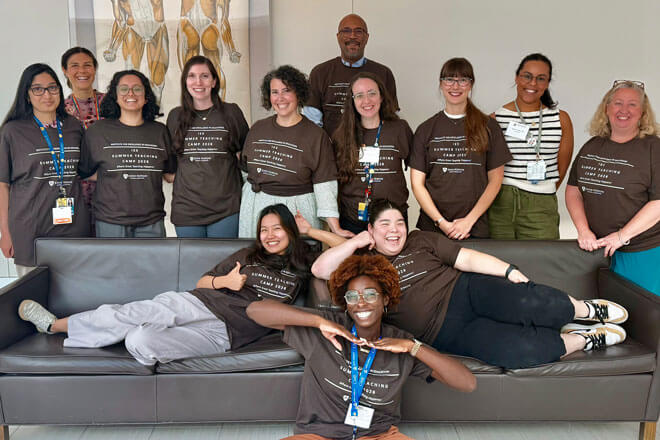 Pediatric faculty and medical education pathway residents at the summer teaching camp of the Institute for Excellence in Education (IEE).
The goal of the Medical Education Pathway is to develop academic educators who are leaders in medical education research, administration, and teaching. We leverage the robust education resources throughout the University and partner with the Osler and Bayview Medicine Residency Medical Education Pathway to offer immersive educational experiences in the six core domains of Medical Education: Teaching and facilitating learning; Program and curriculum development; Assessment and evaluation; Scholarship; Mentoring, coaching and advising; Educational leadership and administration and Career development. Pathway residents will participate in a 2-week elective during the beginning of their JAR year, followed by quarterly seminars and Works in Progress sessions.
Each participant will be matched with a primary education mentor as well as specific content mentors, as needed, and will be expected to complete a medical education scholarly project prior to graduation.
Upon completion of the pathway, participants will be able to:
- Use multiple teaching modalities to teach health professional trainees and practicing health professionals across various learning environment
- Develop, implement, and evaluate curricula
- Develop and disseminate scholarly work related to medical education
- Describe core concepts in education science
- Describe medical education career pathways
- Create a personal education portfolio for career advancement
Current Medical Education Pathway Residents
Dr. Gillean Connolly

Dr. Lucy Murnane
