Research Lab Results
-
Welling Laboratory
Dr. Paul A. Welling and his research team explore the genetic and molecular underpinnings of electrolyte physiology, potassium balance disorders, hypertension and kidney disease. A major thrust of current research activity is devoted to understanding how faulty genes and environmental stresses drive hypertension. The research is providing new insights into how the Western diet triggers deleterious responses of salt-sensitivity genes. The Welling laboratory employs a multidisciplinary approach, spanning from gene discovery, molecular biology, genetically engineered mouse models to translational studies in humans. By illuminating pathophysiological mechanisms and translating the discoveries to develop more effective diagnostic and therapeutic strategies, Welling’s group is striving to improve the health of at-risk individuals and patients with kidney disease and hypertension.
Dr. Welling is the Joseph S. and Esther Hander Professor of Laboratory Research in Nephrology. He has been continuously funded by the National Institutes of Health for over 25 years. Currently he serves as Coordinator of a Global Research Network, funded by the LeDucq Foundation. More about his research can be found at https://www.wellinglab.com/ -
Wendy Bennett Lab
I am a primary care doctor and public health researcher committed to improving women’s health and health care across their lives and improving gender and racial equity.
I am an Associate Professor of Medicine in The Johns Hopkins University School of Medicine, Division of General Internal Medicine. My research focuses on identifying strategies to prevent and manage obesity and type 2 diabetes and cardiovascular disease, particularly among women at highest risk due to pregnancy complications. I conduct pragmatic and community-based randomized controlled trials to test high impact and scalable strategies to reduce excessive weight gain in pregnancy, reduce postpartum weight retention and cardiometabolic risk.
I hold several leadership positions, and I am the Director of Research at Johns Hopkins Community Physicians, the Co-Director of the Johns Hopkins Center for Women’s Health, Sex and Gender Research and a Core Faculty Member of the Welch Center for Prevention, Epidemiology and Clinical Research.

-
William B. Guggino Lab
Work in the William B. Guggino Lab focuses on the structure of the cystic fibrosis transmembrane conductance regulator (CFTR) and water channels; the molecular structure of transport proteins in epithelial cell membranes; and gene therapies to treat cystic fibrosis (CF) patients. We are also working to identify CF’s specific defect in chloride channel regulation. One recent study showed that insulin-like growth factor 1 (IGF-1) enhances the protein expression of CFTR. -
William B. Isaacs Laboratory
Prostate cancer is the most commonly diagnosed malignancy in men in the United States, although our understanding of the molecular basis for this disease remains incomplete. We are interested in characterizing consistent alterations in the structure and expression of the genome of human prostate cancer cells as a means of identifying genes critical in the pathways of prostatic carcinogenesis. We are focusing on somatic genomic alterations occurring in sporadic prostate cancers, as well as germline variations which confer increases in prostate cancer risk. Both genome wide and candidate gene approaches are being pursued, and cancer associated changes in gene expression analyses of normal and malignant prostate cells are being cataloged as a complementary approach in these efforts. It is anticipated that this work will assist in providing more effective methodologies to identify men at high risk for this disease, in general, and in particular, to identify new markers of prognostic and therapeutic significance that could lead to more effective management of this common disease. -
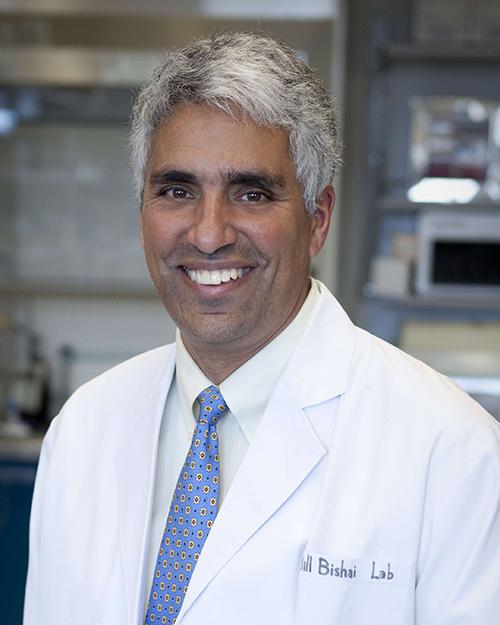
William Bishai Laboratory
The William Bishai Laboratory studies the molecular pathogenesis of tuberculosis. The overall goal of our laboratory is to better understand tuberculosis pathogenesis and then to employ this understanding toward improved drugs, vaccines and diagnostics. Since Mycobacterium tuberculosis senses and adapts to a wide array of conditions during the disease process, it is clear that the regulation of expression of virulence factors plays an important role in pathogenesis. As a result, a theme of our research is to assess mycobacterial genes important in gene regulation. We are also interested in cell division in mycobacteria and the pathogenesis of caseation and cavitation. -
William Checkley Lab
Research in the William Checkley Lab explores the field of lung health, with an emphasis on the epidemiology of obstructive lung diseases as well as acute lung injury and mechanical ventilation. We also explore the interactions between nutrition and infection, and the impact of environmental exposures to health.
-
William G. Nelson Laboratory
Normal and neoplastic cells respond to genome integrity threats in a variety of different ways. Furthermore, the nature of these responses are critical both for cancer pathogenesis and for cancer treatment. DNA damaging agents activate several signal transduction pathways in damaged cells which trigger cell fate decisions such as proliferation, genomic repair, differentiation, and cell death. For normal cells, failure of a DNA damaging agent (i.e., a carcinogen) to activate processes culminating in DNA repair or in cell death might promote neoplastic transformation. For cancer cells, failure of a DNA damaging agent (i.e., an antineoplastic drug) to promote differentiation or cell death might undermine cancer treatment. Our laboratory has discovered the most common known somatic genome alteration in human prostatic carcinoma cells. The DNA lesion, hypermethylation of deoxycytidine nucleotides in the promoter of a carcinogen-defense enzyme gene, appears to result in inactivation of the gene and a resultant increased vulnerability of prostatic cells to carcinogens. Studies underway in the laboratory have been directed at characterizing the genomic abnormality further, and at developing methods to restore expression of epigenetically silenced genes and/or to augment expression of other carcinogen-defense enzymes in prostate cells as prostate cancer prevention strategies. Another major interest pursued in the laboratory is the role of chronic or recurrent inflammation as a cause of prostate cancer. Genetic studies of familial prostate cancer have identified defects in genes regulating host inflammatory responses to infections. A newly described prostate lesion, proliferative inflammatory atrophy (PIA), appears to be an early prostate cancer precursor. Current experimental approaches feature induction of chronic prostate inflammation in laboratory mice and rats, and monitoring the consequences on the development of PIA and prostate cancer.
-
Wilmer Bioinformatics Lab
Wilmer Bioinformatics has been mainly focused on ocular informatics. Specifically, the group develops and applies bioinformatics approaches to study gene regulation and signaling networks, with particular but not exclusive attention to the mammalian retina. Understanding the molecular basis of tissue specific gene regulation and signaling will contribute to better prevention, diagnosis and treatment of retinal disease. -
Wojciech Zbijewski Lab
Research in the Wojciech Zbijewski Lab — a component of the Imaging for Surgery, Therapy and Radiology (I-STAR) Lab — focuses on system modeling techniques to optimize the x-ray CT imaging chain. We’re specifically interested in: 1) using numerical models to improve the task-based optimization of image quality; 2) exploring advanced modeling of physics in statistical reconstruction; 3) using accelerated Monte Carlo methods in CT imaging; and 4) conducting experimental validation of such approaches and applying them to the development of new imaging methods.
-
Wolberger Lab
The Wolberger Lab is interested in the structural and mechanistic basis for transcriptional regulation and ubiquitin signaling as it relates to the integrity and expression of the genome. We use x-ray crystallography, enzymology, cell-based assays and a variety of biophysical tools to gain insights into the mechanisms underlying these essential cellular processes.