Research Lab Results
-
Michael B. Streiff Lab
The Michael B. Streiff Lab conducts clinical and laboratory research of thrombophilia associated with malignancy. We are interested in the application of novel coagulation assays to explore the pathogenesis of thrombosis and the development of strategies to enhance the clinical management of anti-thrombotic agents.
-
The Hackam Lab for Pediatric Surgical, Translational and Regenerative Medicine
David Hackam’s laboratory focuses on necrotizing enterocolitis (NEC), a devastating disease of premature infants and the leading cause of death and disability from gastrointestinal disease in newborns. The disease strikes acutely and without warning, causing sudden death of the small and large intestines. In severe cases, tiny patients with the disease are either dying or dead from overwhelming sepsis within 24 hours. Surgical treatment to remove most of the affected gut results in lifelong short gut (short bowel) syndrome. The Hackam Lab has identified a critical role for the innate immune receptor toll-like receptor 4 (TLR4) in the pathogenesis of necrotizing enterocolitis. The lab has shown that TLR4 regulates the development of the disease by tipping the balance between injury and repair in the stressed intestine of the premature infant. Developing an Artificial Intestine A key goal is to create, in the laboratory, new intestines made from patients’ own cells, which can then be implanted into the patient to restore normal digestive function. This innovative design could transform child development and quality of life in necrotizing enterocolitis survivors without the risks of conventional donor transplant. -
Hamid Rabb Lab
Dr. Rabb’s lab is involved in translational research aimed at understanding the molecular pathogenesis of kidney ischemia/reperfusion injury. The lab is interested in the development of novel treatments for kidney IRI.
-
Thomas Grader-Beck Lab
Research in the Thomas Grader-Beck Lab aims to understand the pathogenesis of systemic autoimmune diseases—particularly systemic lupus erythematosus (SLE) and Sjögren’s syndrome—by taking a translational approach. Autoantibodies (antibodies that target self-molecules) are believed to contribute significantly to the disease process. We are studying mechanisms that may make self-structures immunogenic. We theorize that certain post-translational antigen modifications, which can occur in infections or malignant transformation, result in the expression of neoepitopes that spread autoimmunity in the proper setting. The team has combined studies that employ a number of mouse strains, certain gene-deficient mice and human biological specimens.
-
Translational Neurobiology Laboratory
The goals of the Translational neurobiology Laboratory are to understand the pathogenesis and cell death pathways in neurodegenerative disorders to reveal potential therapeutic targets for pharmaceutical intervention; to investigate endogenous survival pathways and try to induce these pathways to restore full function or replace lost neurons; and to identify biomarkers to mark disease function or replace lost neurons; and to identify biomarkers to mark disease progression and evaluate therapeutics. Our research projects focus on models of Huntington's disease and Parkinson's disease. We use a combination of cell biology and transgenic animal models of these diseases. -
Stivers Lab
The Stivers Lab is broadly interested in the biology of the RNA base uracil when it is present in DNA. Our work involves structural and biophysical studies of uracil recognition by DNA repair enzymes, the central role of uracil in adapative and innate immunity, and the function of uracil in antifolate and fluoropyrimidine chemotherapy. We use a wide breadth of structural, chemical, genetic and biophysical approaches that provide a fundamental understanding of molecular function. Our long-range goal is to use this understanding to design novel small molecules that alter biological pathways within a cellular environment. One approach we are developing is the high-throughput synthesis and screening of small molecule libraries directed at important targets in cancer and HIV-1 pathogenesis. -
Richard F. Ambinder Lab
Epstein-Barr virus and Kaposi's sarcoma herpesvirus are found in association with a variety of cancers. Our laboratory studies are aimed at better defining the role(s) of the virus in the pathogenesis of these diseases and the development of strategies to prevent, diagnose or treat them. We have become particularly interested in the unfolded protein response in activation of latent viral infection. Among the notions that we are exploring is the possibility that activation of virus-encoded enzymes will allow the targeted delivery of radation. In addition, we are investigating a variety of virus-related biomarkers including viral DNA, antibody responses, and cytokine measurements that may be clinically relevant.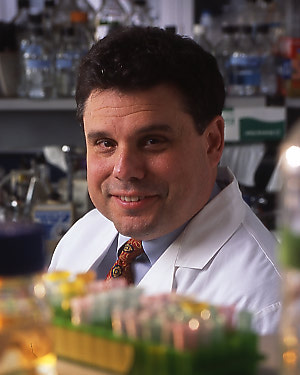
Principal Investigator
Department
-
Retinal Cell and Molecular Lab
The Retinal Cell and Molecular Laboratory has three major areas of interest, each of which deals with some aspect of growth factor signaling and function in the retina and retinal pigmented epithelium (RPE): 1. Investigations aimed at gaining a better understanding of the pathogenesis of retinal and choroidal neovascularization and developing new ways to treat them. 2. Investigations aimed at understanding the molecular signals involved in retinal and RPE wound repair and scarring. The prototypical disease in this category is proliferative vitreoretinopathy and our laboratory is seeking to identify new treatments for it. 3. Investigations aimed at understanding why retinal degenerations occur and how they might be treated, with particular emphasis on neurotrophic factors. -
Retrovirus Laboratory
Research in the Retrovirus Laboratory focuses on the molecular virology and pathogenesis of lentivirus infections. In particular, we study the simian immunodeficiency virus (SIV) to determine the molecular basis for the development of HIV CNS, pulmonary and cardiac disease. Research projects include studies of viral molecular genetics and host cell genes and proteins involved in the pathogenesis of disease. We are also interested in studies of lentivirus replication in macrophages and astrocytes and their role in the development of disease. These studies have led us to identify the viral genes that are important in neurovirulence of SIV and the development of CNS disease including NEF and the TM portion of ENV. The mechanisms of the action of these proteins in the CNS are complex and are under investigation. We have also developed a rapid, consistent SIV/macaque model in which we can test the ability of various antiviral and neuroprotective agents to reduce the severity of CNS and pulmonary disease.