Research Lab Results
-
Philip Smith Lab
Work in the Philip Smith Lab explores several key topics within the field of sleep medicine. We investigate the role of obesity and neural control in sleep-disordered breathing as well as the impact of metabolic function on sleep apnea. We also research the ways in which HIV and its treatments impact a patient’s sleep. Our studies have included the effects of HIV and highly active antiretroviral therapy (HAART) on both sleep and daytime function as well as the relationship between systemic inflammation and sleep apnea in men with HIV.
-
Peter van Zijl Laboratory
The Peter van Zijl Laboratory focuses on developing new methodologies for using MRI and magnetic resonance spectroscopy (MRS) to study brain function and physiology. In addition, we are working to understand the basic mechanisms of the MRI signal changes measured during functional MRI (fMRI) tests of the brain. We are also mapping the wiring of the brain (axonal connections between the brains functional regions) and designing new technologies for MRI to follow where cells are migrating and when genes are expressed. A more recent interest is the development of bioorganic biodegradable MRI contrast agents. Our ultimate goal is to transform these technologies into fast methods that are compatible with the time available for multi-modal clinical diagnosis using MRI. -
Peter Abadir Lab
The Abadir Lab focuses on uncovering the molecular mechanisms underlying frailty, resilience, and age-related diseases to bridge the gap between basic science and clinical applications. Grounded in translational research, the lab investigates the intricate interplay between mitochondrial biology, the renin-angiotensin system (RAS), and chronic inflammation, with an emphasis on their roles in physical and cognitive decline.
Key Areas of Research
- Mitochondrial and Angiotensin Biology
- Discovery and exploration of the mitochondrial angiotensin system (MAS) as a critical regulator of cellular energy, inflammation, and resilience.
- Investigating age-related mitochondrial dysfunction and its contribution to frailty, chronic inflammation, and neurodegeneration.
- Biomarker Development
- Identification of novel biomarkers for aging-related frailty and resilience, including cell-free DNA fragments and kynurenine metabolites.
- Development of diagnostic tools for early detection of physical and cognitive decline.
- Innovative Therapeutics and Bioengineering
- Designing nano-delivery systems for targeted drug delivery to mitochondria, enhancing wound healing and reversing cellular senescence.
- Integration of artificial intelligence and engineering to create advanced diagnostic tools for assessing frailty and aging-related conditions.
- AI and Technology in Aging
- Leveraging artificial intelligence and bioengineering to address challenges in geriatric medicine through collaborations with the Johns Hopkins AI & Technology Collaboratory for Aging Research (AITC) and the Gerotech Incubator Program.
Our Approach
The Abadir Lab employs a multidisciplinary methodology, combining molecular biology, bioinformatics, and engineering to tackle the pressing health challenges of aging populations. By fostering collaboration between clinicians, scientists, and engineers, the lab ensures that discoveries translate into tangible benefits for older adults.
Translational Impact
With a focus on frailty, inflammation, and cognitive decline, the Abadir Lab contributes to the development of personalized interventions and precision medicine approaches. Our work has laid the foundation for:
- Repurposing drugs like losartan and valsartan for treating aging-related chronic wounds.
- Unveiling the role of mitochondrial dysregulation in Alzheimer’s disease and frailty.
- Innovating tools for clinical assessments of resilience and functional decline.
Collaborations and Mentorship
The Abadir Lab is committed to training the next generation of scientists, fostering an interdisciplinary environment where students and postdocs explore cutting-edge aging science. Collaborations with the Johns Hopkins GeroTech Incubator Program and the Translational Aging Research Training Program (T32) further enrich this ecosystem of innovation.
Join Us
Whether you're a researcher, student, or collaborator, the Abadir Lab welcomes individuals passionate about transforming aging research into clinical practice.
- Mitochondrial and Angiotensin Biology
-
Peter Agre Lab
Work in the Peter Agre Lab focuses on the molecular makeup of human diseases, particularly malaria, hemolytic anemias and blood group antigens. In 2003, Dr. Agre earned the Nobel Prize in Chemistry for discovering aquaporin water channels. Building on that discovery, our recent research has included studies on the protective role of the brain water channel AQP4 in murine cerebral malaria, as well as defective urinary-concentrating ability as a result of a complete deficiency in aquaporin-1. We also collaborate on scientific training and research efforts with 20 Baltimore-area labs and in field studies in Zambia and Zimbabwe. -
Peter Terry Lab
Work in the Peter Terry Lab deals primarily with ethical questions surrounding patientsÕ end-of-life care and decision making. We explore topics such as family involvement in health care decision making, informed consent in clinical medicine and effectiveness of palliative support care. Our team has investigated the development and validation of a family decision-making self-efficacy scale. Our research has also included exploring the ethics around the allocation of lifesaving resources during a disaster. -
Athir Morad Lab
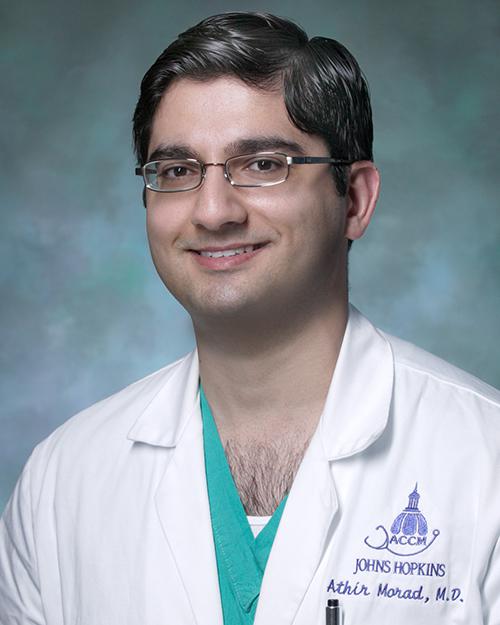
Research in the Athir Morad Lab primarily focuses on perioperative pain management for neurosurgery patients. Our team has conducted two randomized controlled trials to assess the efficacy of patient-controlled analgesia (PCA) following craniotomy. Our current research includes studies on the safety of opioid administration following craniotomy through the use of end-tidal CO2 detection, as well as research into the use of transcortical magnetic stimulation (TMS) for managing pain after spine surgery. -
Ariel Green Lab
Research in the Ariel Green Lab focuses on informing and improving decisions surrounding the use of invasive medical technologies for older adults with complex medical diseases. Our long-term goals are to conduct epidemiologic research, create public health initiatives, and help shape policies that improve the lives of older adults.
-
Arturo Casadevall Lab
The Arturo Casadevall Lab uses a multidisciplinary approach to explore two key topics within microbiology and immunology: how microbes cause disease and how hosts can protect themselves against those microbes. Much of our research focuses on the fungus Cryptococcus neoformans, which frequently causes lung infections in people with impaired immunity. We also work with the microorganism Bacillus anthracis, a bacterium that causes anthrax and is frequently used in biological warfare. Our goal is to devise antibody-based countermeasures to protect against this and other similar threats.
-
Andrea Cox Lab
Research in the Andrea Cox Lab explores the immune response in chronic viral infections, with a focus on HIV and the hepatitis C virus (HCV). In our studies, we examine the role of the immune response upon exposure to HCV by examining responses to HCV in a longitudinal, prospective group of high-risk individuals. This enables us to compare the innate, humoral and cellular immune responses to infection with clearance versus persistence. Through our findings, we seek to identify mechanisms of protective immunity against HCV infection and improve HCV vaccine design.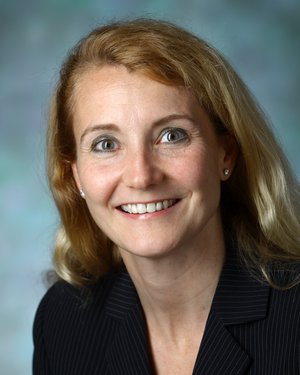
-
Antony Rosen Lab
Research in the Antony Rosen Lab investigates the mechanisms shared by the autoimmune rheumatic diseases such as lupus, myositis, rheumatoid arthritis, scleroderma and SjogrenÕs syndrome. We focus on the fate of autoantigens in target cells during various circumstances, such as viral infection, relevant immune effector pathways and exposure to ultraviolet radiation. Our recent research has sought to define the traits of autoantibodies that enable them to induce cellular or molecular dysfunction. We also work to better understand the mechanisms that form the striking connections between autoimmunity and cancer.