Research Lab Results
-
Daniel Nyhan Lab
The Daniel Nyhan Lab studies vascular changes that accompany aging to determine the underlying causes and find ways to reverse the process. One goal of our research is to identify the factors that cause vascular stiffness. Our hope is that our work in vascular biology will lead to new ways to improve vascular compliance and thereby improve cardiovascular function and perioperative risk.
-
Elizabeth Selvin Lab
The Elizabeth Selvin Lab examines the intersection of epidemiology, clinical policy and public health policy. One of our key goals is to use the findings of epidemiologic research to inform the screening, diagnosis and treatment of diabetes, cardiovascular disease and kidney disease. Much of our work looks at biomarkers and diagnostics related to diabetes and diabetes complications. Our findings — linking hemoglobin A1c (HbA1c) to diabetic complications and identifying the role of A1c in diabetes diagnosis — have influenced clinical practice guidelines.
-
Wei Dong Gao Lab
Work in the Wei Dong Gao Lab primarily focuses on heart failure and defining molecular and cellular mechanisms of contractile dysfunction. We use molecular biology and proteomic techniques to investigate the changes that myofilament proteins undergo during heart failure and under drug therapy. We're working to determine the molecular nature of nitroxyl (HNO) modification of tropomyosin. -
Lakshmi Santhanam Lab
Investigators in the Lakshmi Santhanam Lab examine the fundamental mechanisms behind cardiovascular disease. They are particularly interested in better understanding how nitric oxide-mediated S-nitrosylation (a post-translational protein modification) impacts protein function and trafficking in the vasculature as well as how this relationship influences matrix remodeling and vascular stiffening.
-
Lisa Yanek Lab
Research in the Lisa Yanek Lab focuses on cardiovascular disease in families and risk factor modification. Recently, we conducted a study to determine the association of lean versus fat mass with fitness in healthy, overweight and obese African Americans from families with early-onset coronary disease.
-
Lewis Romer Lab
Work in the Lewis Romer Lab focuses on the responses of vascular systems to disease and injury. Using cultured human endothelial cells and fibroblasts from mice that lack expression of the FAK- or Src-family kinases, we’re exploring several topics. These include the effect of inflammatory cytokine on cell adhesion to the extracellular matrix; the role of FAK signaling in inhibiting apoptosis; and the function of FAK- and Src-family kinases in cell-matrix interactions during adhesion and motility. -
Lee Bone Lab
Research in the Lee Bone Lab uses community-based participatory approaches to promote health in underserved urban African-American populations. We conduct randomized clinical trials on cardiovascular disease, diabetes and cancer detection and control in order to test the success of community interventions. We focus in particular on making interventions sustainable and on implementing electronic education to improve communication.
-
Leucker Laboratory
The Leucker Laboratory is a translational cardiovascular research program dedicated to understanding the mechanisms underlying residual atherosclerotic cardiovascular disease risk and developing innovative strategies for cardiovascular prevention. Our work integrates human vascular biology, advanced cardiovascular imaging, epidemiology, and clinical trials to uncover the pathways linking inflammation, lipoproteins, endothelial dysfunction, and cardiometabolic disease to cardiovascular outcomes.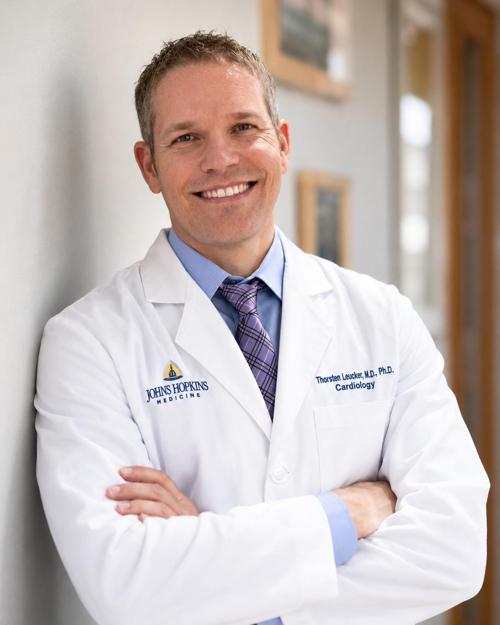
Principal Investigator
-
Nauder Faraday Lab
The Nauder Faraday Lab investigates topics within perioperative genetic and molecular medicine. We explore thrombotic, bleeding and infectious surgical complications. Our goal is to uncover the molecular determinants of outcome in surgical patients, which will enable surgeons to better personalize a patient’s care in the perioperative period. Our team is funded by the National Institutes of Health to research platelet phenotypes, the pharmacogenomics of antiplatelet agents for preventing cardiovascular disease, and the genotypic determinants of aspirin response in high-risk families. -
Maryam Jahromi Lab
The Maryam Jahromi Lab researches infectious diseases such as influenza, tuberculosis, endocarditis, viral hemorrhagic fevers, brucellosis, Clostridium difficile and Crimean-Congo hemorrhagic fever. We are particularly interested in the impact of the influenza vaccine on systemic inflammation. Recent areas of focus include the relationship between influenza vaccination and cardiovascular outcomes, the emergence of Crimean-Congo hemorrhagic fever in Iran, and prospects for vaccines and therapies for Crimean-Congo hemorrhagic fever.