Research Lab Results
-
Pediatric Cerebral Palsy and Epilepsy Lab
The team headed by Shenandoah “Dody” Robinson, M.D., professor of neurosurgery, neurology and pediatrics, studies perinatal brain injury and repair. Employing developmentally age-appropriate models, the lab investigates neurological consequences of extremely preterm birth, including cerebral palsy, chronic pain, cognitive and behavioral impairment, epilepsy and posthemorrhagic hydrocephalus of prematurity. -
Andrew Laboratory: Center for Cell Dynamics
Researchers in the Center for Cell Dynamics study spatially and temporally regulated molecular events in living cells, tissues and organisms. The team develops and applies innovative biosensors and imaging techniques to monitor dozens of critical signaling pathways in real time. The new tools help them investigate the fundamental cellular behaviors that underlie embryonic development, wound healing, cancer progression, and functions of the immune and nervous systems. -
Adam D. Sylvester Lab
Research in the Adam D. Sylvester Lab primarily focuses on the way in which humans and primates move through the environment, with the aim of reconstructing the locomotor repertoire of extinct hominins and other primates. We use a quantitative approach that involves the statistical analysis of three-dimensional biological shapes, specifically musculoskeletal structures, and then link the anatomy to function and function to locomotor behavior. -
Computational Neuroscience Laboratory
In the computational neuroscience Laboratory, we construct quantitative models of biological nervous systems that are firmly based on their neurophysiology, neuroanatomy and behavior, and that are developed in close interaction with experimentalists. Our main interest is neuronal function at the system level, reflecting the interaction of subsystems to generate useful behavior. Modeling is particularly important for understanding this and other system-level functions, since it requires the interaction of several pathways and neural functions. One of the functions we study is selective attention--that is, the capability of higher animals to scan sensory input for the most important information and to discard all other. Models of the neuronal basis of visual selective attention are constructed by simulating them on digital computers and comparing the results with data obtained from the visual and somatosensory systems of primates. We pay particular attention to the mechanisms involving the implementation of neural mechanisms that make use of the temporal structure of neuronal firing, rather than just the average firing rate. -
Christopher Potter Lab
The Christopher Potter Lab functions at an intersection between systems and cellular neuroscience. We are interested in how neurons and circuits function in the brain to achieve a common goal (olfaction), but we also develop, utilize and build tools (molecular and genetic) that allow us to directly alter neuronal functions in a living organism. The specific focus of my laboratory is to understand how the insect brain receives, interprets, and responds to odors. Insects rely on their sense of smell for all major life choices, from foraging to mating, from choosing where to lay eggs to avoiding predators and dangers. We are interested in understanding at the neuronal level how odors regulate these behaviors. Our long-term aim is to apply this knowledge to better control insects that pose a threat to human health. Our general approach towards achieving this goal is to develop and employ new genetic methods that enable unprecedented control over neural circuits in both the model organism Drosophila melanogaster and human malaria vector Anopheles gambiae. -
Clinical and Computational Auditory neuroscience
Our laboratory investigates the neural bases of sound processing in the human brain. We combine electrophysiology recordings (intracranial, scalp), behavioral paradigms, and statistical modeling methods to study the cortical dynamics of normal and impaired auditory perception. We are interested in measuring and modeling variability in spatiotemporal cortical response patterns as a function of individual listening abilities and acoustic sound properties. Current studies are investigating the role of high-frequency (>30 Hz) neural oscillations in human auditory perception.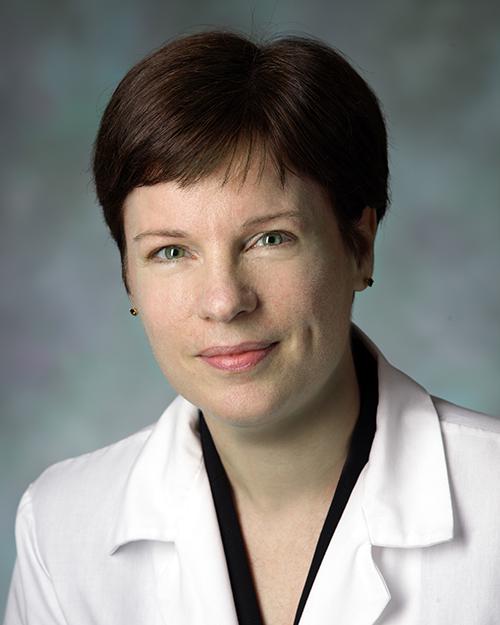
-
Clare Rock Lab
Dr. Clare Rock is an assistant Professor of Medicine, Division of Infectious Diseases at the Johns Hopkins University School of Medicine, Associate hospital Epidemiologist at the Johns Hopkins Hospital, and Faculty Member at Armstrong Institute for Patient Safety and Quality. Her research interest focuses the prevention of pathogen transmission in the hospital environment. This includes novel strategies of improving patient room cleaning and disinfection, including human factors engineering approaches, and conducting robust clinical trials to examine effectiveness of ""no touch"" novel technologies such as UV-C light. She has particular interest in carbapenem-resistant Enterobacteriaceae transmission in the hospital environment, including outbreak management, and transmission and epidemiology of Clostridium difficile. Her other area of interest is diagnostic stewardship, and the behavioral, cultural and human factors aspects of implementation of initiatives to enhance appropriate use of diagnostic tests. She leads a national initiative, as part of the High Value Practice Academic Alliance, examining strategies for appropriate testing for Clostridium difficile. This is a wider implementation of work that Dr. Rock conducted with The Johns Hopkins Health System facilities. Dr. Rock has multiple sources of grant funding including from the Agency of Healthcare Research and Quality, Centers for Disease Control and Prevention, and industry. Dr. Rock is Vice Chair of the Society for Healthcare Epidemiology of America Research Network, and serves on the SHEA research committee. Dr. Rock earned her M.B.B.Ch. at the University College Dublin School of Medicine, National University of Ireland, and her MS masters of clinical science of research at the University of Maryland, where she received the MS scholar award for epidemiology. -
Cheryl Dennison Himmelfarb Lab
Research in the Cheryl Dennison Lab aims to improve cardiovascular care for high-risk groups through multidisciplinary and health information technology-based methods. Our studies focus on reducing system and provider obstacles to implementing cardiovascular guidelines in various health care environments. Additional research interests include chronic illness management, quality of care, interdisciplinary teamwork and provider behavior. -
Gregory Kirk Lab
Research in the Gregory Kirk Lab examines the natural history of viral infections — particularly HIV and hepatitis viruses — in the U.S. and globally. As part of the ALIVE (AIDS Linked to the Intravenous Experience) study, our research looks at a range of pathogenetic, clinical behavioral issues, with a special focus on non-AIDS-related outcomes of HIV, including cancer and liver and lung diseases. We use imaging and clinical, genetic, epigenetic and proteomic methods to identify and learn more about people at greatest risk for clinically relevant outcomes from HIV, hepatitis B and hepatitis C infections. Our long-term goal is to translate our findings into targeted interventions that help reduce the disease burden of these infections.
-
Devreotes Laboratory
The Devreotes Laboratory is engaged in genetic analysis of chemotaxis in eukaryotic cells. Our long-term goal is a complete description of the network controlling chemotactic behavior. We are analyzing combinations of deficiencies to understand interactions among network components and carrying out additional genetic screens to identify new pathways involved in chemotaxis. A comprehensive understanding of this fascinating process should lead to control of pathological conditions such as inflammation and cancer metastasis.