Research Lab Results
-
GI Early Detection Biomarkers Lab
The GI Premalignant Disease and Biomarkers Laboratory studies gastrointestinal cancer and pre-cancer biogenesis and diagnostic biomarkers. The lab is led by Dr. Stephen Meltzer, who is known for his research in the molecular pathobiology of gastrointestinal malignancy and premalignancy. Research in the lab has led to several groundbreaking genomic, epigenomic and bioinformatic studies of esophageal and colonic neoplasms, shifting the gastrointestinal research paradigm toward genome-wide approaches. Biomarker panels have been devised that are currently at stages of clinical translation, with several in commercial development. In addition, this laboratory is developing three-dimensional models of gastric and esophageal early neoplasia based on organoids combined with CRISPR-Cas9 genome editing and other molecular methods.
-
GI Biomarkers Laboratory
The GI Biomarkers Laboratory studies gastrointestinal cancer and pre-cancer biogenesis and biomarkers. The lab is led by Dr. Stephen Meltzer, who is known for his research in the molecular pathobiology of gastrointestinal malignancy and premalignancy. Research in the lab has led to several groundbreaking genomic, epigenomic and bioinformatic studies of esophageal and colonic neoplasms, shifting the gastrointestinal research paradaigm toward genome-wide approaches.
-
Center for Nanomedicine
The Center for Nanomedicine engineers drug and gene delivery technologies that have significant implications for the prevention, treatment and cure of many major diseases facing the world today. Specifically, we are focusing on the eye, central nervous system, respiratory system, women's health, gastrointestinal system, cancer, and inflammation. We are a unique translational nanotechnology effort located that brings together engineers, scientists and clinicians working under one roof on translation of novel drug and gene delivery technologies -
Saowanee Ngamruengphong Lab
Research in the Saowanee Ngamruengphong Lab focuses on methods for diagnosing and managing gastrointestinal conditions, including premalignant and malignant lesions of the gastrointestinal tract, esophageal cancer, colon polyps, and biliary and pancreatic disease. Our most recent work includes investigating a novel hybrid technique for closure of refractory gastrocutaneous fistula. We also conducted an international multicenter study that compared endoscopic ultrasound-guided pancreatic duct drainage with enteroscopy-assisted endoscopic retrograde pancreatography following Whipple surgery.
-
Shaoyong Yu Lab
The Yu Lab does basic and translational research on sensory physiology and disorders of the gastrointestinal tract. Recently funded work by the NIH/NIDDK includes specific research into the pathophysiology of how mast cells and bile salt reflux effect motility of the esophagus.
-
IBD and Autoimmune Liver Diseases Laboratory
Investigators in the IBD and Autoimmune Liver Diseases Laboratory conduct basic and translational research in inflammatory bowel disease (IBD) and autoimmune liver diseases. One area of focus is discovering and developing biomarkers for diagnosing and prognosticating IBD and other autoimmune liver diseases (AILDs). We also are exploring the molecular pathogenesis of—and developing novel therapies for—IBD. In addition, we are working to understand the molecular reason why many IBD patients fail to respond to mainstay drug therapies—and to develop diagnostic assays that can predict non-responders before starting them on those therapies. These biomarker studies have led to our application for four U.S. and international patents. -
Conte Digestive Diseases Basic and Translational Research Core Center
Hopkins Conte Digestive Diseases Basic and Translational Research Core Center is an NIH/NIDDK funded, institutionally supported center that has as its mission, to make gastrointestinal studies at Hopkins as outstanding as possible, by encouraging helping develop interactions between Hopkins basic and translational investigators. The Center consists of an Administrative Core, four scientific Cores, an Enrichment Program, a Pilot and Feasibility Project Program, and services a Research Base of ~60 Hopkins faculty investigators. Co-Director, Mark Donowitz, MD Co-Director, Svetlana Lutsenko, PhD -
Craig W. Hendrix Lab
Research in the Craig W. Hendrix Lab concentrates on the chemoprevention of HIV infection, clinical pharmacology of antiviral drugs, drug interactions, and oral, topical and injectable HIV microbicide development. Our lab conducts small, intensive sampling studies of PK and PD of drugs for HIV prevention with a focus on developing methods to better understand HIV and drug distribution in the male genital tract, female genital tract and lower gastrointestinal tract. We also support numerous HIV pre-exposure prophylaxis development studies from phase I to phase III, largely as leader of the Pharmacology Core Laboratory of both the Microbicide Trial Network and HIV Prevention Trials Network. -
Center for Epithelial Disorders
The Johns Hopkins Center for Epithelial Disorders focuses on research into the physiology and pathophysiology of epithelial cells (cells that line the cavities and interior surfaces of the body) of the gastrointestinal (GI) tract, liver, pancreas and kidney. Specifically, the center’s research seeks to: -Understand the mechanisms regulating the activity of transport proteins (including channels) of epithelial cells Characterize the mechanisms by which polarity of epithelial cells are maintained -Investigate the mechanisms controlling transcription of epithelial-specific genes Understand the pathophysiological basis of GI and renal diseases that involve the preceding three components -The center also provides a framework for training fellows in gastroenterology and hepatology to become independent investigators. The center is funded primarily through individual investigator-initiated extramural research grant support from the National Institutes of Health (NIH) as well as multi-investigator grants including RO1, PO1, UO1 and R24. -
Zachariah Foda Lab
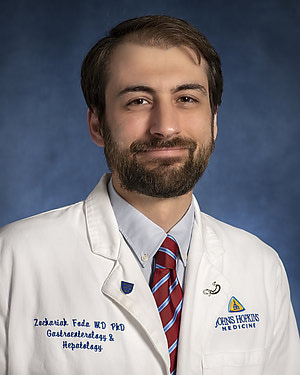
The Foda lab conducts basic, translational, and clinical research on the early detection, prevention, and interception of gastrointestinal cancers. In collaboration with the other member of the Johns Hopkins Cancer Genomics Lab (https://cancergenomicslab.com/), the group develops and applies whole-genome sequencing-based liquid biopsy methods for the early detection and monitoring of gastrointestinal cancers. These approaches are tested and validated in large multi-national cohorts through international collaborations. Dr. Foda directs the Johns Hopkins Hereditary Colorectal Cancer Registry, which facilitates clinical research related to Familial Adenomatous Polyposis, Lynch syndrome, and other hereditary polyposis conditions.