
Surgical Volumes
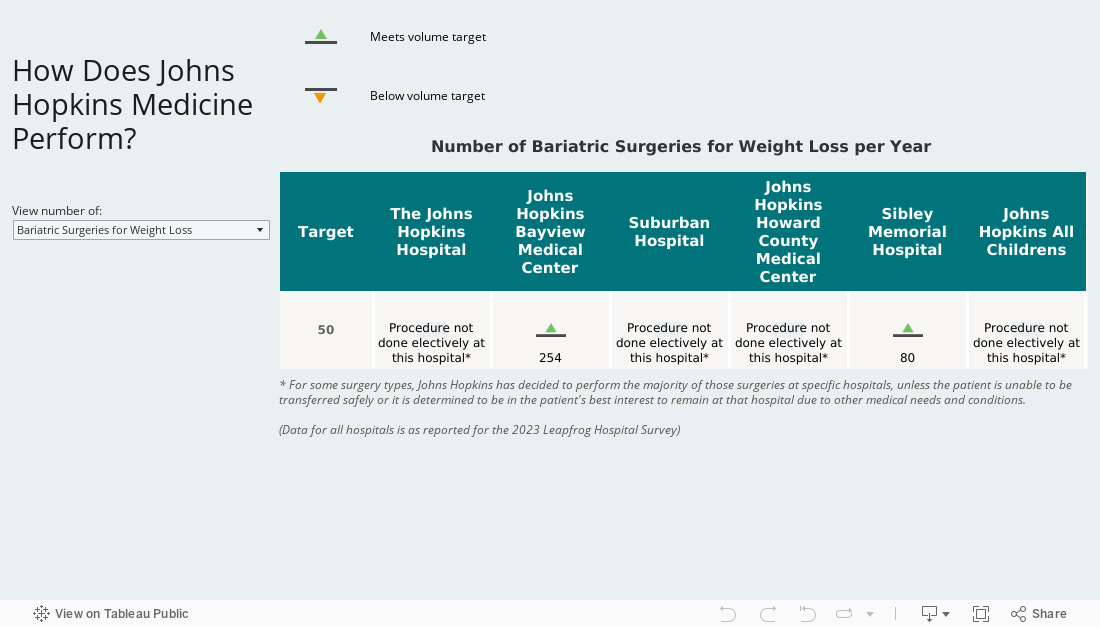
Surgical volumes are the number of times a hospital has done a specific surgical procedure in a defined time period. Hospitals that do more of a specific surgical procedure tend to have better outcomes for their patients than hospitals that do fewer of them. Patients should ask their surgeon how many times the surgeon and the hospital have done their specific surgical procedure in the last two years.
What is this measure?
For the surgical procedures listed below, studies have shown a strong relationship exists between the number of times a hospital performs a specific surgical procedure and the outcomes for those patients, including death and complication rates. Many of the surgeries consist of multiple types of surgeries. For example, some of the surgeries that fall in the Open Aortic Procedures category are thoracic aortic surgery, valve surgery and aortic aneurysm surgery.
- Bariatric Surgeries for Weight Loss
- Carotid Artery Stenting Surgeries
- Esophageal Resection for Cancer Surgeries
- Lung Resection Surgeries
- Mitral Valve Repair/Replacement Surgeries
- Norwood Procedure
- Open Aortic Procedures
- Pancreas Resection for Cancer Surgeries
- Rectal Cancer Surgeries
- Total Hip Replacement
- Total Knee Replacement
Why is it important?
Patients who need to undergo a surgical procedure should understand the experience of the hospital where the surgery will be done. We urge our patients to ask their surgeon how many times the hospital have done their specific surgical procedure in the last two years.
What is Johns Hopkins Medicine doing to continue to improve?
The Surgical Volume Pledge reinforces the need for the Johns Hopkins Health System to review where surgical procedures are being done and what level of volume each hospital is doing, and to consider opportunities to shift procedures from lower-volume hospitals to higher-volume hospitals.
Johns Hopkins Medicine recognizes that traveling to a hospital farther away from home can be inconvenient for the patient, the patient’s family and their loved ones, but Johns Hopkins Medicine strongly believes that the end goal of providing the best and safest care for our patients is a trade-off that is worth taking.