
-
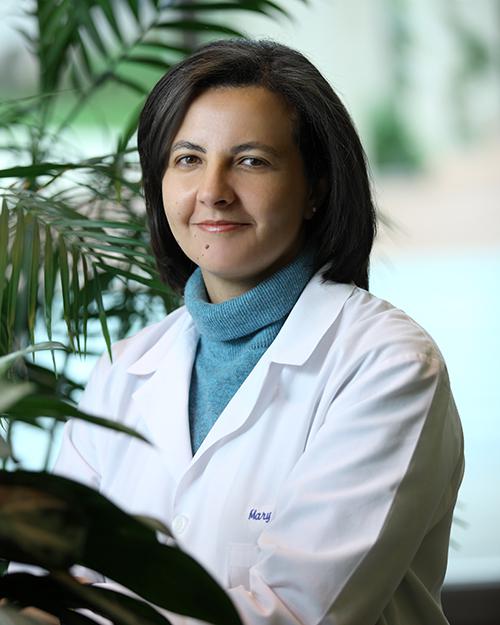
Heather Symons, MD MHS

- Clinical Director, Pediatric Blood and Marrow Transplant
- Associate Professor of Oncology

Telomere Clinic at Johns Hopkins
The Telomere Clinic at Johns Hopkins was the first of its kind and started evaluating patients and providing multidisciplinary care since 2003. The Telomere Clinic is deeply tied to a long-standing research program where collaborative studies between patients and researchers have led to critical discoveries that have transformed the understanding and bedside care of affected patients, both children and adults.
Experts include pediatric and adult doctors who specialize in hematology, oncology and genetics as well as a specialized bone marrow transplantation approach for patients with short telomere syndromes. The Telomere Clinic at Johns Hopkins has been at the forefront of coordinating care across disciplines including immunology, gastroenterology, hepatology and liver transplantation, and pulmonary medicine and lung transplantation teams among others.
Experts include pediatric and adult doctors who specialize in hematology, oncology and genetics as well as a specialized bone marrow transplantation approach for patients with short telomere syndromes. The Telomere Clinic at Johns Hopkins has been at the forefront of coordinating care across disciplines including immunology, gastroenterology, hepatology and liver transplantation, and pulmonary medicine and lung transplantation teams among others.
The Telomere Clinic is one arm of the Telomere Center at Johns Hopkins, a translational program which serves national needs to advance patient care in this area of medicine.
The Telomere Diagnostics Lab is the only clinical testing laboratory of its kind in the United States and it is housed within Johns Hopkins Hospital. In 2025 alone, it served nearly 4,000 patients.Our Multidisciplinary Approach
Telomere conditions can affect many parts of the body, so we coordinate care across many disciplines. This includes immunology, digestive and liver care (gastroenterology and hepatology), liver transplant, lung care (pulmonary medicine), and lung transplant, among others.
Request An Appointment
410-955-8964
Request An Appointment in The Telomere Clinic
410-955-3071
Request An Appointment For Genetic Testing
[email protected]
For other inquiries, you can send an email
Our Team





Short Telomere Syndromes

Treatments
Timing of treatment
Most patients do not require treatment for many years, and the focus is avoiding unnecessary and harmful interventions. Telomere length can be useful in helping to assess the risk for each patient and individualizing the surveillance and treatment program.
Stem cell transplant/Bone marrow transplant
Treatment for severe bone marrow failure and/or primary immunodeficiency due to short telomere syndromes is bone marrow/stem cell transplantation, in which a patient’s bone marrow and immune system are replaced with that of a healthy donor’s. Reduced intensity transplant offers new, safer options for patients with short telomere syndromes, including dyskeratosis congenita and Hoyeraal-Hreidarsson syndrome.
A new trial funded by the Maryland Stem Cell Foundation is studying earlier timing of transplant to allow for consideration of other complications of short telomere syndromes such as the risk of subsequent liver disease and need for liver transplantation. Building on long-standing experiences at Johns Hopkins Kimmel Cancer Center, this study is also examining the options of half-matched stem cell donors ensuring virtually every individual has a donor.
Lung and liver transplantation
Johns Hopkins physicians have one of the longest standing experiences in lung and liver transplantation for short telomere syndromes (Silhan et al. Eur Respir J 2014, Gorgy et al. Chest 2015 and Oseini et al. Liver Transpl 2021 and others).
Innovative new lung transplant protocols that overcome new complications were developed here and disseminated across the world (Shah and Armanios Eur Respir J 2025).
Lung and Liver Transplantation

Telomere center at johns hopkins Resources
Translational studies in the Telomere Center at Johns Hopkins have transformed understanding the clinical manifestations and management of affected patients:
Management of Short Telomere Syndrome Complications
- Risk and natural history of myelodysplastic syndromes
- Risk and surveillance for head and neck cancer
- Immunodeficiency and the risk of opportunistic infections
- Overview of pulmonary fibrosis and importance of recognizing those with ultra-short telomere length in lung transplant setting
- Liver complications and how it may manifest as shortness of breath
- Gastrointestinal disease in children and adults with short telomere syndromes
- An age-adjusted approach to monitoring short telomere syndromes
Treatment-Related Resources
- Successful reduced intensity bone marrow transplant for dyskeratosis congenita
- Clinical trial studying earlier timing of bone marrow transplant for bone marrow failure and immunodeficiency (clinicaltrials.gov)
- Reports of successful liver transplant following hematopoietic stem cell transplant
- Anticipating and avoiding lung transplant complications in the setting of short telomere syndromes