US Loses Measles Elimination Status: What You Need to Know
Featured Expert

November 20, 2026
On Nov. 17, the United States officially lost its status as a country that had eliminated measles, ending an achievement it had held since 2020.
The announcement from the Pan American Health Organization isn’t tied to policy changes, but it recognizes that a gradual erosion of immunity has allowed the virus to circulate without interruption for one full year in the U.S.
Aaron Milstone, pediatric director of infection prevention for the Johns Hopkins Health System, explains what the change in status means for you and your loved ones.
Key Points
- In the general U.S. population, vaccine rates remain high, and most people are protected.
- Measles transmission is concentrated in communities with significant vaccine hesitation.
- If you’re not sure of your vaccination status or if you’re traveling someplace with increased measles risk, talk to your doctor.
Q: What does losing measles elimination status mean for people in the United States?
A: It means that measles is spreading again in the U.S. because vaccination rates have fallen in many communities. It’s discouraging to lose that recognition, which reflected our strong public health infrastructure and our country’s commitment to protecting children from vaccine-preventable diseases.
Q: What happens if I or my child gets measles?
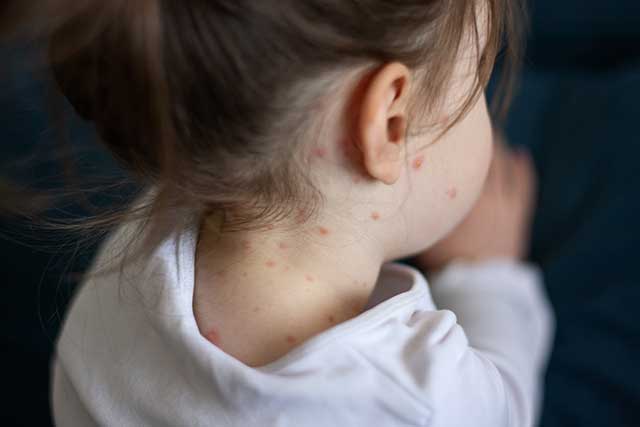
A: Symptoms of measles, which emerge seven to 14 days after contact with the highly contagious virus, can include fever, runny nose, cough and a bumpy rash that may be brown or purple. About 30% of people who get measles experience complications such as ear infections, diarrhea and — in severe cases — death.
Q: How is measles treated?
A: Medicines can reduce fever and alleviate symptoms, and antibiotics can address complications such as bacterial infections. However, antibiotics are not effective in treating viral infections like measles.
Q: Has my risk of getting measles increased?
A: Right now, most measles cases in the U.S. are concentrated in places where people have higher vaccine hesitancy. In those populations, it’s going to run rampant because that’s what measles does.
In most communities, vaccine rates are still very high, and people are still protected.
Q: I’m vaccinated. Am I safe?
A: Probably, but the vaccine is not 100% protective. More than 90% of people who get one dose respond to that vaccine with lifelong protection. That proportion increases to 97% in people who get two doses.
Until recently, if you got the vaccine and you didn’t have an immunologic response (approximately 3% of people), you were protected by herd immunity (e.g., other people around you would not get measles and expose you). We can’t say that anymore. If you are vaccinated and you live in an area with a high level of circulating measles, there’s a small chance that you could get a measles infection. Breakthrough measles infection in vaccinated people tends to be less severe than in people without prior vaccination.
Q: What if I’m not vaccinated?
A: If you are not vaccinated, the chance of getting measles is increasing as the virus spreads in the U.S. Go get vaccinated to protect yourself.
Q: What can I do to protect myself and my family while traveling?
A: For now, most people should just make sure they received a measles vaccine (or had measles) as a child. If you’re going to a place where there’s a lot of measles and you’re worried, you can get a blood test to see whether you have antibodies to measles. If your kids are less than 1 year old, talk to your doctor about getting early vaccinations for them.
Q: You’re not recommending earlier vaccination as a matter of course, right?
A: Not routinely, correct. The reason we historically have not given measles vaccines to kids under 12 months is because moms provide protection to babies during pregnancy that usually lasts at least six months. That protection can also interfere, such that an infant less than 6 months old won’t respond to the vaccine.
When there was no widespread measles in the U.S., we could wait until a child was at least 1 year old to optimize the child’s immune response to the vaccine. Now that measles is spreading, the public health recommendations are changing to consider an earlier dose in children at risk of exposure.
Q: Is it true that people who got vaccinated in the 1960s need boosters?
A: Most people who got vaccinated in the 1960s probably had only one dose. If you live in or go to an area where you might get exposed to measles, it’s reasonable to ask your doctor about a second dose. If you live in Baltimore City and you were born in the 1960s, your risk right now is still very low. If you are going to travel somewhere where you are nervous about measles exposure, then check with your doctor.
Q: Anything else?
A: People ask me what they can do, not just to protect themselves but to help. I tell them that a lot of people who are vaccine hesitant rely on people they know and trust for information. They don’t want to hear from me; they want to hear from someone they know. Everyone can be a vaccine advocate and share the message that vaccines are safe and effective.
Medically reviewed by Aaron Milstone, M.D.