Heartburn's Hidden Cancer Risk
Featured Expert

Updated May 29, 2026
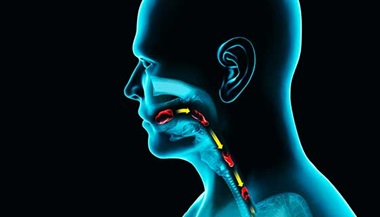
Heartburn is common enough that almost everyone experiences it — and typically, it is a mild annoyance for most sufferers. This burning discomfort may be a sign of acid reflux, which involves stomach acid flowing up into the esophagus and irritating the lining of the esophagus. For millions of people, this condition develops into gastroesophageal reflux disease (GERD).
Gastroenterologist Marcia “Mimi” Canto, M.D., M.H.S. explains that GERD sufferers are more likely to develop significant health problems, including Barrett’s esophagus and esophageal cancer — often with no idea they’re at greater risk.
Key Points
- Occasional heartburn is usually harmless, and lifestyle changes can reduce symptoms.
- Chronic GERD may also lead to Barrett’s esophagus. Barrett’s esophagus raises cancer risk and may require monitoring or treatment.
- Long‑term reflux needs medical evaluation, especially with risk factors like long duration, early onset, obesity or smoking.
Is short-term heartburn dangerous?
For periods of a few months or less, acid reflux is unpleasant but rarely dangerous. If you experience infrequent heartburn, you should check with your primary care provider. Your doctor will typically recommend that you should:
- Refrain from eating three to four hours before bed.
- Eliminate caffeine, alcohol and nicotine.
- Lose some weight if you are overweight.
If you have frequent heartburn or regurgitation 2 to 3 times per week or more, you need to take anti-acid medication daily. Consult your doctor.
The Risks of Ongoing Heartburn: Barrett’s Esophagus
Ongoing heartburn can lead to GERD. When heartburn becomes frequent, some people’s bodies attempt to heal the damage by replacing the esophagus’ lining with tissue very similar to the small intestine, a condition known as Barrett’s esophagus.
This benign condition caused by stomach acid is a concern, as it increases the risk of esophageal cancer. Although the majority of patients with Barrett’s esophagus will never develop esophageal cancer, “given how deadly this cancer is, it’s a condition needing attention and treatment,” explains Canto.
Some people with Barrett’s esophagus will not require immediate treatment but will need to have their progress monitored by a gastroenterologist. For others with precancerous changes, treatment may require endoscopic ablation of the Barrett’s esophagus.
Heartburn's Possible Progression to Esophageal Cancer
A small percentage of people with Barrett’s esophagus will develop cancer, and the number of cases in North America is rising.
Cancer that has not spread to lymph nodes can be removed using minimally invasive endoscopic techniques. When the cancer is more advanced, surgical removal is required. In advanced cases, often when patients hadn’t shown symptoms or been treated before the cancer’s discovery, chemotherapy or radiation treatments may be required before surgery.
Preventing Esophageal Cancer
Although only a fraction of people with GERD will develop health complications, explains Canto, “it’s not normal to have recurrent daily heartburn. Diagnosing Barrett’s esophagus and treating it before it can progress is a scientifically proven way to prevent cancer.”
Anyone with long-term reflux should make an appointment with their primary care provider instead of self-treating with over-the-counter medications. You should consult with your primary care provider for possible screening for Barrett’s esophagus if you have any of 3 of the following risk factors:
- Five years or more of reflux symptoms or GERD symptoms from a young age
- Obesity
- History of smoking
- White
- Male
- Family history of Barrett’s esophagus or esophageal cancer
Medically reviewed by Marcia “Mimi” Canto, M.D., M.H.S.
Worsening Esophageal Damage
When heartburn becomes frequent, some people’s bodies attempt to heal the damage by replacing the esophagus’ lining with tissue very similar to the small intestine, a condition known as Barrett’s esophagus.
This benign condition caused by stomach acid is a concern, as it increases the risk of esophageal cancer. Although the majority of patients with Barrett’s esophagus will never develop esophageal cancer, “given how deadly this cancer is, it’s a condition needing attention and treatment,” explains gastroenterologist Marcia “Mimi” Canto, M.D., M.H.S.
Some people with Barrett’s esophagus will not require immediate treatment but will need to have their progress monitored by a gastroenterologist. For others with precancerous changes, treatment may require endoscopic ablation of the Barrett’s esophagus.
Progression to Esophageal Cancer
A small percentage of people with Barrett’s esophagus will develop cancer, and the number of cases in North America is rising.
“Identifying cancer early really improves patient care and outcomes,” says surgeon Richard Battafarano, M.D., Ph.D.
Cancer that has not spread to lymph nodes can be removed using minimally invasive endoscopic techniques. When the cancer is more advanced, surgical removal is required. In advanced cases, often when patients hadn’t shown symptoms or been treated before the cancer’s discovery, chemotherapy or radiation treatments may be required before surgery.
Preventing Esophageal Cancer
Although only a fraction of people with GERD will develop health complications, explains Canto, “it’s not normal to have recurrent daily heartburn. Diagnosing Barrett’s esophagus and treating it before it can progress is a scientifically proven way to prevent cancer.”
Anyone with long-term reflux should make an appointment with their primary care provider instead of self-treating with over-the-counter medications. You should consult with your primary care provider if you have GERD and the following risk factors:
- Five years or more of reflux symptoms
- GERD symptoms from a young age
- Obesity
- History of smoking