Craniosynostosis Surgery
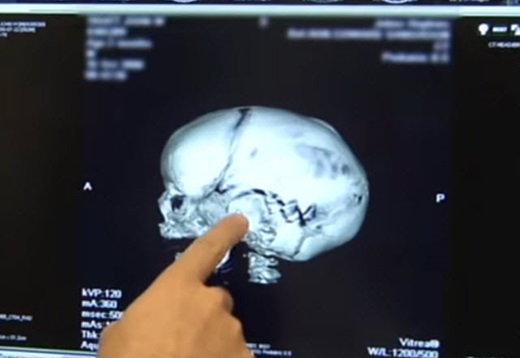
What You Need to Know
- Surgery is often needed for children with craniosynostosis to correct the head shape and make room for the brain to grow.
- Several surgical procedures are available to children with craniosynostosis, ranging from minimally invasive to open/invasive surgeries.
- The child’s surgeon will consider the child’s age, severity of the condition and other factors in recommending the best treatment.
- Adults may have craniosynostosis surgery to address untreated craniosynostosis or improve appearance after craniosynostosis surgery. Learn more about craniosynostosis surgery for adults.
What is craniosynostosis surgery?
Craniosynostosis surgery is a procedure to treat craniosynostosis — early fusion of the bones in a baby’s skull. Craniosynostosis surgery is usually performed by craniofacial surgeons, who specialize in the conditions of the face and the skull. These specialists usually have training in plastic surgery, neurosurgery or related fields.
The goal of craniosynostosis surgery is to expand the skull to relieve pressure inside of it and make room for the brain to grow. Some children born with craniosynostosis, especially with the more severe syndromic type, may need additional surgeries on the face, arms or legs to restore symmetry or improve function.
Webinar with Dr. Eric Jackson: Understanding and Treating Craniosynostosis

Types of Craniosynostosis Surgery
There are several approaches to expanding the skull in children with craniosynostosis. The surgeon will recommend the best approach based on the child’s age, severity of the condition and other factors. Common approaches include:
Cranial Vault Remodeling
Cranial vault remodeling, also called calvarial vault remodeling or reconstruction, is an open surgical approach that has been used for decades to treat craniosynostosis. Cranial vault (calvarium) is the name of the bones that make up the top of the skull.
This procedure is typically performed for children between 6 and 12 months of age. It can also be an option for children diagnosed at later ages or babies who have severe forms of craniosynostosis.
During this surgery, a team of doctors:
- Makes an incision along the baby’s scalp from ear to ear to reveal the skull.
- Removes the affected bones, which could be located in the front, back or middle of the skull.
- When the front part of the skull needs to be reshaped, this is called fronto-orbital advancement. The bones of the forehead and eye sockets are reshaped and repositioned to allow for more room in the front of the head.
- When the back part of the skull needs to be reshaped, this is called posterior cranial vault remodeling or posterior vault expansion.
- Sometimes, the entire top of the skull has to be reshaped, which is called total vault remodeling.
- Reshapes and replaces the bones to allow for improved overall head shape and increased space for the developing brain. The bones are secured with screws, plates and stitches.
The surgery takes about four to six hours. A blood transfusion is often needed during the surgery. The child will likely spend one night in the intensive care unit, plus an additional few days in the hospital for monitoring.
Helmet therapy is typically not needed after cranial vault remodeling. Children will follow up with the surgery team one month after surgery to check on the incision site, and again at six and 12 months after the procedure to keep an eye on recovery.
What is Open Cranial Vault Reconstruction?

Endoscopic Strip Craniectomy
Endoscopic strip craniectomy is a minimally invasive surgery to treat craniosynostosis in babies up to 4 months old, with some exceptions for babies up to 6 months old. The age of the child is important because the skull bones in younger babies are still soft and the bone grows quickly, which this surgery relies on. This approach is typically recommended for children with a single fused suture (joint between the bones of the skull which fuses early), such as in sagittal or lambdoid craniosynostosis.
This procedure is also called minimally invasive suturectomy (removal of the suture). During this surgery, doctors:
- Make small incisions in the baby’s scalp.
- Use an endoscope, a thin tube with a light, to see the inside of the scalp.
- Remove the fused suture, creating a gap of missing bone. This allows for the skull to continue expanding as the brain grows, and the bone will regrow and fuse in a better position.
- The surgeon may use metal springs or similar devices to help push the bones apart. The springs are removed after a few months in a separate procedure.
The surgery takes about one hour and involves less blood loss compared with cranial vault remodeling, so there is less chance of needing a blood transfusion. The baby will stay in the hospital overnight for monitoring before being released to go home.
After endoscopic surgery, the child will need to wear a cranial orthotic helmet, although it is usually not needed if springs were used. The helmet is worn for several months to help mold the head into a symmetrical shape as it continues to grow. This requires appointments with a helmet specialist (orthotist) to create a custom-fit helmet and continue sizing up as the child grows. Children also follow up with the surgeon every three months for the first year after the surgery to check progress of the skull reshaping.
What is Minimally Invasive Suturectomy?
Cranial Distraction Osteogenesis
Distraction osteogenesis is a technique that uses devices to push the bones apart so that new bone can grow between them (a process called osteogenesis). This is usually done at the back of the skull (posterior distraction osteogenesis), although sometimes it can be done to move the forehead forward (anterior distraction osteogenesis). Children of all ages can have this procedure, although the bones will regenerate slower in older children.
Distraction osteogenesis may be recommended over cranial vault remodeling for cases in which bones need to be significantly repositioned and there is high intracranial pressure. This is often the case when two or more sutures close early, such as with syndromic craniosynostosis.
Cranial vault remodeling allows the bones to move only as far as the skin and soft tissues of the scalp can stretch at the time of surgery. However, with distraction osteogenesis, the skin and soft tissues stretch slowly over weeks and can accommodate a more significant movement of the bones over time.
To perform distraction osteogenesis, the doctor:
- Makes a cut across the scalp to access the affected area of the skull.
- Cuts through the bone to create a small gap.
- Installs metal distractor devices in the gap to push the bones apart. Most of the device is hidden under the skin, but a small handle is visible to allow for adjustments.
The surgery takes about two to three hours. Children typically stay in the hospital for three to five days.
Within one or two weeks after surgery, depending on the child’s age, the distraction process starts. The doctor will show the parents how to turn the handle. It is turned less than a millimeter per day for several weeks. The child will need to see the surgeon weekly to monitor the progress. A second surgery is needed to remove the distractors in a few months, once the new bone has started to harden.
Recovery and Follow-Up Care After Craniosynostosis Surgery
After craniosynostosis surgery, the child may experience swelling in the face and eyelids, which will go away after a few days. The recovery process is different for each child. The care team will provide the family with all necessary information and instructions, which may include:
- How to care for the wound/incision
- How to adjust distraction devices if they were used
- When to resume regular daily activities
- Which medications to take or avoid
- When to return for follow-up visits
A child with craniosynostosis will need frequent follow-up visits with the care team to ensure that the skull, facial bones, jaw alignment and brain are developing normally.
Craniosynostosis Surgery Complications
During the hospital stay, the care team will monitor vital signs and watch closely for any problems, such as:
- Fever
- Vomiting
- Irritability
- Redness and swelling along the incision areas
- Decreased alertness
These symptoms could be signs of a complication, such as:
- Bleeding, which can lead to blood pooling under the skin or within deeper tissues (hematoma)
- Infection
- Tears in the lining of the brain, which can lead to cerebrospinal fluid leaks
- Damage to brain tissues
- Brain swelling
Craniosynostosis surgeries range from minimally invasive to open/invasive, so the risk of complications varies for each type of procedure. Generally, endoscopic strip craniectomy and cranial vault remodeling have similar rates of complications. Cranial vault remodeling is a longer and more complex procedure, which increases the likelihood of needing a blood transfusion. Regardless of the procedure, the care team has protocols in place to quickly catch and address any complications. Most craniosynostosis surgeries are successful in reshaping the skull, relieving intracranial pressure and improving appearance.
Occasionally, children may experience long-term problems after craniosynostosis surgery such as:
- Poor wound healing
- Failure of the distractor device if one is used
- Incomplete bone growth in the areas where gaps in the skull were created during surgery
In these cases, a second surgery may be needed to address these issues.
Scars and Appearance After Craniosynostosis Surgery
Some unevenness of the skull’s surface is expected after craniosynostosis surgery. The head may have ridges or bumps that can be felt, but usually not seen because they are hidden by hair.
Cranial vault remodeling typically leaves the largest scar compared with the other procedures. It extends from ear to ear, and may be shaped like a zigzag. The scar will fade over time and will become less noticeable with age. It may continue to be visible on children and adults with very short hair.
When children stop growing, they may opt for a cosmetic procedure to even out the shape of the face or head. The procedure may involve shaving down bumps, adding bone grafts or repositioning soft tissues to create a more even shape.
Craniosynostosis Surgery for Adults
Some mild cases of craniosynostosis may remain undiagnosed, or parents may opt out of surgery for the child if there is no effect on the brain. This can result in the child growing up to have an asymmetric head shape or facial features, such as a narrow or wide forehead, uneven eye sockets or a curved nose bridge. Once they reach adulthood, these children can choose to have surgery to address these issues.
Craniosynostosis surgery for adults is different than surgeries available to children. The goal for adults is usually not to treat craniosynostosis but to address cosmetic concerns, which can be done in a few ways:
A surgery to cut and reposition the bones in the front of the skull. The bones are secured with plates and screws and eventually fuse back together. This surgery may also help with noncosmetic issues related to the irregular head shape, such as headaches.
A surgery to add implants to improve the shape of the face and give it a more symmetric appearance.
Sometimes, adults who had craniosynostosis surgery as children may choose to have additional surgery later in life to address any remaining cosmetic concerns.