

Javier Francisco Quintana, MD
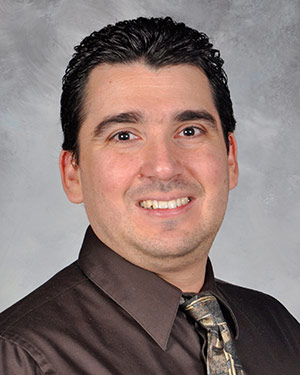
Expertise: Pediatric Radiology
Primary Location: Johns Hopkins All Children's Hospital, Saint Petersburg, FL
Doctors and neuropsychologists use neuroimaging to diagnose and treat brain injuries and disorders. Neuroimaging includes various types of brain scans, including images of the anatomical structure such as CT scans and MRIs. It also includes functional and metabolic imaging of how the brain responds to tasks or stimuli, measuring blood flow in the brain and brain metabolism.
Johns Hopkins All Children’s Hospital in St. Petersburg, Florida, uses neuroimaging to diagnose and treat disorders of the brain, spine, neck and central and peripheral nervous system. We specialize in non-invasive imaging technology, which allows us to study whole-brain maps of structural and functional brain connections.
Our world-renowned team of experts brings decades of clinical and research leadership in the treatment of neurologic diseases, including brain tumors, brain malformations, spine disease, stroke and other vascular disorders.
The Johns Hopkins All Children’s neuroimaging team, together with the Molecular Determinants Core, apply the latest technology to improve patient care including Multi-Omics studies such as connectomics, metabolomics and proteomics to examine the brain and the changes related to the central nervous system reorganization.
1.5 and 3 tesla scanners produce high-quality DTI and resting state fMRI. Our high-performance neuroimaging research lab includes advanced hardware and post-processing software for connectome analysis.
The neuroimaging research mission is to improve the ability to diagnose pediatric neurologic diseases and to advance our understanding of how diseases affect the brain. We also hope to use neuroimaging to track measurable indicators that predict neurodevelopment, cognition and behavior in children.
Expertise: Pediatric Radiology
Primary Location: Johns Hopkins All Children's Hospital, Saint Petersburg, FL
