
Anatomy Donor Memorial
Each year, Johns Hopkins medical and graduate students organize a memorial service to express gratitude to the individuals who donated their bodies to advance medical education. This Anatomy Donor Memorial Ceremony honors those who chose to give to students they would never meet, simply because they knew their choice would matter.
Since 2024, family members of the body donors each year have joined this memorial service alongside students. This has allowed students and family members to connect and share their perspectives with each other, both about the lives of the donors themselves and the profound impact that the donors had as the students’ first medical teachers.
Tuesday, November 10, 2026, 6:30PM-8:30PM
Armstrong Medical Education Building
East Lecture Hall
From the CLOSLER Blog
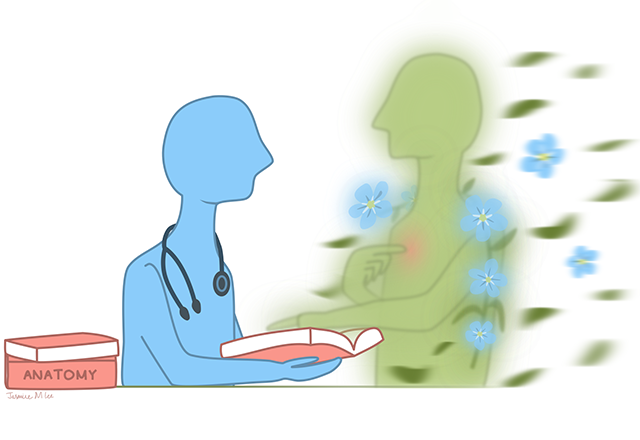
The [2025 Anatomy Donor Memorial theme art] reimagines our experience with anatomy donors as a living gift. Each of our donors generously volunteered to bring to life the images and words we studied in our anatomy textbooks and class materials. In doing so, they’ve transmitted a deeply privileged knowledge of the human body to each of us. Now we must safeguard and apply that knowledge to our future endeavors in medicine.
Jasmine M. Lee, first-year medical student, 2025
From the Biomedical Odyssey Blog
As the anatomy course for the Johns Hopkins University School of Medicine wraps up toward the beginning of October each year, first-year students must say goodbye to their anatomy donors. Anatomy acts as an introduction to medicine, the human body and the role a medical student plays in their medical education — concepts that can interplay in a variety of ways.
Abby Atkinson, second-year medical student, 2023

Anatomy dissection holds a sacred position in medical education as an essential rite of passage. Many other moments mark our entrance into a noble profession — donning our white coats, receiving our first stethoscopes. But laying our hands on a cadaver is more than a symbolic gesture: It is a full-contact sport — a physical, intellectual and moral crossing of the Rubicon, the beginning of a physician’s journey.
Daniel Zheng, first-year medical student, 2023
My Cadaver Had Heavy Hands - Panacea

Old hands are heavy, but
their weight cannot be measured.
Palpation of each finger reveals
identity etched into waves on skin
once soft, then worn, now wearing
folds and faded liver spots.
First and final embraces are
imprinted on these palms
that have touched countless others
and given love. Cradled here by
nitrile gloves, though, they are
anonymous,
idle and upturned.
My hand hovers, hesitating…
surely this trespass demands
permission or forgiveness?
Beneath my scalpel,
the tissue parts
with unexpected ease
and peels away like parchment.
Brilliant and smooth, tendons
gleam under a halo
of cold, white light and
lie like bone-tethered beams—
manual machines that used to
know tension but now rest on
nestled rows of rust-tinged fascicles.
I inspect, in reverent wonder
of the memories they hold.
Ridge Maxson, 4th year medical student
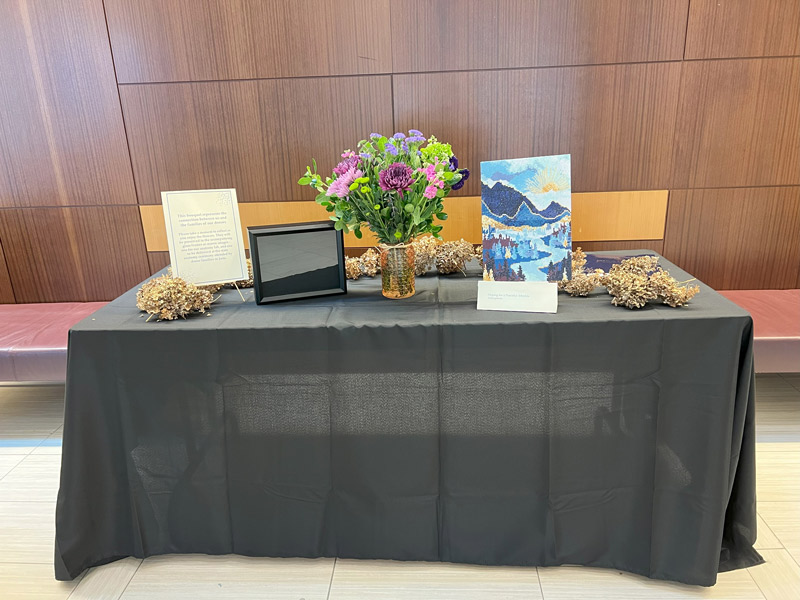
2022 Anatomy Memorial Event in Pictures


