Research Lab Results
-
Pablo Iglesias Lab
Investigators in the Pablo Iglesias Lab use analytic tools from control systems and dynamical systems to study cell biology, including biological signal transduction pathways. Our research interests include the ways cells interpret directional cues to guide their motion, regulatory mechanisms that control cell division, and the sensing and actuation that enable cells to maintain lipid homeostasis. -
Xiao Group
The objective of the Xiao Group's research is to study the dynamics of cellular processes as they occur in real time at the single-molecule and single-cell level. The depth and breadth of our research requires an interdisciplinary approach, combining biological, biochemical and biophysical methods to address compelling biological problems quantitatively. We currently are focused on dynamics of the E. coli cell division complex assembly and the molecular mechanism in gene regulation. -
Advanced Optics Lab
The Advanced Optics Lab uses innovative optical tools, including laser-based nanotechnologies, to understand cell motility and the regulation of cell shape. We pioneered laser-based nanotechnologies, including optical tweezers, nanotracking, and laser-tracking microrheology. Applications range from physics, pharmaceutical delivery by phagocytosis (cell and tissue engineering), bacterial pathogens important in human disease and cell division. Other projects in the lab are related to microscopy, specifically combining fluorescence and electron microscopy to view images of the subcellular structure around proteins. -
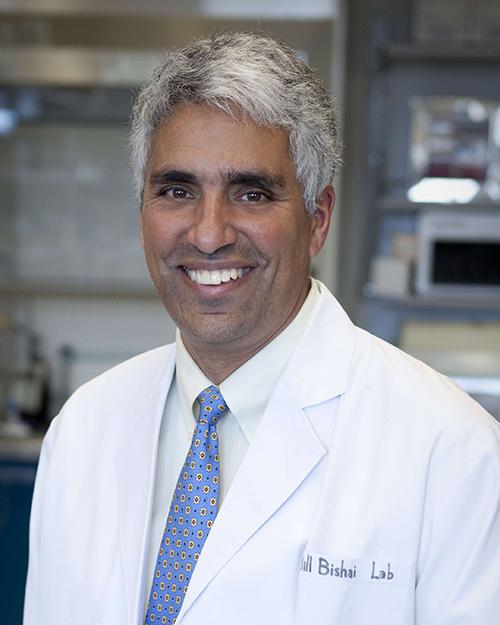
William Bishai Laboratory
The William Bishai Laboratory studies the molecular pathogenesis of tuberculosis. The overall goal of our laboratory is to better understand tuberculosis pathogenesis and then to employ this understanding toward improved drugs, vaccines and diagnostics. Since Mycobacterium tuberculosis senses and adapts to a wide array of conditions during the disease process, it is clear that the regulation of expression of virulence factors plays an important role in pathogenesis. As a result, a theme of our research is to assess mycobacterial genes important in gene regulation. We are also interested in cell division in mycobacteria and the pathogenesis of caseation and cavitation.