Research Lab Results
-
Center on Aging and Health
The Center on Aging and Health pursues creative approaches to solve the important health and health care problems for an aging population. Research in our center involves population-based and clinical studies of the causes, correlates, and consequences of aging-related conditions, including frailty, disability, and social isolation. We house four distinct research working groups: the Frailty and Multisystem Dysregulation Working Group; the Family and Social Resources Working Group; the Cognitive and Sensory Functions Working Group; and the Biostatistics, Design and Analysis Working Group. We provide key infrastructure, such as the statistical data core, that supports clinical- and population-based research and education with expertise in research with older adults. -
Elizabeth Hunt Lab
Researchers in the Elizabeth Hunt Lab study innovative ways to improve the care quality and clinical outcomes of children who suffer cardiopulmonary arrest. Our work includes implementing rapid-response systems, capturing and analyzing cardiac-arrest data, and redesigning medical devices and simulators. We've introduced novel simulation approaches to education, including data-driven debriefing and the Rapid Cycle Deliberate Practice approach.
Principal Investigator
Department
-
URobotics
URobotics is a research and education program that uses advanced technology to improve how urological diseases are diagnosed and treated. The URobotics lab’s main focus is creating robots that aid in real-time, image-guided interventions. This multidisciplinary team of urologists, radiologists and engineers has teamed up to revolutionize how surgeries are performed. -
LEADD Center: Laboratory for Endoscopy Advancement and Device Development
The principal goal of LEADD is to catalyze the development and dissemination of innovative techniques in advanced gastrointestinal endoscopy at Johns Hopkins Medical Institutions, by providing the resources and expertise to conceptualize, design, build, and test new endoscopic devices. LEADD resources will also provide resources for endoscopy education for trainees and faculty. Additional Faculty: Anthony Kalloo, M.D.; Mouen Khashab, M.D., Saowanee Ngamruengphong, M.D.
-
Linda Smith-Resar Lab
The Linda Smith-Resar Lab primarily investigates hematologic malignancy and molecular mechanisms that lead to cancer as well as sickle cell anemia. Recent studies suggest that education is an important and effective component of a patient blood management program and that computerized provider order entry algorithms may serve to maintain compliance with evidence-based transfusion guidelines. Another recent study indicated that colonic epithelial cells undergo metabolic reprogramming during their evolution to colorectal cancer, and the distinct metabolites could serve as diagnostic tools or potential targets in therapy or primary prevention. -
IndoUS Clinical Research
Our IndoUS team, based both in Baltimore and in India, specializes in international clinical research (cohort studies and clinical trials), public health implementation science and education in infectious diseases, HIV/AIDS, tuberculosis (TB), vaccine preventable illnesses, antimicrobial resistant infections, and more recently COVID. Since 2003, our work has been focused primarily on India, where we are engaged in several Indo-JHU and international research collaborations. We partner with several leading medical and research institutions in India (e.g. BJGMC, DY Patil, Hinduja Hospital, KEM, Bharati Vidyapeeth, NIRT, JIPMER, CMC, Medanta, IISER, YRG, IIT), as well as others in sub-Saharan Africa, US and Brazil. We are actively involved in the following consortia: 1) Indo-US Vaccine Action Program sponsored RePORT India TB research consortium, which is funded by the US National Institutes of Health (NIH) and the government of India, Department of Biotechnology. 2) RePORT International TB Research Consortium, a multilateral global consortia for TB research, 3) US NIH funded multi-country HIV and TB trials consortia of the AIDS Clinical Trials Group (ACTG) and the International Maternal Pediatric Adolescent AIDS Trials Network (IMPAACT) Network, 4) NIH and AmFAR funded IeDea HIV/TB Working Group and the Treat Asia-IeDEA HIV and TB epidemiology databases, and 5) CDC SHEPHERD AMR studies. Our group has been awarded research grants from the US NIH, US CDC, UNITAID, Indian government, and several philanthropic foundations to investigate infectious diseases of importance to India and beyond.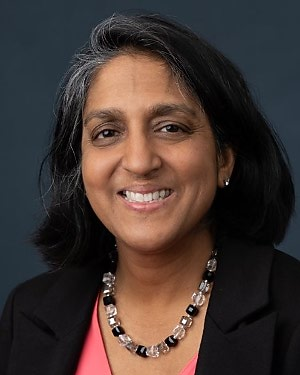
-
Stephen Sozio Lab
Dr. Sozio’s research focuses on 1) Clinical research related to chronic kidney disease and end stage renal disease, and 2) Educational research in undergraduate and graduate medical education.
The Sozio lab pursues work related to stroke, cognitive impairment, manifestations of kidney disease, and systematic reviews on clinical topics, and collaborates on multiple projects with other key investigators. In particular, Dr. Sozio has been an active investigator in the Choices for Healthy Outcomes in Caring for ESRD (CHOICE) Study, Predictors of Arrhythmic and Cardiovascular Risk in End Stage Renal Disease (PACE) Study, Chronic Renal Insufficiency Cohort (CRIC) Study, and work funded through the Agency for Healthcare Research and Quality (AHRQ) and Johns Hopkins Evidence-Based Practice Center. In addition, the Sozio lab performs studies at the UME and GME levels, investing in understanding learners’ mentorship, research, and transitional experiences.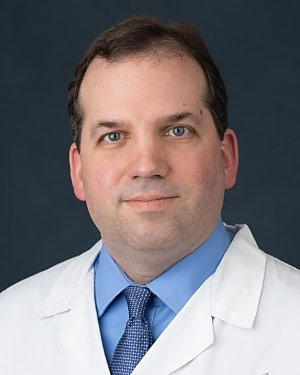
-
Robert Bollinger Lab
The key research interests in the Robert Bollinger Lab include identifying biological and behavioral risk factors for HIV transmission as well as characterizing the clinical progression and treatment of HIV and related infectious diseases. We also have a long-standing interest in optimizing health care capacity and delivery in settings with limited resources. Our work includes implementing science research projects to explore the effectiveness of initiatives such as task-shifting, clinical education, distance learning and mobile health programs as a way to improve health care in these locations.
-
Robert Greenberg Lab
Researchers in the Robert Greenberg Lab examine anesthesiology and critical care-related topics that include critical airway management, non-invasive fetal monitoring, neural blockade monitoring, pediatric acute pain management, cuffed oropharyngeal airway (COPA), pain informatics, and pediatric pain education and innovation.