Research Lab Results
-
Inoue Lab
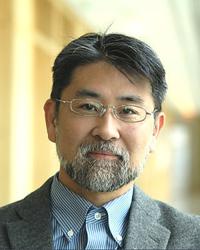
Complexity in signaling networks is often derived from co-opting one set of molecules for multiple operations. Understanding how cells achieve such sophisticated processing using a finite set of molecules within a confined space--what we call the ""signaling paradox""--is critical to biology and engineering as well as the emerging field of synthetic biology. In the Inoue Lab, we have recently developed a series of chemical-molecular tools that allow for inducible, quick-onset and specific perturbation of various signaling molecules. Using this novel technique in conjunction with fluorescence imaging, microfabricated devices, quantitative analysis and computational modeling, we are dissecting intricate signaling networks. In particular, we investigate positive-feedback mechanisms underlying the initiation of neutrophil chemotaxis (known as symmetry breaking), as well as spatio-temporally compartmentalized signaling of Ras and membrane lipids such as phosphoinositides. In parallel, we also try to understand how cell morphology affects biochemical pathways inside cells. Ultimately, we will generate completely orthogonal machinery in cells to achieve existing, as well as novel, cellular functions. Our synthetic, multidisciplinary approach will elucidate the signaling paradox created by nature. -
Mass Spectrometry Core
The Mass Spectrometry Core identifies and quantifies proteins that change expression in well-characterized protein fractions from cancerous cells or tissues. This includes identifying and quantifying changes in binding partners and post-translational modifications. Column chromatography and gel electrophoresis-based one and two-dimensional separations of protein complexes coupled to mass spectrometry are used. Techniques such as difference gel electrophoresis (DIGE), isobaric tag for relative and absolute quantitation (iTRAQ) and 18O-labeling as well as non-labeling methods (MudPit, multi-dimensional protein identification technology) are available for quantifying relative differences in protein expression and post-translational modifications. We developed methods to detect post-translational modifications such as LCMS methods to accurately determine the intact mass of proteins, selective fluorescent labeling of S-nitrosothiols (S-FLOS) to detect nitrosated cysteines in proteins, and ion mapping methods to map post-translational modifications that produce a signature mass or mass difference when the modified peptide is fragmented. -
Mohamed Atta Lab
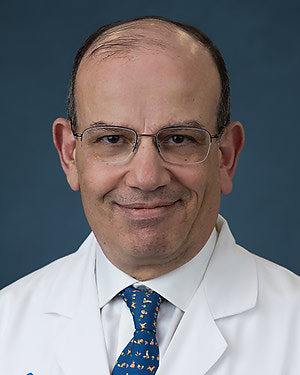
Dr. Atta and his research team explore the epidemiological and clinical interventions of a variety of kidney diseases. Our goal is not only to advance the understanding of many kidney diseases but also to capitalize on novel discoveries of basic science to treat a wide range of rare and common kidney disorders.
- Multi-international observational study of a rare form of amyloid (LECT2 amyloid) to understand its natural history with the ultimate interest of treating this condition.
- Our group has launched a project investigating the impact of COVID19 on the kidney to identify risk factors influencing outcome across different clinical phenotypes
- In collaboration with the Division of Infectious Diseases and the School of Public Health, our research has focused on the epidemiology of HIV and kidney disease. We also study clinical markers and contributing factors in the progression of kidney disease, and the association between kidney disease and heart disease.
- Our research group is participating in a multicenter consortium serving as a clinical core site to study the pathogenesis of HIV-associated kidney disease by providing well-characterized clinical specimens and corresponding clinical and laboratory data.
-
Mark Liu Lab
Research in the Mark Liu Lab explores several areas of pulmonary and respiratory medicine. Our studies primarily deal with allergic inflammation, chronic obstructive pulmonary disease (COPD) and asthma, specifically immunologic responses to asthma. We have worked to develop a microfluidic device with integrated ratiometric oxygen sensors to enable long-term control and monitoring of both chronic and cyclical hypoxia. In addition, we conduct research on topics such as the use of magnetic resonance angiography in evaluating intracranial vascular lesions and tumors as well as treatment of osteoporosis by deep sea water through bone regeneration.
-
Michael Klag Lab
The Michael Klag Lab focuses on the epidemiology and prevention of kidney disease, cardiovascular disease and hypertension. Our research determined that the U.S. was experiencing an epidemic of end-stage kidney disease, pinpointed the incidence of kidney disease and published scholarship on risk factors for kidney disease such as race, diabetes and socioeconomic status. Our Precursors Study has shown that serum cholesterol measured at age 22 years is a predictor for midlife cardiovascular disease, a finding that has influenced policy about cholesterol screening in young adults. We also research health behaviors that lead to hypertension and study how differences in these behaviors affect urban and non-urban populations. -
Huang Laboratory
Our lab is interested in understanding the fundamental mechanisms of how cells move and implications in disease treatment. We use an interdisciplinary approach involving fluorescent live cell imaging, genetics, and computer modeling to study the systems level properties of the biochemical networks that drive cell migration. -
Tom Woolf Lab
The Tom Woolf Lab studies the quarter of the genome devoted to membrane proteins. This rapidly growing branch of bioinformatics, which includes computational biophysics, represents the main research direction of our group. We aim to provide insight into critical issues for membrane systems. In pursuit of these goals, we use extensive computer calculations to build an understanding of the relations between microscopic motions and the world of experimental measurements. Our calculations use our own Beowulf computer cluster as well as national supercomputer centers. An especially strong focus has been on the computed motions of proteins and all-atom models of the lipid bilayers that mediate their influence. To compute these motions, we use the molecular dynamics program CHARMM. We hope to use our understanding of the molecular motions for the prediction of membrane protein structures using new computational methods. -
The Arking Lab
The Arking Lab studies the genomics of complex human disease, with the primary goal of identifying and characterizing genetics variants that modify risk for human disease. The group has pioneered the use of genome-wide association studies (GWAS), which allow for an unbiased screen of virtually all common genetic variants in the genome. The lab is currently developing improved GWAS methodology, as well as exploring the integration of additional genome level data (RNA expression, DNA methylation, protein expression) to improve the power to identify specific genetic influences of disease. The Arking Lab is actively involved in researching: • autism, a childhood neuropsychiatric disorder • cardiovascular genomics, with a focus on electrophysiology and sudden cardiac death (SCD) • electrophysiology is the study of the flow of ions in biological tissues Dan E. Arking, PhD, is an associate professor at the McKusick-Nathans Institute of Genetic Medicine and Department of Medicine, Division of Cardiology, Johns Hopkins University.
-
The Sfanos Lab
The Sfanos Lab studies the cellular and molecular pathology of prostate disease at the Johns Hopkins University School of Medicine. We are specifically interested in agents that may lead to chronic inflammation in the prostate, such as bacterial infections and prostatic concretions called corpora amylacea. Our ongoing studies are aimed at understanding the influence of prostate infections and inflammation on prostate disease including prostate cancer and benign prostatic hyperplasia (BPH). The laboratory also focuses on the influence of the microbiome on prostate disease development, progression, and/or resistance to therapy. -
Stivers Lab
The Stivers Lab is broadly interested in the biology of the RNA base uracil when it is present in DNA. Our work involves structural and biophysical studies of uracil recognition by DNA repair enzymes, the central role of uracil in adapative and innate immunity, and the function of uracil in antifolate and fluoropyrimidine chemotherapy. We use a wide breadth of structural, chemical, genetic and biophysical approaches that provide a fundamental understanding of molecular function. Our long-range goal is to use this understanding to design novel small molecules that alter biological pathways within a cellular environment. One approach we are developing is the high-throughput synthesis and screening of small molecule libraries directed at important targets in cancer and HIV-1 pathogenesis.