Research Lab Results
-
Sean Taverna Laboratory
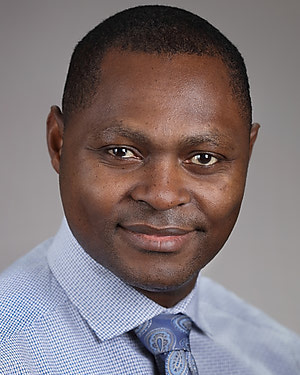
The Taverna Laboratory studies histone marks, such as lysine methylation and acetylation, and how they contribute to an epigenetic/histone code that dictates chromatin-templated functions like transcriptional activation and gene silencing. Our lab uses biochemistry and cell biology in a variety of model organisms to explore connections between gene regulation and proteins that write and read histone marks, many of which have clear links to human diseases like leukemia and other cancers. We also investigate links between small RNAs and histone marks involved in gene silencing. -
S.C.O.R.E. Lab
The mission of the Stroke Cognitive Outcomes and Recovery (S.C.O.R.E.) Lab is to enhance knowledge of brain mechanisms that allow people recover language, empathy, and other cognitive and communicative functions after stroke, and to improve ways to facilitate recovery of these functions after stroke. We also seek to improve the understanding of neurobiology of primary progressive aphasia., and how to enhance communication in people with this group of clinical syndromes. -
Schneck Lab
Effective immune responses are critical for control of a variety of infectious disease including bacterial, viral and protozoan infections as well as in protection from development of tumors. Central to the development of an effective immune response is the T lymphocyte which, as part of the adaptive immune system, is central in achieving sterilization and long lasting immunity. While the normal immune responses is tightly regulated there are also notable defects leading to pathologic diseases. Inactivity of tumor antigen-specific T cells, either by suppression or passive ignorance allows tumors to grow and eventually actively suppress the immune response. Conversely, hyperactivation of antigen-specific T cells to self antigens is the underlying basis for many autoimmune diseases including: multiple sclerosis; arthritis; and diabetes. Secondary to their central role in a wide variety of physiologic and pathophysiologic responses my lab takes a broad-based approach to studying T cell responses. -
Sanjay Desai Lab
Research in the Sanjay Desai Lab focuses primarily on clinical outcomes in survivors of critical illnesses, such as acute lung injury. We also investigate techniques to improve graduate medical education and are conducting a clinical trial on the comparative effectiveness of models that optimize patient safety and resident education. Our research examines factors such as residency work-hour reform, hand hygiene practices and the use of etiquette-based communication.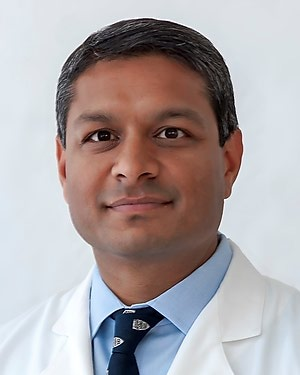
-
Samuel R. Denmeade Laboratory
The main research goals of my laboratory are: (1) to identify and study the biology of novel cancer selective targets whose enzymatic function can be exploited for therapeutic and diagnostic purposes; (2) to develop methods to target novel agents for activiation by these cancer selective targets while avoiding or minimizing systemic toxicity; (3) to develop novel agents for imaging cancer sites at earliest stages. To accomplish these objectives the lab has originally focused on the development of prodrugs or protoxins that are inactive when given systemically via the blood and only become activated by tumor or tissue specific proteases present within sites of tumor. Using this approach, we are developing therapies targeted for activation by the serine proteases prostate-specific antigen (PSA), human glandular kallikrein 2 (hK2) and fibroblast activation protein (FAP) as well as the membrane carboxypeptidase prostate-specific membrane antigen (PSMA). One such approach developed in the lab consists of a potent bacterial protoxin that we have reengineered to be selectively activated by PSA within the Prostate. This PSA-activated toxin is currently being tested clinically as treatment for men with recurrent prostate cancer following radiation therapy. In a related approach, a novel peptide-cytotoxin prodrug candidate that is activated by PSMA has been identified and is this prodrug candidate is now entering early phase clinical development. In addition, we have also identified a series of potent inhibitors of PSA that are now under study as drug targeting and imaging agents to be used in the treatment and detection of prostate cancer.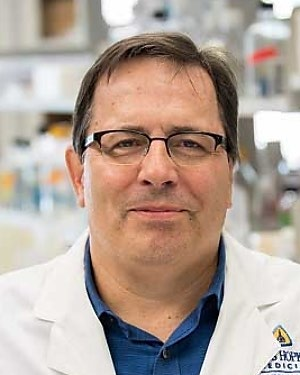
-
Shyam Sundar Biswal Lab
xResearch in the Shyam Biswal Lab focuses on therapeutic resistance of cancer due to a gain-of-function mutation in transcription factor Nrf2. Using patient-derived xenografts in humanized immunocompetent mice and GEM models, we aim to understand the mechanisms of oncogenic cooperation and metabolic adaptation in cancer cells. We’re also investigating the systemic and pulmonary effects of air pollution as well as the health effects of recent tobacco products, such as electronic cigarettes and water pipes.
-
Saowanee Ngamruengphong Lab
Research in the Saowanee Ngamruengphong Lab focuses on methods for diagnosing and managing gastrointestinal conditions, including premalignant and malignant lesions of the gastrointestinal tract, esophageal cancer, colon polyps, and biliary and pancreatic disease. Our most recent work includes investigating a novel hybrid technique for closure of refractory gastrocutaneous fistula. We also conducted an international multicenter study that compared endoscopic ultrasound-guided pancreatic duct drainage with enteroscopy-assisted endoscopic retrograde pancreatography following Whipple surgery.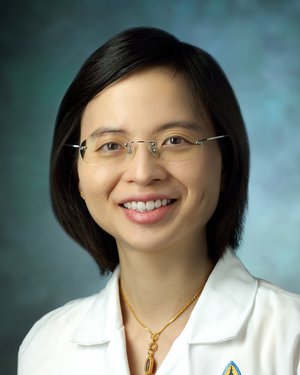
-
Seth Blackshaw Lab
The Seth Blackshaw Lab uses functional genomics and proteomics to rapidly identify the molecular mechanisms that regulate cell specification and survival in both the retina and hypothalamus. We have profiled gene expression in both these tissues, from the start to the end of neurogenesis, characterizing the cellular expression patterns of more than 1,800 differentially expressed transcripts in both tissues. Working together with the lab of Heng Zhu in the Department of Pharmacology, we have also generated a protein microarray comprised of nearly 20,000 unique full-length human proteins, which we use to identify biochemical targets of developmentally important genes of interest. -
Sean Tackett Lab
Research in the Sean Tackett Lab explores methods for assessing and improving medical education. Our recent work has included the design of an evaluation framework for World Federation of Medical Education basic standards for medical education. We also have participated in a student-driven initiative to develop a global health education program at the Johns Hopkins University School of Medicine.
-
Sean Agbor-Enoh Lab
Research in the Sean Agbor-Enoh Lab explores topics within the field of pulmonary medicine. Our team also participates in clinical trials that explore new techniques for diagnosing rejection following an organ transplant. One current study is seeking to develop a new blood test that may be used instead of biopsies to diagnose rejection after transplant.