
The Early Years
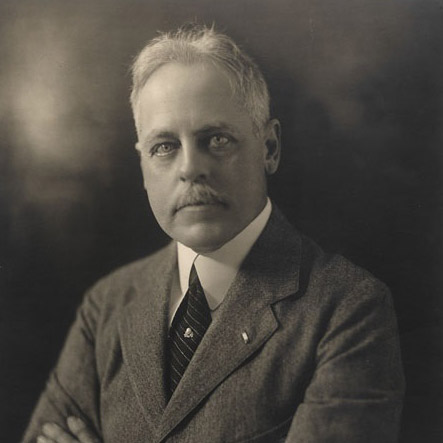
William Holland Wilmer
The son of a clergyman, William Holland Wilmer, M.D., was born in the middle of the Civil War in Powhatan County, Virginia. He received his medical degree from the University of Virginia in 1885, interned at Mount Sinai Hospital in New York City, worked for three years as assistant to eminent ophthalmologist Emil Gruening and opened a practice in Washington, D.C., in 1889. Wilmer entered the Medical Reserve Corps in 1911 and ran an American Expeditionary Force hospital in Issoudon, France, during World War I — for which he was recognized with the Distinguished Service Medal in 1919 and membership in the French Legion of Honor in 1924.
In 1922, the trailblazing philanthropist Aida de Acosta Root Breckinridge traveled from New York to consult Wilmer for her deteriorating vision. He diagnosed her glaucoma, and prompt surgery preserved her sight. Grateful for her own care and impressed by the surgeon’s service to patients coming to him from far and wide, she shared with Wilmer her plan to raise the funds to establish a larger, better-equipped institute to meet patients’ needs and to allow him to pass his skills on to young doctors.
As Breckinridge later related to the audience at the dedication of the Wilmer Ophthalmological Institute, “Dr. Wilmer admitted that such an institute was very much needed but was horrified at the suggestion that the financial aid of his patients be requested. He not only refused to provide a list of his patients, but he said he would block every attempt to compile such a list.”
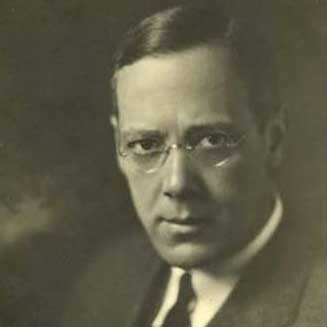 Alan Woods
The strong-willed Breckinridge was not to be deterred. She said she “obtained by various methods” a list of 700 patients, and a remarkable 338 of them contributed to make the Wilmer Ophthalmological Institute a reality in 1925. As the institute’s first director (1925–1934), Wilmer would spend the next nine years establishing the patient care, research and teaching programs for which the institute has become famous.
In 1934, Alan Churchill Woods Sr., M.D., became Wilmer’s second director (1934–1955). His undergraduate and medical school degrees were obtained at Johns Hopkins, followed by training in medicine at Peter Bent Brigham Hospital in Boston and a fellowship at the University of Pennsylvania, where he became fascinated with allergy and immunity. In 1925, he was named assistant director to William Holland Wilmer, and he began an active clinical and research program focused on eye disease characterized by inflammation, including inflammation caused by tuberculosis, syphilis and sympathetic ophthalmia. As much as anyone, Woods played a major role in establishing what is today an acknowledged subspecialty field of uveitis and ocular immunology.
In 1941, Woods found himself in the role of patient when his own vision deteriorated due to cataracts. Determined to “eat his own cooking,” Woods had his surgery performed by a newly graduated resident, Jack Guyton, M.D. The outcome was perfect.
In many ways, Woods was a larger than life personality — Norman Ashton, D.Sc., a professor at the University of London, described him as “a sort of human Sherman tank riding roughshod through life, caring only for the truth as he saw it and very little for the world’s reactions to his views.”
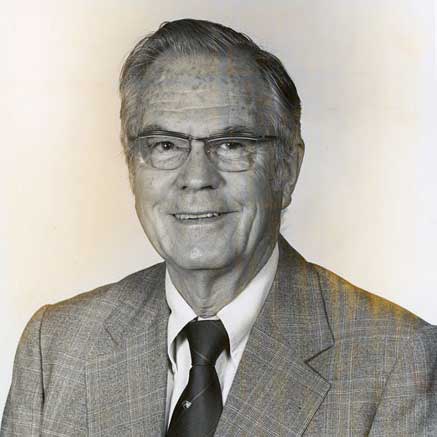 A. Edward Maumenee
The first Wilmer director to be a product of the institute’s training program, Alfred Edward Maumenee, M.D., (known to many as Ed) began his residency in 1938. He was also chief resident at Wilmer, and a medical officer in the U.S. Navy from 1944–1946. In 1948, he left Wilmer to become chair of the ophthalmology department at Stanford University before returning to Wilmer in 1955 for a 24-year term as director (1955–1979).
Maumenee loved performing surgery and was unusual (by today’s standards) in that his knowledge was all encompassing — he had major publications in almost all areas of ophthalmology and a willingness to go toe-to-toe with colleagues who were “specialists” in only one part of our field. The one exception was neuro-ophthalmology, about which he would defer to his colleague Frank Walsh, M.D., who founded the field.
Maumenee was a charismatic leader, and a contemporary noted that he “has been president of nearly every ophthalmic group to which he has belonged.” When he stepped down as director of Wilmer, his scientific contributions included popularizing the use of fluorescein angiography as a new diagnostic technique for retinal disease, and descriptions of immunologic corneal graft rejection and the basis of congenital glaucoma.
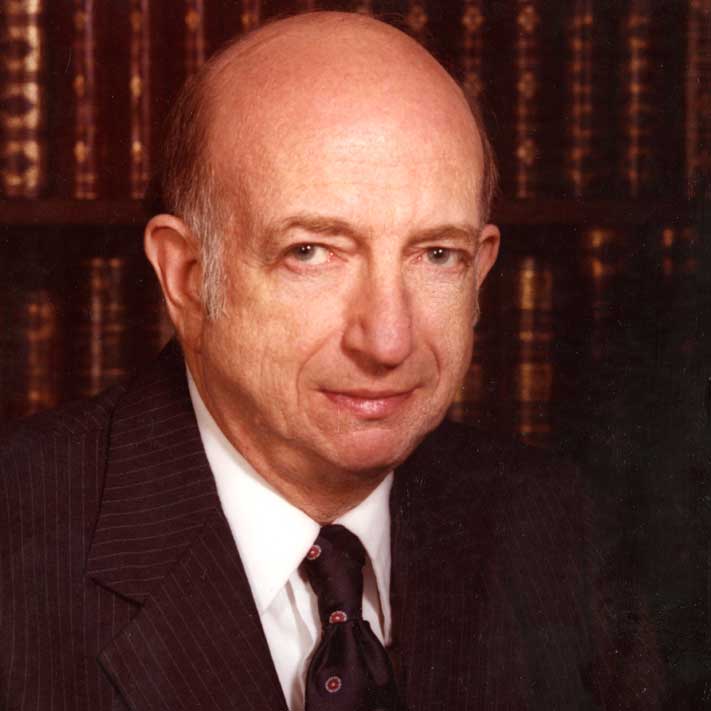 Arnall Patz
Arnall Patz, M.D., grew up in Georgia and attended Emory University as an undergraduate and medical student. While serving in the military at Camp Lee, Virginia, he visited the eye department at what is now named the Walter Reed National Military Medical Center and became excited about a career in ophthalmology. Post World War II, an epidemic of blindness in children occurred due to retrolental fibroplasia (now called retinopathy of prematurity). Patz suspected the problem was related to the pure oxygen given to premature babies in hospitals and applied for a grant to test his idea. The grant was rejected and Patz was harshly criticized for proposing to study this, but he persisted in his gracious way and was proven correct. Helen Keller presented him with a Lasker Award (known as the American Nobel Prize) in 1956.
Patz went on to be a pioneer in the use of the argon laser (laser iridotomies and retinal photocoagulation) to treat eye disease and received the Presidential Medal of Freedom in 2004 from President George W. Bush. Like Ed Maumenee before him, Patz was tapped to serve as president of key organizations such as the American Academy of Ophthalmology and the Macula Society, and today, the Arnall Patz Medal is awarded by the latter organization to an outstanding contributor to the field of retinal diseases.
During his term as Wilmer’s director (1979–1989), Patz dramatically increased the institute’s size and scope. The addition of the Maumenee Building provided modern space for clinics, operating rooms and research, and the growth of the faculty included creation of new specialty areas (such as the Retinal Vascular Center, which Patz led, and the Dana Center for Preventive Ophthalmology, led by Alfred Sommer, M.D., M.H.S.). Patz’s residents saw in him a kind and humble man without the ego that often accompanies such a track record of accomplishment and public recognition.