

Pediatric Intelligent Care Assistants Supporting Safety & Outcomes (PICASSO) Project
What is the PICASSO Project?
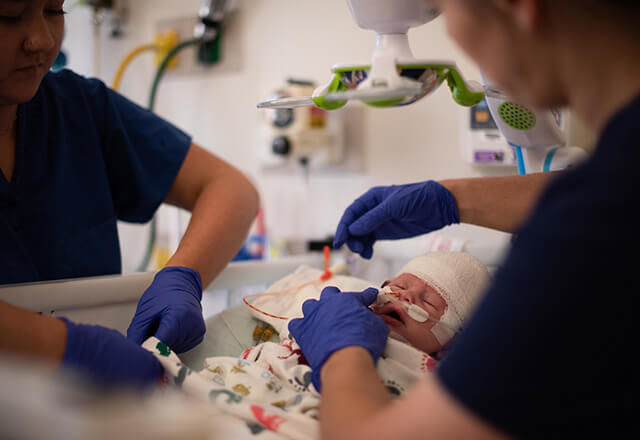
The Pediatric Intelligent Care Assistants Supporting Safety & Outcomes (PICASSO) Project is seeking support to create, evaluate, and integrate trustworthy artificial intelligence into the clinical workflows within the Pediatric Intensive Care Unit (PICU).
PICASSO brings together clinicians of all roles, data scientists, human factor experts, and patient and family advocates to create a set of collaborative Intelligent Digital Assistants (or IDAs) that are being developed to become harmonious “team members” in the PICU.
IDAs may be as simple as aggregating data to support team handoffs or as complex as autonomously managing mechanical ventilators – while in constant contact with the bedside care team. IDAs will be patient and family facing to better gather insights from the people who know the children best as well as to augment patient and family understandings.
We believe IDAs will significantly improve the care of critically ill children, and we will carefully analyze their impacts on children’s outcomes.
Project Mission
The mission of PICASSO project is to bring the promise of artificial intelligence to the bedside of critically ill children and improve their outcomes. Successful implementation of this project will provide a better hospital experience for the patient and the family.
The first two AIDAS within the project will focus on:
- Sepsis prevention. (e.g. identification of serious bacterial infections and their timely and effective treatment)
- Smart mechanical ventilation system for children who need respiratory support
Principal Investigators
Kimia Ghobadi, Ph.D.

Ayse Gurses, Ph.D.

Jim Fackler, M.D.

Supporting PICASSO
Statement of Need
Long before big data and artificial intelligence were practical, investigators in the pediatric critical care unit at The Johns Hopkins Hospital were using data from electronic health records to share information among care sites, find diagnostic patterns and support operational efficiencies. Recently, we leveraged what are now Johns Hopkins’ routine machine-learning techniques to identify sepsis, septic shock and impending cardiac arrest, and we novelly leveraged large language models to analyze physiological data.
With philanthropic support, we believe this project will demonstrate vast improvement in patient outcomes. Additionally, this endeavor harnesses the world-renowned medical expertise of Johns Hopkins Medicine and the machine learning and artificial intelligence preeminence of the Johns Hopkins Whiting School of Engineering. This partnership provides us with a distinguished opportunity to enact great change through the intersection of engineering and health care in a way that benefits sick children.

How Your Gift Will Improve Patient Care

Contact Us
Chelsea Kirk
Director of Development, Johns Hopkins Children’s Center
Email: [email protected]
Phone: 301-461-3791
Bruce Kranig
Senior Associate Director of Development, Department of Anesthesiology
Email: [email protected]
Phone: 443-287-7952