
2nd Annual Maryland Stem Cell Symposium and Workshop
October 16 and 17, 2025
Tilghman Auditorium and Turner Concourse
The Johns Hopkins University School of Medicine

Bringing together prominent investigators in stem cells, bioengineering and regenerative medicine, the Maryland Stem Cell Symposium and Workshop is organized by a joint committee of Johns Hopkins and University of Maryland School of Medicine
The symposium showcases the results of the visionary and generous support of the Maryland Stem Cell Research Fund (MSCRF) to bring new treatments to patients through partnerships with biotechnology companies and Maryland academic institutions and will focus on the contributions of trainees and junior faculty.
We aim to provide a networking opportunity to bring together and foster collaboration between young researchers from different Maryland institutions. There will be opportunities for interested departments, divisions and/or commercial entities for sponsorship of the event. Junior-level participants (young faculty, postdoctoral fellows, graduate students, undergraduate students) are especially encouraged to submit abstracts, with an opportunity to present their work in either oral or poster format and compete for awards.
Additional support is provided by the Institute for Cell Engineering at the Johns Hopkins University School of Medicine and the Johns Hopkins Kimmel Cancer Center.
Symposium Program
Turner Concourse and Tilghman Auditorium
Johns Hopkins University School of Medicine
*Enter at the Miller Research Building (733 N Broadway, Baltimore, MD 21205)
Thursday, October 16
Plenary Sessions: “Challenges and Opportunities in Gene and Stem Cell Therapies for Sickle Cell Anemia”
12:00 - 2:00 PM
Poster Viewing and Registration
2:00 - 2:30 PM
Opening Remarks
Elias T. Zambidis, M.D., Ph.D., Professor of Oncology and Pediatrics, The Johns Hopkins Kimmel Cancer Center and Institute for Cell Engineering
Ms. Grace Ojo and Family, Patient Advocate Testimony
Delegate Jheanelle Wilkins, Chair, Maryland Legislative Black Caucus, Maryland House of Delegates
2:30 - 4:30 PM
Plenary Talks
Robert Brodsky, M.D, The Johns Hopkins Family Professor of Medicine and Oncology at the Johns Hopkins University School of Medicine
“HLA-Haploidentical Bone Marrow Transplantation (BMT) Cures Sickle Cell Disease and Preserves Fertility”
Matthew Porteus, M.D., Ph.D., The Sutardja Chuk Professor of Definitive and Curative Medicine at the Stanford University School of Medicine, and Recipient of The Beatrice and Jacob H. Conn Lectureship in Regenerative Medicine of the JHUSOM Institute for Cell Engineering
"Applying the Versatility and Specificity of Genome Editing to Engineer Stem Cells"
Ambroise Wonkam, M.D., Ph.D., Professor of Genetic Medicine and the Director of the McKusick-Nathans Institute and Department of Genetic Medicine at Johns Hopkins University School of Medicine
“Harnessing African Genomic Variation to Improve Sickle Cell Disease Therapeutics”
4:30 - 5:00 PM
Plenary Speaker Discussion Panel
5:00 - 6:00 PM
Poster Viewing
Friday, October 17
Maryland Young Investigator Showcase in Regenerative Medicine Research
7:30 - 8:00 AM
Registration
8:00 - 8:30 AM
Opening Remarks
Elias T. Zambidis, M.D., Ph.D., Professor of Oncology and Pediatrics, Johns Hopkins Kimmel Cancer Center and Institute for Cell Engineering
Senator Shelly L Hettleman, Member, Budget and Taxation Committee, Maryland State Senate
8:30 AM - 10 AM
Young Investigators, Session 1: Mesodermal and Hematopoietic Stem Cell Lineages
Session Chair: Alan Friedman, M.D., Johns Hopkins University School of Medicine
- Yuchuan Miao, Ph.D., Assistant Professor, Johns Hopkins University School of Medicine: Illuminating human vertebral column development and disease with stem cells
- Shayan Manuchehrfar, Graduate Student, UMBC: hMSCs Force Generation on Extracellular Matrix Mimetic Surfaces
- Neelima Thottappillil, Ph.D., Postdoctoral Fellow, Johns Hopkins University School of Medicine: Thrombomodulin expression defines adventitial progenitor cell heterogeneity in human blood vessels
- MinJung Kim, Ph.D., Assistant Professor, and Angela Tan, student, University of Maryland School of Medicine: SIX family transcription factors drive human erythroid differentiation
10:00 - 12:00 PM
Young Investigators, Session 2: Neural Stem Cell Lineages and Reprogramming
Session Chair: Miroslaw Janowski, M.D., Ph.D., University of Maryland School of Medicine
- Manoj Kumar, Ph.D., Professor, University of Maryland School of Medicine: GBA1/PD microglia induce a-synuclein aggregation in dopamine neurons
- Ludovic Zimmerlin, Ph.D., Research Associate, Johns Hopkins University School of Medicine: Human Tankyrase/PARP1 Inhibitor-Regulated Naive (TIRN) Stem Cells: A New Class of Blastomere-Like Stem Cells with Improved Mult-lineage Directed Differentiation and Chimera Competency
- Stella Mary, Ph.D., Postdoctoral Fellow, Johns Hopkins University School of Medicine: Microglia-Retinal Ganglion Cell Interactions Following Transplantation
- Mansoureh Barzegar, Ph.D., Postdoctoral Fellow, Johns Hopkins University School of Medicine: An Inverse Agonist of ROR-g, SR2211, Promotes Oligodendrocyte Maturation and Remyelination in Vivo
- Eun Ra, Ph.D., Research Associate, Johns Hopkins University School of Medicine: Sex-specific brain organoid damages from galactic cosmic ray simulation rescued by optogenetic-ECM
12:00 - 1:00 PM
Sponsor Presentations, Lunch and Poster Viewing
1:00 - 2:30 PM
Young Investigators, Session 3: Stem Cell Therapeutics
Session Chair: Elias T. Zambidis, M.D., Ph.D., Institute for Cell Engineering, Johns Hopkins University School of Medicine
- Tea Soon Park, Ph.D., Cell Therapy Director, SereNeuro Therapeutics: SN102 Gene Therapy: Translating Human Nociceptor Genomics to Treat Trigeminal Neuralgia
- Willem Buys, M.D., Ph.D., Postdoctoral Fellow, Johns Hopkins University School of Medicine: Bioengineering GD2 chimeric antigen receptor myeloid progenitor therapies from improved human blastomere like stem cells
- Shalini Sharma, Ph.D., Postdoctoral Fellow, University of Maryland School of Medicine: Radiolabeling of mesenchymal stem cells for intra-arterial delivery in stroke model
- Muhammad Ali, Ph.D., Research Associate, Johns Hopkins University School of Medicine: Pluripotent Stem Cell-Derived Corneal Endothelial Cell Sheets: an Alternative to Donor Tissue in Endothelial Keratoplasty
2:30 - 3:00 PM
Break, Poster Viewing
3:00 - 4:30 PM
Young Investigators, Session 4: Disease Pathophysiology Modeling Using Stem Cells
Session Chair: Ricardo Feldman, Ph.D., University of Maryland School of Medicine
- Hungoo Lee, Ph.D., Assistant Professor, Johns Hopkins University School of Medicine: Unraveling the Root Cause of Fragile X Syndrome via R-Loop-Driven Repeat Contraction in Patient-Derived Stem Cell Models
- Aliyah Penn, Graduate Student, Johns Hopkins University School of Medicine: Using iPSC-derived Brain Organoids as a Tool for Precision Medicine in Rare Neurodevelopmental Diseases
- Ye Jun Kim, Graduate Student, University of Maryland School of Medicine: Investigating the mechanism mediated by Heme-Regulated Inhibitor (HRI) in ART838-induced AML cell death
- Zanshe Thompson, Ph.D., Research Fellow, Johns Hopkins University School of Medicine: Hmga1 Chromatin Regulators Induce Inflammatory Signals Necessary for Atherogenesis in Tet2 Mutant Clonal Hematopoiesis
4:30 - 5:00 PM
Break, Poster Viewing
5:00 - 5:45 PM
Ruchika Njihara, Ph.D., M.B.A., Director of Maryland Stem Cell Research Fund (MSCRF)
Delegate Stephanie Smith; Chair, Education and Economic Development Subcommittee, Maryland House of Delegates
5:45 - 6:00 PM
Young Investigator Awards for Best Talks and Posters
6:00 - 7:00 PM
Refreshments/Mixer/Networking
Planning Committees
Senior Executive Committee
Elias Zambidis, M.D., Ph.D.
Johns Hopkins University School of Medicine

Alan Friedman, M.D.
Johns Hopkins University School of Medicine

Curt Civin, M.D.
University of Maryland School of Medicine

Ruchika Nijhara, Ph.D.

Executive Committee
Jinchong Xu, Ph.D.
Johns Hopkins University School of Medicine

Marta Lipinski, Ph.D.
University of Maryland School of Medicine

Yajie (Kevin) Liang, Ph.D.
University of Maryland School of Medicine

Ricardo Feldman, Ph.D.
University of Maryland School of Medicine

Miroslaw Janowski, M.D., Ph.D.
University of Maryland School of Medicine

Laura Ihle
Johns Hopkins University School of Medicine
Bettina Wilkerson
Johns Hopkins University School of Medicine
John McNally
Johns Hopkins University School of Medicine
Plenary Speakers
Robert Brodsky, M.D., Johns Hopkins University School of Medicine
“HLA-Haploidentical BMT Cures Sickle Cell Disease and Preserves Fertility”
Dr. Brodsky is the Johns Hopkins Family Professor of Medicine and Oncology, The Director of the Division of Hematology, and a member of the Johns Hopkins Kimmel Cancer Center. Dr. Brodsky’s clinical and academic interests relate to bone marrow failure disorders, hemolytic anemias, and complement. He and his colleagues performed the first successful half-matched bone marrow transplant worldwide for sickle cell disease in 2007.

Matthew Porteus, M.D., Ph.D., Stanford University School of Medicine
Institute for Cell Engineering Visiting Professor and recipient of the Beatrice and Jacob Conn Lectureship in Regenerative Medicine
"Applying the Versatility and Specificity of Genome Editing to Engineer Stem Cells"
Dr. Porteus is the Sutardja Chuk Professor of Definitive and Curative Medicine at the Stanford University School of Medicine. After completing his postdoctoral fellowship in David Baltimore’s lab, he devoted his career to developing homologous recombination as a strategy to correct disease causing mutations in stem cells as curative therapy for children with genetic diseases of the blood such as sickle cell disease. He first demonstrated that gene correction could be achieved in human cells. He is considered one of the founders of genome editing—a field that encompasses hundreds of labs and biotech companies throughout the world. His research program continues to focus on developing genome editing as a curative therapy for children with genetic diseases.

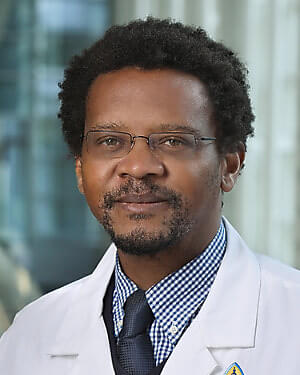
Ambroise Wonkam, M.D., Ph.D., Johns Hopkins School of Medicine
Harnessing African Genomic Variation to Improve Sickle Cell Disease Therapeutics
Dr. Wonkam is a Professor of Genetic Medicine and the Director of the McKusick-Nathans Institute and Department of Genetic Medicine at Johns Hopkins University School of Medicine. He also serves as the Director of GeneMAP (Genetic Medicine of African Populations).
Dr. Wonkam completed his MD training at the Faculty of Medicine and Biomedical Sciences, University of Yaoundé I (Cameroon). He pursued a thesis in Medical Sciences (Cell Biology) at the University of Geneva (Switzerland) and earned a PhD in Human Genetics from the University of Cape Town (South Africa). He also received advanced training as a medical geneticist at the University of Geneva, one of the most reputable centers for genetic medicine, and has practiced genetic medicine in European, African and American contexts. With over 250 peer-reviewed publications, Dr. Wonkam’s research focuses on genetic and genomic variation in African populations, particularly in three areas: Genomic Modifiers of Sickle Cell Disease (SCD), Genetics of Hearing Impairment, and Ethical and Educational Issues in Human Genetics. Over the past decade, he has successfully led numerous NIH- and Wellcome Trust-funded projects conducting research in several African countries, including Tanzania, Cameroon, Nigeria, Zimbabwe, Zambia, Uganda, Mali, Sudan, Rwanda and Ghana.
Dr. Wonkam has received numerous prestigious awards, including: the 2003 Denber-Pinard Prize for the best thesis from the Faculty of Medicine, University of Geneva, Switzerland, the 2014 Clinical Genetics Society International Award from the British Society of Genetic Medicine, UK; the 2021 Alan Pifer Award from the University of Cape Town, South Africa; the 2021 MRC South Africa Gold Scientific Merit Award for research excellence; the 2023 Human Genome Organization (HUGO) Africa Prize. He is a member of the South African Academy of Science and was elected as a Fellow of The World Academy of Sciences (UNESCO) for 2024.
Dr. Wonkam has served as an Associate Editor for leading journals, including Nature, the American Journal of Human Genetics, American Journal of Medical Genetics, and the Journal of Community Genetics, as well as an academic editor for PLOS ONE. Additionally, he is on the editorial boards of Genetics In Medicine, Human Genetics and npj Genomic Medicine.
Currently, Dr. Wonkam serves as the President of the African Society of Human Genetics, championing the integration of genetic medicine across the African continent.
Symposium and Workshop Details
-
All sessions are located in the Turner Concourse and Tilghman Auditorium at the Johns Hopkins University School of Medicine. Both locations can be accessed by entering the Miller Research Building at 733 N. Broadway, Baltimore, MD 21205.

Parking Information:
Vendors
Vendors can use the loading dock located at 1721 E. Madison Street to unload any supplies or large items for presentation. The dock hours are 8:00am to 4:30 pm. If there are before/after regular hour needs, security will need to be contacted (410) 955-5585.Attendee Parking
Visitor parking is available at the Caroline, McElderry and Washington garages. A visitor parking ticket will be pulled upon entry.- Caroline Garage - 601 N. Caroline Street (take parking ticket with you to pay for parking before returning to vehicle).
- McElderry Garage - 1501 McElderry Street (take ticket with you to pay for parking before returning to vehicle).
- Washington Garage - 701 N. Washington Street (parking is paid for at exit).
Symposium Entrance and Registration
Vendors and attendees should enter the Miller Research Building at 733 N Broadway, Baltimore, MD 21205. Upon arrival let the security desk know that you are attending the symposium. They will direct you down the long hall to the registration desk at Turner Concourse. -
The Johns Hopkins Institute for Cell Engineering
The Johns Hopkins Kimmel Cancer Center
The University of Maryland School of Medicine
The Maryland Stem Cell Research Fund
For sponsorship opportunities, contact Dr. Elias Zambidis.
-
Dr. Elias Zambidis ([email protected])
Dr. Alan Friedman ([email protected])
Administrative Staff:
Bettina Wilkerson ([email protected])
Laura Ihle ([email protected])
Abstract Submission Guidelines
Follow these guidelines to submit your abstract to the 2nd Annual Maryland Stem Cell Symposium and Workshop
-
Submit an abstract related to any aspect of stem cells, including all lineages and applications of stem and progenitor cells.
-
Based on the abstracts received, we will develop five one-hour sessions that will open with a 15-minute presentation from an invited expert in that area of stem cell research. This will be followed by three workshop-style presentations by junior investigators and trainees selected based on the submitted abstracts. Each presenter will be designated an eight-minute presentation slot, followed by a seven-minute question period. Principal investigators of oral presenters will be considered to chair the sessions.
Junior investigators and trainees include all researchers who do not have a major grant, such as an NIH R01 or equivalent (they may have NIH R21, MSCRF, or other equivalent grants), are under 45 years old, and are maximally assistant professors.
-
Those who submit abstracts but are not selected for talks may be invited to present posters, which will be on display throughout the event. We will conclude the symposium with highlights from the presented work and the world. Following the symposium, there will be a two-hour networking event.
-
Prizes will be awarded for the top rated oral presentation(s) and the top rated poster(s).
-
Deadlines:
Abstracts can be submitted along with the registration process by submitting this form, or alternatively abstracts can be emailed directly to [email protected] following registration. Please follow instructions on abstract format guidelines before submitting.
For maximal consideration of selection for an oral presentation, please submit abstracts early, and preferably before Sept. 22. Otherwise, rolling selection for abstracts for poster presentations can be submitted up until Sunday, Oct. 12.
Notification of prizes will be announced at the symposium's closing ceremony.
-
All abstracts must be submitted in English. Do not include the name or personal information of any patient participating in a study or clinical trial.
Recommended subsections: Objectives and Hypothesis, Methods, Findings, and Conclusions.
Abstract format: Word document
Abstract Title: 30 words maximum
Abstract Content: 500 words maximum plus abstract figure embedded in Word document (include a figure caption of no more than 300 characters)
File Size: 25MB maximum
The submitted abstracts will be evaluated and scored by experts. Acceptance letters will be sent by email. The best scored abstracts will be accepted for oral presentations.Use this form to submit abstracts. For maximal consideration of selection for an oral presentation, please submit abstracts early, and preferably before Sept. 22. Otherwise, rolling selection for abstracts for poster presentations can be submitted up until Sunday, Oct. 12.