
Facial Feminization Surgery (FFS)
Featured Expert

Updated September 28, 2026
Facial feminization surgery, or FFS, refers to a group of surgical procedures that modify facial features to create a more feminine appearance. FFS is highly individualized. Some patients choose one procedure, while others combine several procedures during one operation or undergo surgery in stages.
FFS can address both the facial skeleton and soft tissues, including the forehead and brow, hairline, nose, cheeks, lips, jaw, chin and neck. The goal is not to create one particular type of feminine face, but to develop a surgical plan that reflects each person's anatomy, identity and goals.
Fan Liang, M.D., of the Johns Hopkins Center for Transgender and Gender Expansive Health reviews FFS options.
Key Points
- Facial feminization surgery can change facial features to create a more feminine appearance and may be an important part of gender-affirming care.
- FFS is individualized. One or several procedures may be performed during a single operation or in stages, depending on your anatomy, goals, overall health and the procedures being considered.
- FFS can include surgery of the forehead, brows, hairline, nose, cheeks, lips, jaw and chin, as well as reduction of a prominent Adam's apple.
- Some procedures change the underlying facial bones, while others address the skin and soft tissues.
- Nonsurgical treatments, such as injectable fillers and botulinum toxin, may also help some patients achieve their facial gender-affirmation goals.
What is facial feminization surgery (FFS)?
Facial feminization surgery is a group of procedures that can reshape the face and its features to create a more feminine appearance.
Hormone therapy can produce changes in facial skin, hair and soft-tissue distribution, but it generally does not substantially change the shape of the adult facial skeleton. For patients who desire additional changes, surgery can address both skeletal and soft-tissue features.
The procedures included in FFS vary considerably from person to person. Your surgeon will evaluate your facial anatomy and discuss which features are most important to you before developing an individualized surgical plan.
Who may consider facial feminization surgery?
FFS may be appropriate for transgender women, nonbinary people and other individuals who desire a more feminine facial appearance.
For some people, facial appearance can be an important component of gender affirmation and how they are perceived by others. The decision to undergo FFS is personal, and there is no single set of procedures that is appropriate for everyone.
FFS Procedures
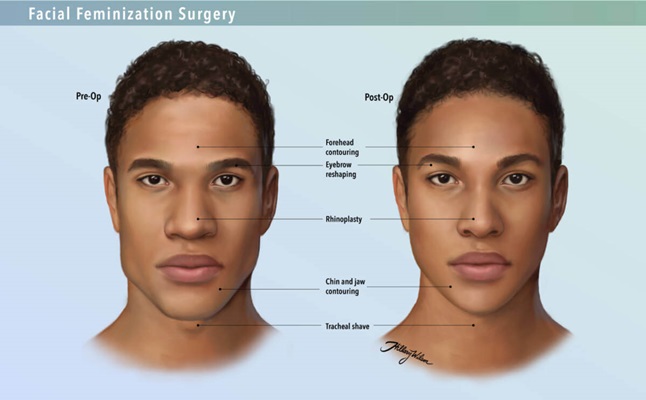
Depending on your anatomy, priorities and goals, your surgical plan may include one or more of the following procedures.
Forehead, Brow and Hairline Contouring
The forehead and area around the eyes can play an important role in the overall appearance of the face. Facial feminization surgery can reduce prominent bony contours of the forehead and reshape the brow and upper eye region.
Forehead contouring may include reduction of the bony prominence above the eyes, known as the brow or supraorbital ridge. Depending on the thickness of the bone and the anatomy of the frontal sinus, the surgeon may contour the bone directly or temporarily remove, reshape and reposition the anterior wall of the frontal sinus.
The upper edges of the eye sockets, or orbital rims, may also be contoured to create a smoother transition between the forehead and eyes.
For patients who would like to change the position or shape of the hairline, scalp advancement can lower or reshape the hairline. Hairline advancement may be performed at the same time as forehead contouring.
The location of the incision depends on the patient's hairline, anatomy and procedures being performed. Your surgeon will discuss the location of scars and the risk of temporary or permanent changes in scalp sensation or hair growth.
Brow Lift and Eyelid Surgery
A brow lift can change the height and shape of the eyebrows and the relationship between the brows and eyes. It may be performed alone or together with forehead and hairline surgery.
For patients with excess eyelid skin or other concerns around the eyes, upper or lower eyelid surgery, called blepharoplasty, may also be considered. Incisions are generally placed in natural creases or other locations designed to minimize visible scarring.
Rhinoplasty
Rhinoplasty reshapes the nose and can help create balance between the nose and other facial features.
Depending on your anatomy and goals, surgery may change the nasal bridge, nasal bones, nasal tip, nostril width or overall size and proportions of the nose. Rhinoplasty may involve reshaping both bone and cartilage.
An important goal of rhinoplasty is to achieve the desired appearance while preserving or improving nasal breathing.
Cheek Augmentation and Facial Fat Grafting
Changes in cheek contour and facial volume can help create a more feminine facial appearance.
Cheek augmentation may be performed using fat grafting and/or facial implants. With fat grafting, fat is removed from another area of the body using liposuction, processed and carefully injected into selected areas of the face.
Fat grafting can also be used to add volume to the temples, cheeks, lips and other areas. Some of the transferred fat is naturally absorbed by the body, so the amount of volume that remains can vary.
Facial implants may be considered when greater or more predictable augmentation of the cheekbones is desired.
Lip Lift and Lip Augmentation
A lip lift can shorten the distance between the nose and upper lip and increase the amount of visible upper lip. Lip volume can also be increased using fat grafting or other tissue.
The appropriate procedure depends on the patient's anatomy and goals.
Jaw Contouring and Genioplasty
Jaw and chin surgery can change the shape and proportions of the lower face.
Mandibular contouring may reduce or reshape the angles and sides of the lower jaw to create a narrower or softer lower facial contour.
Genioplasty reshapes the chin. Depending on the patient's anatomy, the chin can be narrowed, shortened, advanced, set back or otherwise repositioned. The bone may also be contoured to change the width or shape of the chin.
Many jaw and chin procedures are performed through incisions inside the mouth, which can minimize visible external scars.
Facelift and Neck Contouring
Some patients may benefit from procedures that address skin and soft-tissue laxity of the face or neck. These can include facelift, neck lift, liposuction or direct removal of excess fat.
These procedures may be performed alone or in combination with skeletal facial feminization procedures, depending on the patient's anatomy, age, goals and degree of skin laxity.
Tracheal Shave (Chondrolaryngoplasty)
Chondrolaryngoplasty, commonly called a tracheal shave, reduces the prominence of the thyroid cartilage, sometimes called the Adam's apple, to create a smoother neck contour.
During surgery, the surgeon removes a portion of the prominent thyroid cartilage while protecting the structures that support the vocal cords.
Because the vocal cords attach to the thyroid cartilage, the amount of cartilage that can safely be removed varies from person to person. Protecting the vocal cords and their attachment is an important part of the procedure.
The incision is generally placed in a location designed to make the resulting scar less noticeable, such as under the chin.
Temporary swelling, discomfort with swallowing and hoarseness can occur after surgery. Less common risks include an unsatisfactory scar, persistent prominence of the cartilage, or changes in the voice. Permanent voice change due to injury to the vocal cords or their attachment is uncommon but can occur.

Nonsurgical Options for Facial Gender Affirmation
Not everyone seeking changes in facial appearance requires surgery. Nonsurgical treatments may be used alone or in combination with surgery.
Options can include:
- Injectable fillers to change facial contours or add volume
- Botulinum toxin injections
- Laser or electrolysis for facial hair removal
- Skin resurfacing and other skin treatments
Unlike surgical fat grafting, injectable fillers are temporary and may require repeat treatment to maintain their effect.
Other gender-affirming services, such as voice therapy, are available for patients who would like to address aspects of gender expression beyond facial appearance.
First Consultation for Facial Feminization Surgery
Your first consultation is an opportunity to discuss your goals and identify which facial features are most important to you.
Your surgeon will evaluate your facial proportions, skin and soft tissues, facial skeleton and hairline and will discuss which surgical and nonsurgical options may help you achieve your goals.
Standardized photographs are commonly obtained for surgical planning. In most cases, your surgeon will recommend a CT scan or other imaging to better understand your facial skeletal anatomy or plan specific procedures.
Preparing for Facial Feminization Surgery
Facial feminization surgery is highly individualized. Your surgical team will work with you to develop a plan based on your anatomy, priorities, medical history and goals.
Some patients undergo several procedures during a single operation, while others benefit from surgery performed in stages. Factors such as the procedures being performed, anticipated length of surgery, overall health, recovery considerations and patient preference help determine the safest and most appropriate approach.
Your surgical team will provide specific instructions regarding medications, nicotine use, eating and drinking before surgery, transportation and postoperative care.
During Your FFS Procedure
How long does FFS surgery take?
The length of surgery depends on the procedures being performed. A single procedure may take a few hours, while an operation combining several facial procedures may take considerably longer.
Will I stay in the hospital?
Some facial feminization procedures can be performed as outpatient surgery, while patients undergoing more extensive or combined procedures may stay overnight for observation. Your surgeon will discuss what to expect based on your specific surgical plan.
When is the first follow-up visit?
The first follow-up is usually within 7-10 days of your surgery.
Recovery After Facial Feminization Surgery
Recovery varies depending on the procedures performed and the extent of surgery.
Swelling and bruising are common after facial surgery and are often most noticeable during the first several days. Bruising generally improves substantially during the first few weeks. Swelling can take longer to resolve, particularly after surgery involving the facial bones.
Patients undergoing jaw or chin surgery may initially find soft foods more comfortable. Patients undergoing rhinoplasty may have temporary splints both over the nose, and within the nostrils.
Temporary numbness or altered sensation is common after some facial procedures. Sensation often improves over time, although recovery can take several months and some sensory changes can be permanent.
Your surgical team will provide individualized instructions about incision care, bathing, diet, sleeping position, returning to work and resuming exercise.
Although you may notice changes soon after surgery, the final result cannot be judged immediately. Facial swelling continues to improve over several months, and the final contour after skeletal surgery may take several months or longer to become apparent.
Risks and Possible Complications of Facial Feminization Surgery
FFS is generally safe when performed by an appropriately trained surgical team, but all surgery involves risks. The specific risks depend on which procedures are performed.
Potential complications can include:
- Bleeding or hematoma
- Infection
- Scarring
- Delayed wound healing
- Temporary or permanent numbness
- Hair loss or changes in hair growth near scalp incisions
- Facial asymmetry or contour irregularities
- Injury to nerves, teeth or other nearby structures
- Sinus-related complications after forehead surgery
- Nasal breathing problems after rhinoplasty
- Changes in voice after chondrolaryngoplasty
- Problems with implanted hardware or facial implants
- Blood clots or complications related to anesthesia
- Dissatisfaction with the aesthetic result
- Need for additional or revision surgery
Your surgeon will discuss the risks that apply to your individual surgical plan.
Contact your surgical team promptly if you develop symptoms such as fever, worsening redness, increasing drainage, sudden or severe swelling, difficulty breathing, severe or worsening pain, or other concerning symptoms after surgery.
What Results Can I Expect From Facial Feminization Surgery?
The goal of FFS is not to create one particular type of feminine face. Facial appearance varies widely, and surgery should be individualized to preserve facial harmony and reflect each patient's identity and goals.
Research on facial gender-affirming surgery has shown improvements in satisfaction with facial appearance and quality of life after surgery.
Results continue to change as swelling resolves and tissues heal. Some changes are apparent soon after surgery, while the final results of skeletal procedures may take several months or over a year to become apparent.
It is important to discuss your priorities and expectations openly with your surgeon. Understanding what surgery can and cannot accomplish is an important part of deciding which procedures are right for you.
Medically reviewed by Fan Liang, M.D.
The Center for Transgender and Gender Expansive Health Team at Johns Hopkins
The Johns Hopkins Center for Transgender and Gender Expansive Health provides comprehensive, multidisciplinary care for transgender and gender-diverse people.
Our team works with each patient to develop an individualized care plan based on their health, anatomy, priorities and goals. The Center brings together specialists in primary care, hormone therapy, voice care, dermatology, reproductive health, behavioral health, urology, gynecology and gender-affirming surgery.
Our goal is to provide evidence-based, affirming and patient-centered care while advancing education and research in transgender health.