Cardio-Obstetrics: Managing Heart Health During and After Pregnancy
Featured Expert

April 14, 2026
Arthur Vaught, M.D., a maternal-fetal medicine specialist, critical care physician and the director of labor and delivery at The Johns Hopkins Hospital, talks about the Johns Hopkins cardio-obstetrics program and how it can help manage women’s heart health throughout pregnancy and beyond.
Key Points
- Women who are at risk for certain heart conditions, already have them or develop them during pregnancy may benefit from cardio-obstetric care.
- Care focuses on keeping the mother and the fetus healthy while managing heart complications during pregnancy, childbirth and beyond.
- Vaginal birth is possible for many women with heart conditions, after careful planning with the cardio-obstetrics team.
What is cardio-obstetrics?
Cardio-obstetrics is a medical specialty focused on the heart health of women who are planning a pregnancy, are pregnant or recently gave birth. It brings together experts in heart health and pregnancy to keep both the parent and baby safe.
What heart-related complications can arise during pregnancy and delivery?
Pregnant women may experience a variety of heart-related problems during pregnancy, including:
- High blood pressure, such as preeclampsia
- Weakening of the heart muscle (cardiomyopathy, including peripartum cardiomyopathy)
- Abnormal heart rhythms (arrhythmias)
- Blood clots
These problems can lead to dangerous complications during pregnancy, delivery and the postpartum period, including premature birth, placental abruption, bleeding, heart failure, aortic tears and stroke.
Women with existing heart conditions may be at higher risk for some of these complications. A Johns Hopkins study found that preeclampsia was 90% more common and placental abruption was 30% more common in women with heart valve disease, compared with women without it.
Why is cardio-obstetrics care important?
Heart-related complications are becoming more common during pregnancy in the United States. These conditions can be serious, and many hospitals don’t have coordinated teams or specialized delivery units to manage them. Johns Hopkins created a dedicated program to close this gap and improve outcomes.
Cardio-Obstetrics Clinic Overview
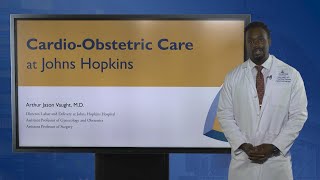
Dr. Arthur Vaught explains maternal cardiac disease and how the Johns Hopkins cardio-obstetrics program can help support women's heart health during pregnancy.
When should someone consider cardio-obstetric care?
Cardio-obstetrics care is for women who:
- Have a known heart condition such as:
- regurgitant or “leaky” heart valves
- narrowed valves or arteries
- arrhythmias
- congenital heart disease
- cardiomyopathy
- Develop heart-related symptoms during pregnancy.
- Have risk factors that could affect the heart, such as certain autoimmune conditions or relevant family history.
“We counsel patients early about expected cardiac changes. It sets an expectation that this is something that could happen, but we have a plan. We monitor, we may increase their medications, and we can usually keep them out of the hospital,” says Vaught.
What does care look like during pregnancy?
Cardio-obstetrics care typically includes:
- Counseling for risk factors while planning a pregnancy.
- Close monitoring during pregnancy, such as fetal scans and keeping track of important heart numbers.
- Personalized treatment plans, which may include medication management, lifestyle modifications and other therapies.
- Coordinated visits with multiple specialists to address symptoms and plan delivery.
- Postpartum care.
The care team focuses on keeping the heart stable while supporting a healthy pregnancy.
Can patients with heart problems still have a vaginal birth?
Yes, in most cases, vaginal delivery is still the safest option. The team carefully manages labor to reduce strain on the heart and help ensure both parent and baby are safe.
“Vaginal births are appropriate for most of our patients, and we advocate for it,” says Vaught. “There are ways we can monitor through delivery and decrease the amount of cardiac stress as much as possible.”
What makes the Johns Hopkins program unique?
Johns Hopkins is one of the few places in the country with a fully integrated cardio-obstetrics program. This means patients are cared for by a team of specialists that includes:
- Cardiologists and cardiac surgeons
- Maternal-fetal medicine doctors
- Neonatologists
- Anesthesiologists
- Imaging experts
- Nephrologists
Many specialists are uniquely cross-trained in both their primary specialty and gynecology, obstetrics or heart care.
Physicians across the region now refer patients for cardio-obstetric care earlier and more frequently, which helps specialists intervene sooner and prevent complications. A referral is not necessary to consult with a cardio-obstetrics specialist at Johns Hopkins. However, an insurance company may require a referral.
What happens after the baby is born?
Care doesn’t stop at delivery. Many heart conditions need long-term follow-up. Some complications, such as heart failure, may happen weeks to months after giving birth. The cardio-obstetrics program helps patients stay connected to cardiac care well beyond the typical postpartum visit.
“We don’t want our patients to be healthy just during pregnancy and six weeks postpartum. We want them to enjoy cardiovascular health for the one-year visit, a future pregnancy, the kindergarten graduation, the college graduation, the wedding. We really want our moms to thrive not only in motherhood, but also in their communities and in their life work,” says Vaught.
Medically reviewed by Arthur Vaught, M.D.
Johns Hopkins Cardio-Obstetrics Program
Our services are offered at The Johns Hopkins Hospital. This innovative program combines comprehensive expertise and technology spanning all levels of care, from preventive care to neonatal intensive care.