
Recurrent Pregnancy Loss Center

You Are Not Alone. We Are Here To Help.
At the Johns Hopkins Recurrent Pregnancy Loss (RPL) Center, we understand the emotional, physical and psychological challenges that come with experiencing multiple pregnancy losses. We are dedicated to providing comprehensive, compassionate care to individuals and couples navigating this difficult journey. With a multidisciplinary team of specialists, we offer personalized treatment plans designed to identify the underlying causes of RPL and increase your chances of a healthy pregnancy.
Request an Appointment
By Phone

By Online Form

Recurrent Pregnancy Loss: Navigating the Path to a Healthy Pregnancy
Experiencing multiple pregnancy losses can be overwhelming and leave you with many unanswered questions. Join Dr. Vasiliki Moragianni, Director of the Johns Hopkins Recurrent Pregnancy Loss Center, for an informative webinar on recurrent pregnancy loss (RPL). Dr. Moragianni will discuss the latest research on RPL, common causes, diagnostic approaches, and available treatment options. She will also provide guidance on next steps for those looking to achieve a healthy pregnancy.

What is Recurrent Pregnancy Loss?
Recurrent pregnancy loss (RPL) is defined as the loss of two or more pregnancies. These losses — whether consecutive or not — may occur with or without a history of infertility. Miscarriage is common, affecting at least 25% of all women at some point in their lives, while RPL can impact about 5% of reproductive-age women.
Possible Causes of RPL
RPL can have multiple underlying causes. At the Johns Hopkins RPL Center, our goal is to provide an accurate diagnosis and create an individualized treatment plan tailored to your needs. Possible causes include:
- Uterine abnormalities, such as a uterine septum, fibroids or retained pregnancy tissue
- Hormonal or metabolic conditions, including thyroid disorders, diabetes or elevated prolactin levels
- Antiphospholipid antibody syndrome, a blood-clotting disorder
- Genetic conditions, such as chromosomal translocation
- Autoimmune conditions or infections, such as chronic endometritis, an inflammation of the uterine lining
- Cervical insufficiency, which can lead to pregnancy loss later in gestation
However, in some cases, determining a specific cause for RPL can be challenging. That’s why a multidisciplinary approach is essential for a thorough evaluation and effective treatment.
Johns Hopkins Fertility Center | Heather's Story
The Johns Hopkins Fertility Center brings together an expert team dedicated to helping patients facing recurrent pregnancy loss. At the Johns Hopkins Recurrent Pregnancy Loss Center, care is comprehensive, compassionate, and delivered in one central location. In this video, hear Heather’s story and learn more from Dr. Vasiliki Moragianni, director of the center.

A Multidisciplinary Approach to Care
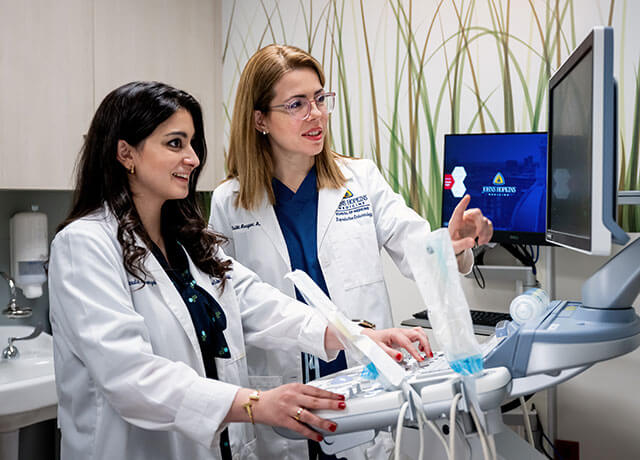
We use the latest diagnostic tests and state-of-the-art technology to uncover potential causes of RPL. Additionally, we offer opportunities to participate in ongoing research and clinical trials, helping advance knowledge and improve treatment options for RPL.
Our center provides a unique, highly collaborative approach, with a level of multidisciplinary integration available at only a few select programs nationwide.
Is There Hope After RPL?
Absolutely! We know how heartbreaking and overwhelming RPL can be, but you are not alone. With the right care and support, many individuals and couples go on to have successful pregnancies.
At the Johns Hopkins RPL Center, we are here to walk through this journey with you. Our team will listen, support and guide you — helping to uncover answers, explore treatment options and give you the best possible chance of a healthy pregnancy. We’re here to help you every step of the way.