Research Lab Results
-
Wu Lab
Dr. Wu leads a multi-disciplinary team with collaborators from the Bloomberg School of Public Health, JHU Whiting School of Engineering, and JHU Krieger School of Arts and Sciences. She conducts ongoing investigations with the Multicenter AIDS Cohort Study and Women’s Inter-agency Health Study. Her lab’s goals are to develop, implement, and validate novel imaging-based metrics of cardiac structure and function to improve risk prediction and stratification at the individual patient-level. Research Focuses: Predictors of Sudden Cardiac Death by Magnetic Resonance Imaging Subclinical myocardial disease in people living with HIV Individualized risk prediction Cardiac structural and mechanical modeling
-
Xiao Group
The objective of the Xiao Group's research is to study the dynamics of cellular processes as they occur in real time at the single-molecule and single-cell level. The depth and breadth of our research requires an interdisciplinary approach, combining biological, biochemical and biophysical methods to address compelling biological problems quantitatively. We currently are focused on dynamics of the E. coli cell division complex assembly and the molecular mechanism in gene regulation. -
Youngjee Choi Lab
Research in the Youngjee Choi Lab focuses on ambulatory care, cancer survivorship, high-value care and medical education.
-
Yukari Manabe Lab
Investigators in the Yukari Manabe Lab evaluate the accuracy of rapid, point-of-care diagnostics for HIV, tuberculosis and related infectious diseases in resource-limited settings particularly sub-Saharan Africa and examine the impact of diagnostic interventions on disease detection and patient outcomes. The team also conducts operational and translational research in tuberculosis and HIV co-infection.
-
Yun Guan Lab
Research is the Yun Guan Lab explores the peripheral, spinal and supraspinal mechanisms of chronic pain. Our long-term goal is to develop better strategies and novel targets for treatment of pathological pain conditions. Our team’s multidisciplinary research uses electrophysiological, molecular biological, immunocytochemical and behavioral pharmacological approaches to study neurobiological mechanisms of pain and hyperalgesia that occur following tissue or nerve injury. -
Zachara Lab
Elevation of O-GlcNAc levels modulates numerous pathways in a manner consistent with increased cell survival, including the expression of heat shock proteins. The Zachara Lab's goal is to understand the O-GlcNAc regulated stress response, how this can be manipulated to improve patient outcome and how this response is misregulated in disease.
-
Zachariah Foda Lab
The Foda lab conducts basic, translational, and clinical research on the early detection, prevention, and interception of gastrointestinal cancers. In collaboration with the other member of the Johns Hopkins Cancer Genomics Lab (https://cancergenomicslab.com/), the group develops and applies whole-genome sequencing-based liquid biopsy methods for the early detection and monitoring of gastrointestinal cancers. These approaches are tested and validated in large multi-national cohorts through international collaborations. Dr. Foda directs the Johns Hopkins Hereditary Colorectal Cancer Registry, which facilitates clinical research related to Familial Adenomatous Polyposis, Lynch syndrome, and other hereditary polyposis conditions.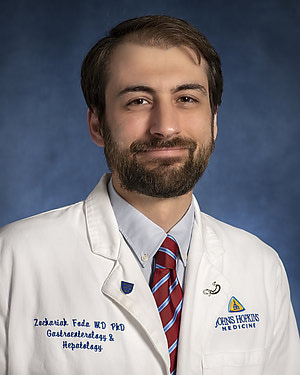
-
Zack Wang Lab
The Wang lab focuses on the signals that direct the differentiation of pluripotent stem cells, such as induced-pluripotent stem (iPS) cells, into hematopoietic and cardiovascular cells. Pluripotent stem cells hold great potential for regenerative medicine. Defining the molecular links between differentiation outcomes will provide important information for designing rational methods of stem cell manipulation.
-
Zackary Berger Lab
The research mission of the Zackary Berger Lab is to bridge evidence-based medicine and shared decision-making in the context of patient-centered care. Lab studies investigate how to accomplish this in the common case of uncertainty, while seeking to clarify the ethics of decision-making and empirically describe how shared decision-making is and should be done. Zackary Berger, MD, PhD, is an assistant professor in the Division of General Internal Medicine at the Johns Hopkins School of Medicine. In addition to his work as an internist and primary care physician, Dr. Berger is an associate faculty member in the Berman Institute of Bioethics, and core faculty in the Evidence Based Practice Center as well as the Center for Health Services and Outcomes Research.
-
Zambidis Laboratory
The Zambidis Labratory studies the formation of pluripotent stem cells and the subsequent hematopoietic, endothelial and cardiac differentiation, as well as the potential therapeutic uses of pluripotent stem cell-derived cells.