Research Lab Results
-
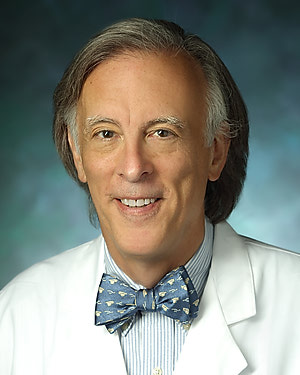
Jonathan Zenilman Lab
The Jonathan Zenilman lab conducts research related to sexually transmitted diseases (STDs). We are working to develop biological markers for sexual behavior to use in other research. The lab studies sexual risk behaviors in highly vulnerable populations and studies datasets from the Baltimore City Health Department to understand STD trends and behaviors. Additionally, we study nosocomial infections at Johns Hopkins Bayview Medical Center, with a focus on developing an antimicrobial control program. We also conduct clinical research related to the natural history and microbiology of chronic wounds in the outpatient setting.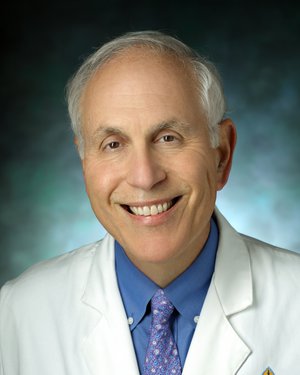
-
Joanna Melia Lab
The Melia lab performs basic, translational, and clinical research on inflammatory bowel disease. Specifically, Dr Melia's basic science and translational research program is concentrated on novel roles of manganese (Mn) homeostasis in Crohn's disease and the interaction with aberrant N-glycosylation with current support from NIDDK and NICHD, including support as a co-investigator in the Center for Metals in Nutrition and Development.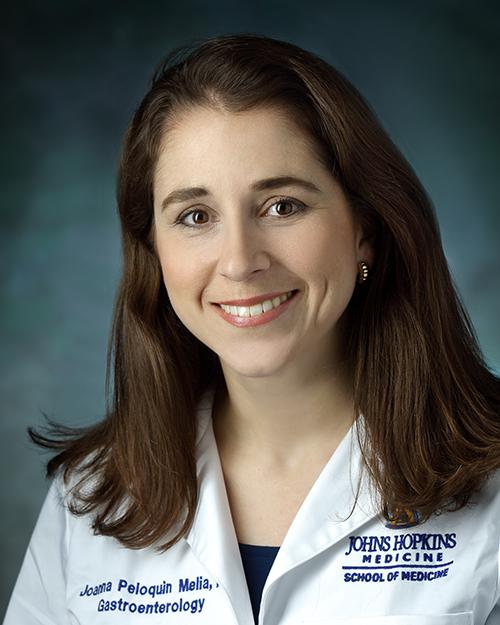
-
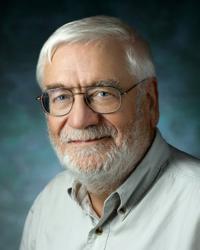
James Knierim Laboratory
Research in the James Knierim Laboratory attempts to understand the flow of information through the hippocampal formation and the computations performed by the various subfields of the hippocampus and its inputs from the entorhinal cortex. To address these issues, we use multi-electrode arrays to record the extracellular action potentials from scores of well-isolated hippocampal neurons in freely moving rats. These neurons, or ""place cells,"" are selectively active when the rat occupies restricted locations in its environment and help to form a cognitive map of the environment. The animal uses this map to navigate efficiently in its environment and to learn and remember important locations. These cells are thought to play a major role in the formation of episodic (autobiographical) memories. Place cells thus constitute a tremendous opportunity to investigate the mechanisms by which the brain transforms sensory input into an internal, cognitive representation of the world and then uses this representation as the framework that organizes and stores memories of past events.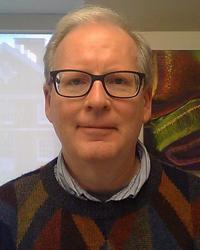
-
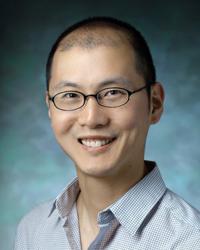
James Sham Lab
Research in the James Sham Lab focuses on pulmonary arteries. Studies include local calcium signaling in the pulmonary arteries and transient receptor potential (TRP) channels in pulmonary arterial smooth muscle cells. We’re also interested in calcium regulation in chronic hypoxic pulmonary hypertension.
-
Jamie Murphy Lab
The Jamie Murphy Lab conducts research on post-cesarean section pain management and post-partum hemorrhage. We also explore topics around post-partum analgesia.
-
Joanne Shay Lab
The Joanne Shay Lab primarily conducts research on pediatric pain management techniques. Our studies have explored pain management in special-needs children and patients, and we have studied non-traditional pain management methods, such as regional anesthesia and peripheral nerve blocks in children, medical acupuncture, and remote anesthesia services. We also have an ongoing interest in the business of medicine. -
James Fackler Lab
Research in the James Fackler Lab explores the operational side of the hospital environment, seeking ways to optimize patient care and physician decision-making. Our work includes building a mathematical model of how patients move throughout a hospital, which we believe will help hospitals better predict the influx of emergency cases and therefore optimize resource preparation and scheduling of elective procedures. We also research data acquisition and data mining in the operating room and intensive care unit, with a goal of identifying patterns and trends. -
Jungsan Sohn
Dr. Sohn's lab is interested in understanding how biological stress-sensors are assembled, detect danger signals and initiate stress response. Innate immunity is the first line of defense against invading pathogens in higher eukaryotes. We are using in vitro quantitative biochemical assays and mutagenesis and x-ray crystallography to investigate the underlying operating principles of inflammasomes, a component of the innate immune system, to better understand biological stress sensors. -
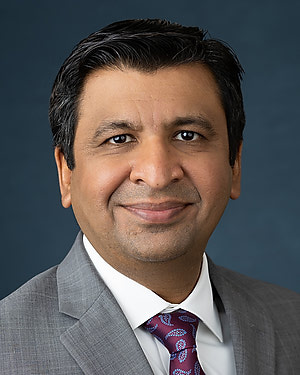
Chirag Parikh Lab
Dr. Parikh's research focuses on the translation and validation of novel biomarkers for the diagnosis and prognosis of acute kidney injury. Progress in kidney diseases has been hamstrung by significant heterogeneity within the current disease definitions, which are largely based on serum creatinine. Dr. Parikh's research has addressed this critical challenge by developing biomarkers of renal tubular injury, repair, and inflammation to dissect this heterogeneity. He has assembled multicenter longitudinal prospective cohorts for translational research studies across several clinical settings of acute kidney injury and chronic kidney disease for the efficient translation of novel biomarkers.
His research is dedicated to the process of applying discoveries generated in the laboratory and in preclinical experiments, the development of clinical studies, and the design of clinical trials. Dr. Parikh's studies have refined the clinical definition in perioperative acute kidney injury and hepatorenal syndrome, developed strategies to reduce kidney discard in deceased donor transplantation, and advanced regulatory approvals of kidney injury biomarkers. He has also developed biomarkers to identify rapid progressors of early diabetic kidney disease before derangements in serum creatinine. Dr. Parikh's research goal is to translate our understanding of pathophysiological mechanisms into clinical practice and improve the outcomes in patients with kidney disease.
Dr. Parikh has also been the recipient of numerous honors, including the 2017 Young Investigator Award from the American Society of Nephrology. -
Computational Neuroscience Laboratory
In the computational neuroscience Laboratory, we construct quantitative models of biological nervous systems that are firmly based on their neurophysiology, neuroanatomy and behavior, and that are developed in close interaction with experimentalists. Our main interest is neuronal function at the system level, reflecting the interaction of subsystems to generate useful behavior. Modeling is particularly important for understanding this and other system-level functions, since it requires the interaction of several pathways and neural functions. One of the functions we study is selective attention--that is, the capability of higher animals to scan sensory input for the most important information and to discard all other. Models of the neuronal basis of visual selective attention are constructed by simulating them on digital computers and comparing the results with data obtained from the visual and somatosensory systems of primates. We pay particular attention to the mechanisms involving the implementation of neural mechanisms that make use of the temporal structure of neuronal firing, rather than just the average firing rate.