Find a Research Lab

Research Lab Results

Results per page:

  • Neuro-Vestibular and Ocular Motor Laboratory

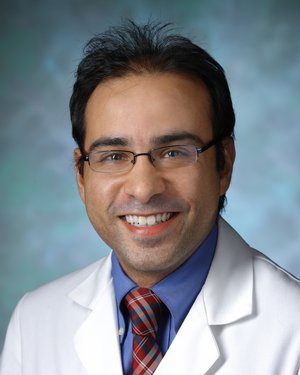
    In our laboratory we study the brain mechanisms of eye movements and spatial orientation. -How magnetic stimulation through transcranial devices affects cortical brain regions -Neural mechanisms underlying balance, spatial orientation and eye movement -Mathematical models that describe the function of ocular motor systems and perception of spatial orientation -Short- and long-term adaptive processes underlying compensation for disease and functional recovery in patients with ocular motor, vestibular and perceptual dysfunction Developing and testing novel diagnostic tools, treatments, and rehabilitative strategies for patients with ocular motor, vestibular and spatial dysfunction

    Principal Investigator

    Amir Kheradmand, MD

    Department

    Neurology

  • The Mumm Lab

    The research conducted in the Mumm Lab (Dept. of Ophthalmology, Wilmer Eye Institute) is focused on understanding how neural circuits are formed, how they function, and how they can be regenerated, to develop new therapies for retinal regeneration. Toward that end, we investigate the development, function, and regeneration of disease-relevant neurons and neural circuits responsible for vision. An emphasis is placed on translating what can be learned in regenerative model systems to develop novel therapies for stimulating dormant regenerative capacities in humans, Therefore, we apply what we learn from a naturally regenerative species, the zebrafish, toward the development of novel therapies for restoring visual function to patients. We place an emphasis on unique perspectives zebrafish afford to biological studies, such as in vivo time-lapse imaging of cellular behaviors and cell-cell interactions, and high-throughput chemical and genetic screening. We have pioneered several technologies to support this work including multicolor imaging of neural circuit formation, a selective cell ablation methodology, and a quantitative high-throughput phenotypic screening platform. Together, these approaches are providing novel insights into how the degeneration and regeneration of discrete retinal cell types is controlled.
    Lab Website

    Principal Investigator

    Jeff Mumm, PhD

    Department

    Medicine

  • The Swenor Research Group

    The Swenor Research Group focuses on examining the interrelationship between vision loss and aging. This includes determining the effects of visual impairment and eye disease on physical and cognitive functioning in older adults, and identifying interventions that could enhance the health of older adults with visual impairment and eye disease.

    Principal Investigator

    Bonnie Kathleen Swenor, MPH PhD

    Department

    Ophthalmology