Research Lab Results
-
Clinical and Computational Auditory neuroscience
Our laboratory investigates the neural bases of sound processing in the human brain. We combine electrophysiology recordings (intracranial, scalp), behavioral paradigms, and statistical modeling methods to study the cortical dynamics of normal and impaired auditory perception. We are interested in measuring and modeling variability in spatiotemporal cortical response patterns as a function of individual listening abilities and acoustic sound properties. Current studies are investigating the role of high-frequency (>30 Hz) neural oscillations in human auditory perception.
-
Clinical Laboratory and Biomarkers Core
The Clinical Laboratory and Biomarkers Cores will coordinate access to laboratory expertise, testing, training, specimen repositories and Good Clinical Laboratory Practices (GCLP). The goals of this core are to assure that all JHU HIV investigators have access to and utilize appropriate, validated and, where applicable, certified laboratory assays. The core will also maintain a biomarker specimen repository for storage cataloguing and utilization of biological specimens. -
Cochlear Neurotransmission Group
The Cochlear Neurotransmission Group studies the generation and propagation of neural signals in the inner ear. Our laboratories use biophysical, electrophysiological, molecular biological and histological methods to determine fundamental molecular mechanisms by which neurotransmitters are released from primary sensory cells ('hair cells') to excite second order neurons carrying information to the brain. We apply these same techniques to study inhibitory feedback produced by brain neurons that project to and regulate the sensitivity of the cochlea. -
Colleen Christmas Lab
The Colleen Christmas Lab studies geriatric medicine, with a focus on geriatric education, interventions to reduce inappropriate nursing home citations by state surveyors, nutrition and fall prevention for geriatric patients, and perioperative geriatric care. -
Coller Lab
We leverage both yeast and mammalian systems to study the processes of mRNA translation and mRNA stability. -
Complex Arrhythmias in Congenital and Acquired Structural Heart Diseases
The Aronis Lab develops and refines catheter-based, surgical, and computational strategies to treat the most complex arrhythmias in patients with congenital and acquired structural heart disease—hearts whose distorted anatomy, surgical scar, and limited vascular access place them beyond the reach of conventional electrophysiology. Our mission is to make ablation and device therapy in these patients safer, more durable, and individualized, and to generate the outcomes evidence this historically understudied population has lacked. The lab integrates clinical research, procedural innovation, advanced imaging, and computational modeling, and works closely with the Johns Hopkins adult congenital heart disease, cardiac surgery, cardiac anesthesiology, and biomedical engineering teams.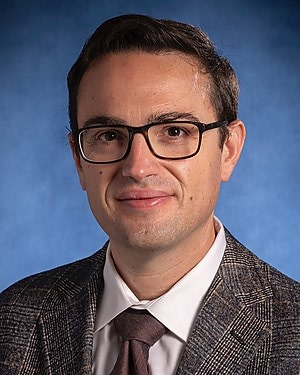
Principal Investigator
-
Computational Neuroscience Laboratory
In the computational neuroscience Laboratory, we construct quantitative models of biological nervous systems that are firmly based on their neurophysiology, neuroanatomy and behavior, and that are developed in close interaction with experimentalists. Our main interest is neuronal function at the system level, reflecting the interaction of subsystems to generate useful behavior. Modeling is particularly important for understanding this and other system-level functions, since it requires the interaction of several pathways and neural functions. One of the functions we study is selective attention--that is, the capability of higher animals to scan sensory input for the most important information and to discard all other. Models of the neuronal basis of visual selective attention are constructed by simulating them on digital computers and comparing the results with data obtained from the visual and somatosensory systems of primates. We pay particular attention to the mechanisms involving the implementation of neural mechanisms that make use of the temporal structure of neuronal firing, rather than just the average firing rate. -
Constance Monitto Lab
The Constance Monitto Lab conducts clinical research on pediatric pain management as well as basic science studies on chemotherapy resistance. In our pediatric pain management research, we work to assess the impact of low-dose opioid antagonism on opioid-related side effects, such as nausea and vomiting. We also analyze data on current methods of pediatric pain management in the United States. In addition, our team uses basic science studies to assess the success of epigenetic gene regulation on the development of resistance to chemotherapeutic agents in cancer. -
Conte Digestive Diseases Basic and Translational Research Core Center
Hopkins Conte Digestive Diseases Basic and Translational Research Core Center is an NIH/NIDDK funded, institutionally supported center that has as its mission, to make gastrointestinal studies at Hopkins as outstanding as possible, by encouraging helping develop interactions between Hopkins basic and translational investigators. The Center consists of an Administrative Core, four scientific Cores, an Enrichment Program, a Pilot and Feasibility Project Program, and services a Research Base of ~60 Hopkins faculty investigators. Co-Director, Mark Donowitz, MD Co-Director, Svetlana Lutsenko, PhD -
CORE-320 Multicenter Trial Lab
The central theme of the CORE-320 Multicenter Trial Lab’s research is to support the Coronary Artery Evaluation Using 320-Row Multidetector CT Angiography (CORE 320) study, a multi-center multinational diagnostic study with the primary objective to evaluate the diagnostic accuracy of 320-MDCT for detecting coronary artery luminal stenosis and corresponding myocardial perfusion deficits in patients with suspected CAD compared with the reference standard of conventional coronary angiography and SPECT myocardial perfusion imaging. Armin Arbab-Zadeh, MD, PhD, is an associate professor of medicine at the Johns Hopkins University School of Medicine and Director of Cardiac Computed Tomography in the Division of Cardiology at the Johns Hopkins Hospital in Baltimore. Research Areas: coronary/cardiac imaging, coronary risk prediction, heart attack prevention, cardiac computed tomography, coronary circulation and disease